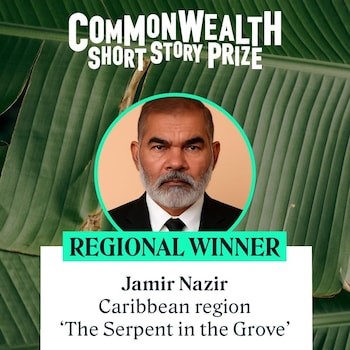
Detection programs suggest Trinidadian writer’s short story was entirely computer-generated -UK Telegraph
The 2026 Commonwealth Short Story Prize is facing an authorship controversy following allegations that the Caribbean regional winner, Trinidad and Tobago author Jamir Nazir, used generative AI to write his story, “The Serpent in the Grove”. Critics flagged repetitive sentence structures, clichéd metaphors, and hallmark AI tropes.
The Controversy at a Glance
• The Winning Entry: Jamir Nazir’s “The Serpent in the Grove” was selected as one of the five regional winners from 7,806 entries across 51 countries.
• The Allegations: Literary critics and AI researchers on platforms like X (formerly Twitter) and Reddit pointed out distinct linguistic patterns reminiscent of large language models (LLMs), such as excessive figurative language and the “not X, but Y” sentence structure.
• Testing: The UK-based literary magazine Granta, which publishes the winning stories, ran Nazir’s entry through the AI detector Claude, which concluded it was “almost certainly” assisted or produced by AI.
The UK’s The Telegraph newspaper reported.
“The story is written in indistinct, prose-poetic language, and the only discernible action is an incident in which a woman falls down a well.
“Sentences include “hard living lays itself on a man like wet sacking; it never asks permission”, which suggests that a sackcloth can give permission, and “laughter can cut a hush, not cure it”, which implies that silences can be “cured”.
“Other sentences are attempts at aphorism that appear nonsensical, such as “doing is a treacherous bridge: you step on and it carries you to a side you didn’t plan to reach”.
“This suggests that one would step onto a bridge without being aware of what was on the other side, and that the structure “carries” people across.
“Other aperçus include “first good rain after dry is a forgiveness the sky gives itself” and “if grace is near and hands hold, something breathing comes up”.
Response from the Organisers
• The Commonwealth Foundation: The prize committee stated that they do not use AI-detection tools in the judging process, calling them “not infallible”. They contacted shortlisted writers, who twice reaffirmed that no AI was used in their stories. The foundation has chosen to operate on a “principle of trust”.
• Granta’s Stance: Granta publisher Sigrid Rausing acknowledged the AI detection results, stating that they were taking the speculation seriously but would keep the stories online until concrete evidence is found.

Join BusinessDay whatsapp Channel, to stay up to date
Open In Whatsapp