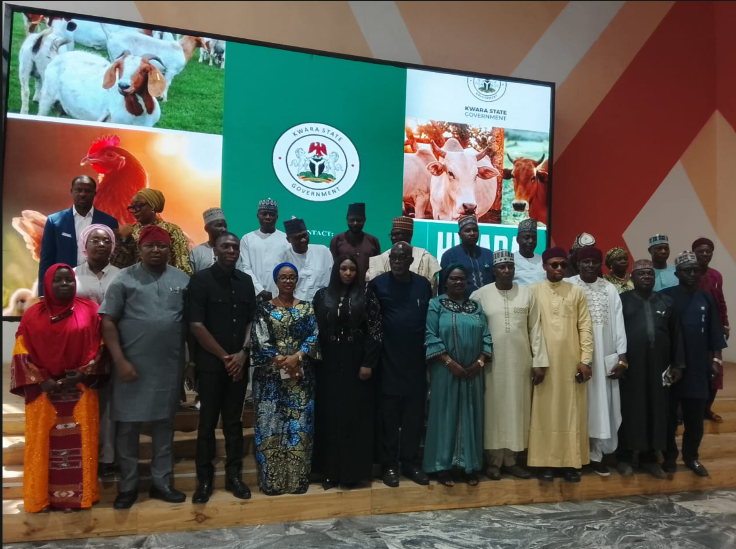
The Kwara State Government has reaffirmed its commitment to working closely with the Presidential Enabling Business Environment Council (PEBEC) to sustain reforms aimed at enhancing competitiveness, attracting investments, creating jobs, and improving the quality of life of citizens.
Hauwa Nuru, PhD, Commissioner for Finance and Chairman of the Kwara State Ease of Doing Business Council, gave the assurance over the weekend at the PEBEC Nationwide Subnational Stakeholder Engagement and Reform Tour 2026 held at the Innovation Hub, Ilorin.
According to her, the programme underscores the Federal Government’s commitment to deepening business environment reforms across the federation while strengthening collaboration between government and the private sector.
Nuru noted that the ease of doing business agenda goes beyond improving rankings, stressing that it is aimed at creating an enabling environment where businesses can thrive, investments flourish, jobs are created, and citizens enjoy greater economic opportunities.
She said the administration of Governor Abdulrahman Abdulrazaq has consistently prioritised reforms that improve the investment climate, strengthen institutions, promote private-sector growth, and position Kwara as a preferred investment destination.
“Since the inception of the Abdulrazaq administration, the Ease of Doing Business agenda has remained a key pillar of governance and economic development in Kwara State. His Excellency has demonstrated unwavering commitment to reforms that improve the investment climate, strengthen institutions, promote private-sector growth, and position the state as a preferred destination for investment,” she said.
Highlighting key reforms implemented by the state government, Nuru listed the streamlining of business-related approvals and regulatory processes, improvements in land administration systems to facilitate access to land for investment and development, and the digitalisation and automation of key government services to improve efficiency, transparency and service delivery.
She also cited tax administration reforms that promote transparency and predictability, as well as the establishment and operationalisation of the Small Claims Court, which provides businesses, particularly Micro, Small and Medium Enterprises (MSMEs), with a faster, more affordable and efficient mechanism for resolving commercial disputes and enforcing contracts.
The Commissioner said these reforms have collectively improved investor confidence, reduced transaction costs, enhanced transparency, and created a more predictable and efficient business environment.
She added that the success of the ease of doing business reforms has been complemented by strategic investments in infrastructure and economic development.
“Under the Abdulrazaq administration, significant investments have been made in healthcare infrastructure and service delivery, education and human capital development, water supply and sanitation, agricultural transformation and value-chain development, rural access roads, urban renewal initiatives, digital governance and public sector modernisation,” she said.
Nuru noted that the investments are laying a strong foundation for economic growth, industrialisation and increased private-sector participation.
She noted that Kwara continues to attract investments across agriculture, manufacturing, renewable energy, healthcare, education and other strategic sectors, while maintaining strong support for MSMEs, which she described as the backbone of the state’s economy.
The commissioner expressed confidence that the state’s reform agenda is yielding positive results and assured stakeholders that the government remains committed to creating an environment where businesses can succeed and economic opportunities can expand for all.
She also commended Governor Abdulrazaq for his visionary leadership, prudent economic management and commitment to investment promotion, which she said have continued to position Kwara as one of Nigeria’s emerging investment destinations.
In her remarks, Zahrah Mustapha Audu, the Director-General of PEBEC, said the administration of Bola Ahmed Tinubu is implementing one of the most ambitious economic reform agendas in Nigeria.
According to her, sustainable economic transformation can only be achieved through a coordinated national strategy involving all tiers of government.
“As President Bola Ahmed Tinubu has consistently emphasised, the future of Nigeria’s economy will not be determined in Abuja alone. It will be determined in our states, cities, industrial clusters, farms, innovation hubs and local governments.
“This is why strengthening subnational competitiveness is no longer optional; it is imperative,” she said.
Audu explained that through PEBEC and other reform initiatives, the Federal Government is collaborating with states to improve regulatory efficiency, streamline processes, enhance service delivery and strengthen the ease of doing business across the country.
She noted that while investors may enter a country, they ultimately invest in states, making subnational competitiveness critical to economic growth.
The PEBEC Director-General urged state governments to strengthen engagement with businesses operating within their jurisdictions, address bottlenecks promptly, and ensure that government institutions remain responsive, accessible and accountable.
Also speaking, Prosper Ogbonna, Reform Leader for High-Impact Investments at the Office of the Vice President – PEBEC, commended Kwara State for its efforts in creating a business-friendly environment and expanding economic opportunities.
“Kwara has shown improvement in national subnational business environment rankings, although there is still room for further progress. The objective of the ranking is not to name and shame states but to encourage healthy competition, peer learning and continuous improvement,” he said.
Ogbonna stressed the need to strengthen the state’s One-Stop Investment Centre to enable investors to access multiple government services from a central location.
He disclosed that efforts are also underway to harmonise taxes and levies to eliminate multiple charges, reduce the cost of doing business and curb revenue leakages.
According to him, PEBEC’s visit was aimed at providing technical support to business-facing Ministries, Departments and Agencies (MDAs) in the state to improve service delivery, strengthen the ease of doing business and make Kwara more competitive as an investment destination.

Join BusinessDay whatsapp Channel, to stay up to date
Open In Whatsapp