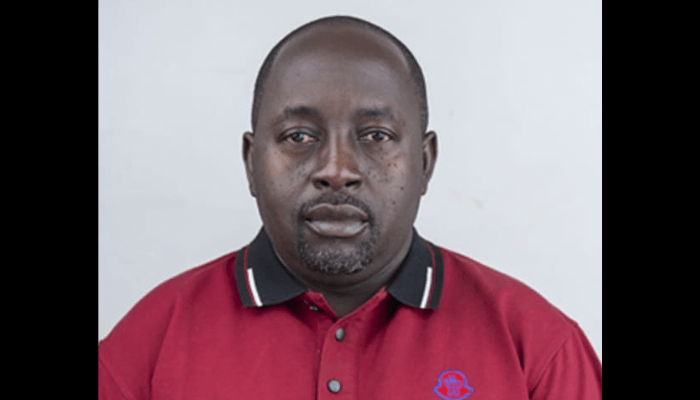
Africa, which bears the world’s highest burden of sickle cell disease, is witnessing renewed momentum in efforts to improve survival outcomes, as the Africa CDC rolls out its Continental Sickle Cell Disease Plan. The initiative is designed to strengthen screening, expand access to treatment, and improve overall care across the continent. Livingstone Dogara is a physician-scientist and Associate Professor of Hematology at Kaduna State University, Nigeria. In this interview with Anthonia Obokoh, Dogara discusses the new continental strategy, key lessons from the Consortium on Newborn Screening in Africa (CONSA), Nigeria’s preparedness for implementation, and the critical role of primary healthcare systems, data infrastructure, and sustainable financing in advancing sickle cell disease management in Africa.
Africa carries the world’s highest sickle cell burden. How transformative is the Africa CDC’s Continental Plan for care and survival outcomes?
This marks a turning point in the fight against one of Africa’s most severe health challenges. It builds on work of the technical working group that was established in April 2025. The technical working groups had clear terms of reference and a plan for development. The idea is that this is a plan that will successfully be rolled out across Africa. This is not a new problem in Africa, but the continental plan gives us real hope that this will be successful in conquering or at least making significant strides in the treatment or management of sickle cell disease in Africa.
What does CONSA’s screening of 175,000 newborns and identified cases reveal about scaling newborn screening across Africa?
Wherever we start a clinic, we begin to see babies outside. We start clinic for the cohorts of newborn babies diagnosed through the CONSA programme, but we see the clinic overrun, and overtaken by other people living with sickle cell disease who did not have anywhere to go; and the clinics are in the primary healthcare system.
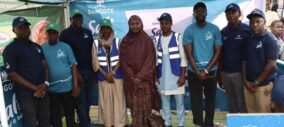
We’ve seen just eight clinics for screening and now we have over 20 clinics for screening and we have five clinics offering care at the community level for babies diagnosed through the CONSA programme. We are seeing what we are doing as a scale of project now. We can make this thing a routine service and we are actually seeing achievement. And we have seen that it is actually a scalable programme.
What are the biggest gaps in treatment access, specialist care, and health infrastructure, especially in rural communities?
Geographic access is a major gap: “Most initial structure of care the way it has been done here in Nigeria and Kaduna State. Most of the clinics are located within the tertiary academic hospital, that is the teaching hospital. And the teaching hospitals are quite far away from the rural communities.
Most of the teaching hospitals have a large registry, which is hospital-based registry. But it is nowhere near to the numbers of people living with sickle cell. The result is catastrophic underutilization: “In 2009 to 2011, pilot study that was done in Kaduna, led by the initial nucleus of what we’re doing in Kaduna. We noticed that our 4000 babies are delivered every year in Kaduna we live in with sickle cell. And 95 to 97% of people living with sickle cell that have never attended one post clinic.”
How can African countries sustainably finance sickle cell programmes while strengthening workforce capacity?
We need to start working with the primary healthcare development board. Right from day one, we work with them, and they allow us to use their facilities, and we have been using their facilities for screening and even starting the clinics now, and it is working.
The primary healthcare system and the beauty of the primary health system, they are naturalised. Over years, the HIV pandemic that came, the workforce got training on how to take samples. They got training on how to do some low-level monitoring. Health workers already have foundational competencies that can be developed further, and so it shows that they have capacity and they will be able to give us some help.
How prepared is Nigeria to align with the continental strategy, and what lessons can others draw?
Nigeria is ready. Why am I saying Nigeria is ready? It is because Nigeria is the country with a high burden of sickle cell, and the doctors, clinicians, researchers in Nigeria, are leading a number of high impact groups and consortium that are working towards in the standard of care.
If you look at the CONSA project, you see two sites in Nigeria, a part of the CONSA project. That shows readiness and capacity to be able to handle challenges. And if you notice at the possible levels, we are already part of the community, the health worker initiative. So, we’ve been doing some training into the community health workers.
We have a government that is ready to support, and we are looking at how to make our labs very sound and ready to be a reference to that for this screening. And importantly, there is a bill at the national level waiting to become a law. Whatever is going to establish centres of excellence, which are going to start with research to develop health system for sickle cell disease.
Also, it means budget is not going to be a problem for sickle cell. Usually, it is the area of budget that has been an issue. But now with the coming up of this bill, which is being supported mainly by members in the National Assembly who have noted the need for supporting people.
Fourth, Nigeria’s work is already being studied and replicated by others. It is the modest input steps that Nigeria is making because of the huge population of over 200 million. We have seen bodies coming in with structures that are working together. So, we are actually working in groups, like the ARISE, has its own consortium.
Africa is such an innovative energy, physical certification, which is working hand in hand with CONSA on the project. We have seen that, and we’ve seen the stroke prevention in Nigeria programme which a colleague of mine is leading. And the fact that we are involved in clinical trials, shows that we are ready. I think most of the new money coming into the market now, you will see Nigeria as part of the site.
How can improved data systems strengthen policy and patient outcomes?
Without registry, we will not have data to work with, we won’t be able to speak, and we cannot engage government for budgetary advocations. At the national level, integration is also happening through data systems.
The CONSA work is giving us a space to organize data for newborn screening. The federal ministry of Health in Nigeria is actually trying to integrate, and see how this pocket of activities go, and have one centralized, unifying platform to engage and discuss.
What key milestones should Africa expect over the next five to ten years under this plan?
Standardization of screening. It is one milestone that you are going to see. There is an ongoing discussion on how to create systems whereby the population studies, religious screening, come into the platforms, the IEA, the HBLC for the population screening.
With the facility base for newborn screening, with the point of their testing which we understand, each of them will come with own challenge or the other. So, you will see one of the milestones is the integration of this case of activity, this newborn screening, coming together to perform one national system. It will come from under one national system for Nigeria, and even for Africa.
Centralized data and registry systems are the second milestone. In terms of data, the CONSA work is giving us space to be able to organize data for newborn screening, but the Federal Ministry of Health in Nigeria is trying to integrate to have one centralized, a unifying platform. You are going to see screening and registry being organized in Nigeria, because without registry, we will not have data to work with.
The next key milestone that you will see in the next five years, is some form of budgetary support. And once the bill for the research centers for sickle cell comes through, this is something that we will see will be taking care of.
Cost-effective, centralized screening systems is the fourth milestone. The first thing is, the screening is going to take shape of what we are seeing working in other countries, the centralized type of screening which is eventually, it is going to be cost-effective for the country. That’s why it is working.
Kaduna’s work is becoming a reference point for others. Other places are beginning to engage Kaduna to see how they can develop their own.
Finally, workforce development is a continuing milestone. We are working towards having a team of health care providers. Other pockets of activities are going in. Under the ARISE project, we have done exchange training which is basically an educational programme. We have a number of healthcare workers that we’ve train on task shifting, like the nurses, to take care of some things.
We are working towards training some level of professionals so that we have multidisciplinary setup. We have people through the Africa project that have been trained in implementation science, and they have been trained in some other disease areas, for instance, cardiology. So, you will see these activities coming in galvanizing into such a way that it becomes organized and the single person has somewhere to go whenever there’s anything.
Dr. Livingstone Dogara is a physician-scientist and Associate Professor of Hematology at Kaduna State University, Nigeria

Join BusinessDay whatsapp Channel, to stay up to date
Open In Whatsapp