

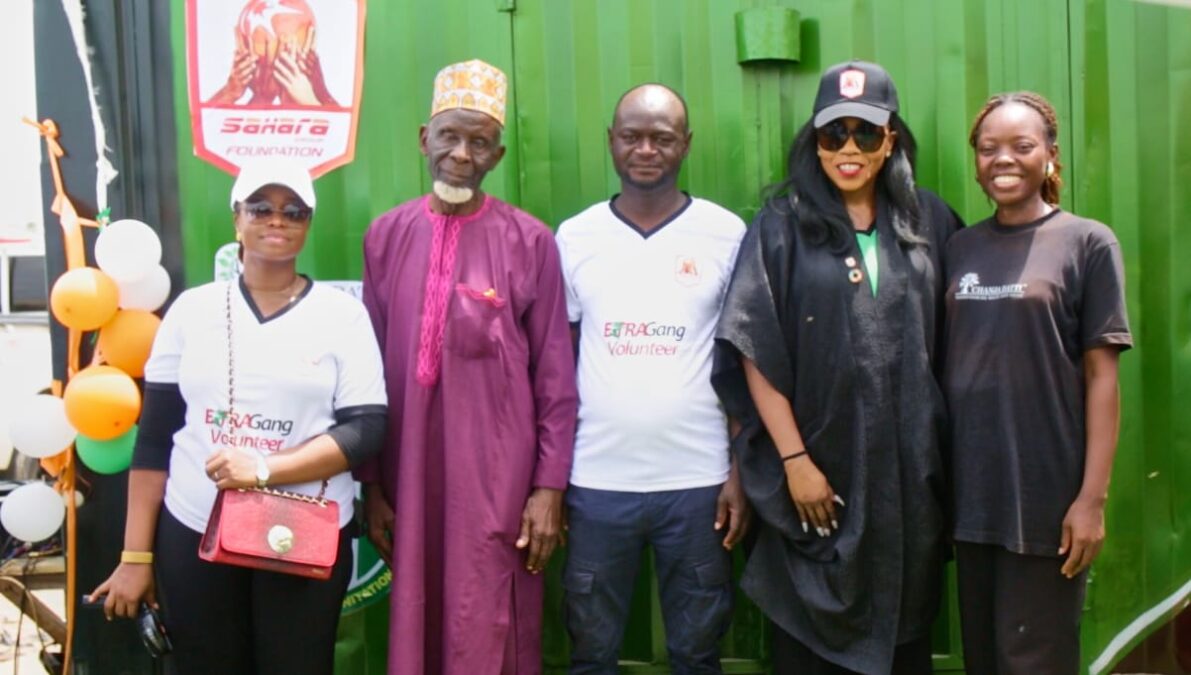
Sahara Group Foundation has commissioned a recycling facility in Masaka, Nasarawa State, pushing its waste management programme deeper into Northern Nigeria as the energy conglomerate’s philanthropic arm accelerates a drive to convert household refuse into economic opportunity across underserved communities.
The Masaka hub, delivered alongside the Nasarawa State Waste Management Authority, is the latest node in the Foundation’s Sahara Go Recycling Initiative, a structured programme that pays residents for sorted recyclables while diverting materials from landfills. Since its launch, the initiative has processed more than 1,000 tonnes of recyclable materials and generated income streams for over 2,000 people across collection, sorting, logistics, and local enterprise chains.
Nigeria produces an estimated 32 million tonnes of solid waste annually, according to government data, yet formal recycling infrastructure remains concentrated in Lagos and a handful of southern cities. The Masaka commissioning signals a deliberate push northward, where institutional waste management capacity is thinner and informal dumping more prevalent.
“Masaka represents an important next step in expanding access to sustainable waste management across Nigeria,” said Chidilim Menakaya, director of Sahara Group Foundation, at a ceremony attended by state officials, local council representatives, community leaders, and residents. “Through Sahara Go Recycling, we are showing how collaboration can unlock cleaner communities, stronger livelihoods, and shared prosperity.”
Nasarawa State waste officials welcomed the move. Ishaku Ibrahim, the state’s Director of Waste Management, said the facility addresses a practical gap while opening a revenue channel for ordinary residents. “Beyond improving environmental outcomes, it creates a pathway for residents to participate in a cleaner future while deriving economic value from recyclable materials,” Ibrahim said at the event.
The hub is framed internally as an expression of what the Foundation calls the Sahara Beyond vision, a long-term strategy that ties environmental stewardship to economic inclusion under the banner of what the group terms EXTRApreneurship — a model that encourages community members to treat sustainability as a business proposition rather than a civic obligation.
That framing carries strategic weight for Sahara Group, which operates across energy, infrastructure, and commodities in more than 40 countries. Foundations attached to large Nigerian conglomerates have increasingly used waste management and clean-energy access programmes to demonstrate social licence in communities near their operations, as regulators and international partners sharpen scrutiny of environmental, social, and governance commitments.
Sahara Go Recycling operates by establishing physical collection hubs where households and small-scale waste pickers bring sorted materials — plastics, metals, paper — in exchange for cash or airtime. The model reduces sorting costs for downstream recyclers while giving residents a predictable income source, a structure advocates say is more durable than one-off clean-up campaigns.
The Foundation says it plans to extend the hub network further across Nigeria, though it has not disclosed a timeline or capital commitment for the expansion.


Join BusinessDay whatsapp Channel, to stay up to date
Open In Whatsapp

