To head off environmental catastrophe, the Rivers State Government and the Mayor of Housing have called for a stop to harmful activities against the environment.
Instead, they called for activities that reduce harm to the environment as well as the return of the garden city status of Port Harcourt, the state capital.
The state government, through the Ministry of Environment, regretted that most citizens and oil companies have acted in ways that harmed the waterways, creeks, sewage ways, gutters, and even the surroundings of homes and markets.
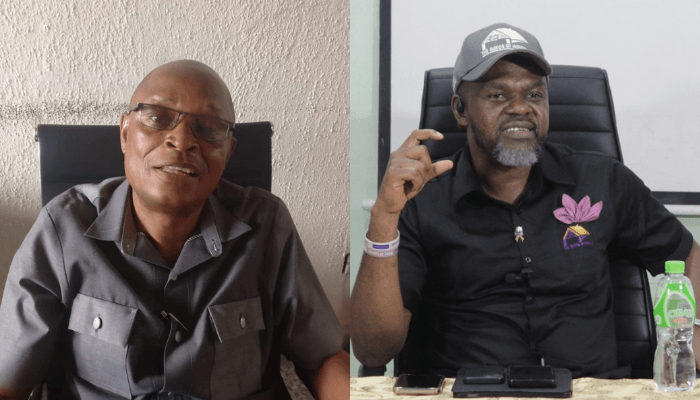
Alwell Chinedum Okereuku, permanent secretary, Rivers State Ministry of Environment, said there is an impending man-made catastrophe in the environment sector.
He said Port Harcourt was historically celebrated across Nigeria for its lush vegetation and cleanliness, a reputation the permanent secretary believes has been eroded by human attitudes and actions.
Today, he lamented, flooding and erosion remain major threats, but the Permanent Secretary insists that many of these challenges were self-inflicted.
“You take all your domestic waste and pour it into gutters and drainage channels, blocking them everywhere,” he explained.
“What we are experiencing today—floods, erosion, and other environmental challenges—is largely a result of human activities. It constitutes one of the greatest challenges facing the environment today.”
He compared the intended state of the environment to the biblical Garden of Eden and urged residents to maintain cleaner surroundings while avoiding construction on natural waterways and drainage channels.
He said oil companies were not left out in whatever has happened to the environment of the state. While human activities account for many local sanitation issues, the oil companies did not do well.
He noted that while the state welcomes oil companies and provides an enabling environment for their operations, some of their activities continue to inflict significant environmental damage.
“Look at the oil pollution. Look at the gas flaring,” he pointed out.
“These things were not adequately considered during the early days of oil exploration, and the consequences continue to plague the environment to this day.”
He saw the 2026 World Environment Day as a wake-up opportunity. He said the Ministry had prepared officially approved activities to mark the occasion.
For Okereuku, however, the day is less about celebration and more about a call to action for the people of Rivers State.
“The people of Rivers State owe a duty to the environment and to themselves to maintain a clean, green environment,” he urged.
“If we all do our part and commit to sanitizing our environment, we will not be facing many of the challenges we have today.”
On growing agitation by the residents of the Garden City over mounting refuses, the Permanent Secretary said the governor was not to blame.
He said the governor usually discharges his monthly statutory obligation to the sanitation agency.
He admitted that Port Harcourt’s environmental challenges (from mountains of uncollected refuse to devastating man-made floods) may have sparked outrage across Rivers State.
According to Okereuku, the fault lies with those mandated to management of refuse in the city. He also blamed oil companies for oil spillages that ravage the creeks and forests, and citizens actively contributing to the destruction of their own environment.
He also admitted some administrative necks corporate negligence, and the everyday human activities driving the crisis.
He noted that the law gave the agency full autonomy to battle refuse in the state capital: “The governor is not the one who will pack the refuse himself. If the government gives an agency a responsibility and the resources to execute it, that agency should not fail and allow the blame to return to the governor. They are self-accounting.”
He noted that while this separation was designed to give the agency operational independence, it should not serve as an excuse for poor performance.
Mayor of Housing: Return the garden in the Garden City
Speaking with newsmen, My-ACE China, who sees the World Environment Day as an important opportunity for cities that care to review their environmental activities and regulations, said it draws global attention to the importance of sustainable living and environmental stewardship.
For him, he said, the future of Rivers State lies in the renaissance of its past. “Rivers State was once proudly known as the Garden City, but somewhere along the way, we forgot about the garden in the Garden City. We stopped tending it. We stopped growing it. We stopped nurturing it. We stopped celebrating it.”
Today, he went on, the city has an opportunity to change that narrative. “It is time to restore the garden to the Garden City. It is time to return greenery to our communities, reintroduce environmental consciousness into our developments, and create a culture that values nature as much as it values progress.
“Many people spend their lives searching for greener pastures elsewhere, but the truth is that there are no greener pastures anywhere in the world. There are only gardens that have been better maintained. The difference is not location. The difference is stewardship.
“If we commit ourselves to planting trees, preserving green spaces, maintaining our environment, and building communities that respect nature, Rivers State can once again become a model of environmental excellence.”
On his exact message to Rivers people, he said: “Let us make our garden green again. Let us restore the Garden City—not just in name, but in reality. That responsibility belongs to all of us.”
Beautiful nonsense:
The Mayor of Housing thus called for a green revolution in Rivers State real estate world. He said as the World Environment Day approached, conversations around sustainable living were gaining renewed attention.
He said, yet, in an era of rapid urbanization, a critical question remained whether the state’s housing developments destroyed the very environment they depend on.
My Ace China, a renowned real estate success strategist, known by many as the best real estate company in Port Harcourt and Nigeria said real estates must not be destroyers of the environment.
The expert touted as the most trusted real estate company in Port Harcourt and Nigeria highlighted the urgent need to restore the delicate balance between housing and nature while unveiling his ambitious vision to return Rivers State to its famed identity as the Garden City.
On the symbiotic relationship between housing and nature, China said housing and the environment are inseparable. There can be no environment without housing, and there can be no housing without the environment.”
He compares the relationship to that of the tongue and the teeth. “Even though the teeth are there, their job is not to bite the tongue.”
According to him, problems arise when development is pursued without environmental consideration. Trees and vegetation play a crucial role in sustaining life by absorbing carbon dioxide and releasing oxygen. When green spaces are removed without replacement, the ecological balance is disrupted.
He said: “Luxury without green leaves is what I call beautiful nonsense, or concrete deserts.”
Referencing the work of David McClelland of Harvard University, who emphasized the influence of environment on human outcomes, he argued that surroundings significantly shape behaviour, health, and quality of life. “We make our environments, and our environments make us. If we stop serving the environment, it will stop serving us and begin harming us.”
On tackling pollution, the housing guru said it is a shared responsibility. He regretted that Rivers State continues to face significant environmental challenges, including blocked drainage systems, oil spills, and the persistent issue of black soot.
When asked whether green housing alone can address these broader concerns, China emphasized that responsibility must be shared between government institutions and citizens.
On the corporate side, he advocated stricter enforcement of environmental regulations.
“When companies operating in the Niger Delta and Rivers State are not properly regulated, you hear of oil spillages and black soot. That is a failure on the government’s side.”
He, however, believes individual actions are equally important. He expressed concern over the increasing trend of clearing mature trees to make way for large developments without replacing them.
The law I will like to make – China:
If given the opportunity to influence policy, he said his focus would be on environmentally conscious housing legislation. “I would make cutting trees or building houses without trees illegal. There should be a minimum number of trees required per square meter of land. For example, five trees for every 500 square meters. You should need a permit before cutting down any tree.”
Alesa Highlands Sustainable Smart Green City: a blueprint for the future:
Rather than merely pointing out problems, the Mayor of Housing says he is rather working to provide practical solutions through his flagship development project, Alessa Highlands Sustainable Smart Green City. “The difference between critics and developers is that critics only criticize what is missing, while developers create what should be there.”
The project is designed to become one of Nigeria’s lowest-density residential communities, where homes are thoughtfully integrated into nature rather than replacing it.
At the heart of the development is a concept he describes as Integrated Horticulture—the strategic use of plants to provide environmental, health, and lifestyle benefits while reducing dependence on artificial alternatives.
Planned features include:
Natural Pest Management: Lavender plants to help repel mosquitoes naturally; Cactus and lemongrass strategically planted to discourage reptiles; Nutritional and Medicinal Landscaping, including mango trees, guava trees, moringa trees, etc.
He said these will provide residents with access to fresh produce while contributing to overall wellness.
On natural fragrance and air quality, China said the upcoming estate would incorporate the ‘Queen of the Night’ flower, known for its distinctive nighttime fragrance, reducing dependence on synthetic air fresheners and enhancing the natural living experience.
Reflecting on changing lifestyles, China noted: “Before now, mango and guava trees were found in almost every home. Today, they are seen as rural products brought into urban areas for consumption.”
On efforts to restore the Garden City vision, he talked about initiatives such as Alesa Highlands, and hopes to reshape the future of Nigerian real estate by proving how luxury and environmental sustainability can coexist.
His vision goes beyond building houses, he said. “It is about creating communities that preserve nature, promote healthier living, and restore the ecological identity of Rivers State.”
As conversations around sustainability continue to grow, his message is clear: “The future of real estate should not be measured only by concrete and infrastructure, but also by the trees, green spaces, and natural systems that make communities truly livable.”
His belief is that if Port Harcourt is to reclaim its reputation as the Garden City, the journey must begin with intentional, environmentally responsible development today.

Join BusinessDay whatsapp Channel, to stay up to date
Open In Whatsapp