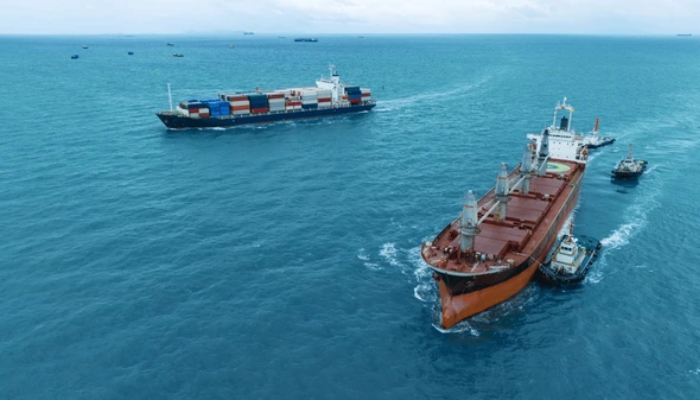
Though the Strait of Hormuz is several miles away from Africa, including Nigeria, the impact of its closure is telling on the cost of construction materials and energy, leading to about 20 percent rise in the cost of these items.
The Strait of Hormuz is a narrow, strategically vital waterway situated in the Middle East. It lies directly between Iran to the north and the Musandam Peninsula of Oman (and the United Arab Emirates) to the south.
Fortren and Company, a Lagos-based, pan-African real estate research and strategy firm, confirms that construction input and energy cost indices across six African markets shows an average increase of 20 percent over the five months to May 2026, driven by supply chain and freight disruptions linked to the escalating Iran-Israel conflict.
The company’s recent report notes, however, that the impact is uneven across markets, with import-dependent economies bearing the most significant exposure. Countries like Nigeria, still absorbing three years of domestic reform shocks, face heightened exposure, with operational real estate assets and active construction projects bearing the most significant impact.
Read also: Niger partners Australian firm to harness economic potentials
Africa’s real estate markets entered 2026 in cautious recovery. Across the continent, the economic volatility of 2023 and 2024, driven by strengthening of the dollar against local currencies, sovereign debt stress, and post-pandemic fiscal tightening, had begun to ease. Growth forecasts from the IMF and World Bank were improving. Institutional investors were revisiting allocation conversations until the escalation of the Iran-Israel conflict interrupted that recovery.
Unlike other shocks that were primarily felt through exchange rates, the war is disrupting supply chains in the built sector resulting in increases in the cost of construction materials and energy that underpin both the delivery and operation of real estate assets across the continent.
“The extent of the impact of the war cannot be fully quantified yet, neither do we know when the war will end. Nonetheless, here are (just a few) of our thoughts on the direct consequences of the war on the market, particularly from a transactions, construction and asset operations standpoint,” Martin Uche, Fortren and Comoany’s CEO, noted.
Uche recalled that, on June 13, 2025, Israel launched a pre-emptive strike on Iran’s nuclear facilities and military infrastructure, triggering sustained retaliatory exchanges and direct US military involvement that escalated through the first half of 2026.
“The strategic consequence relevant to African markets is the effective closure of the Strait of Hormuz — the passage through which approximately 20 percent of global oil trade and a significant share of containerised freight transits.
Although Africa has no direct role in the conflict, the closure of the Strait of Hormuz is feeding directly into African real estate costs. With roughly 70 percent of construction materials in Nigeria and many other African markets imported, the resulting disruption to global commodity supply chains, shipping costs, and refined petroleum prices has had an immediate and material impact on the cost of building and operating real estate across the continent,” Uche stated.
While the impact has not yet reached the severity of the 2023 foreign exchange shock, he noted further that Nigeria’s limited tolerance for supply-side disruption means the effects are already material. Ongoing projects are struggling to reach completion, and conceptual ones are taking longer to mobilise to site.
Although the volatility has introduced cost-overruns to the market, the more consequential threat is the return of unpredictability and weakening investor confidence. Faced with sustained price volatility, contractors across Nigerian and West African markets are abandoning fixed-price contracts in favour of phase-by-phase pricing arrangements. While this structure protects contractor margins, it transfers cost risk squarely to developers, many of whom operate financing structures with insufficient flexibility to absorb it.
“Transaction activity across African markets has slowed, with multilateral institutions revising down growth forecasts for the region in response to the uncertainty,” he said.

Join BusinessDay whatsapp Channel, to stay up to date
Open In Whatsapp