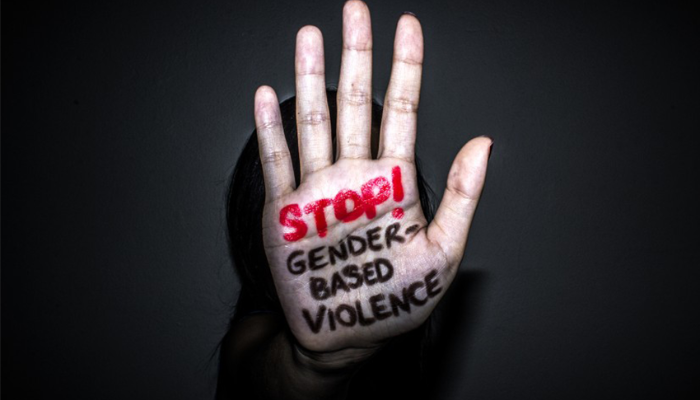
Since the Violence Against Persons (Prohibition) law came into effect in 2000, Akwa Ibom has intensified efforts to tackle the growing cases of Gender-Based Violence (GBV) which had assumed an alarming proportion in recent years.
Every year, it sets aside a month to raise awareness on the dangers of GBV, domestic violence, sexual assaults including rape and defilement as well spousal battery.
To kick-start this year’s GBV awareness month, the state government through the ministry of justice has mobilised several service providers working to end GBV and create a better society.
The providers who are engaged as Non-Governmental Organizations have received various training relating to GBV issues and the reporting processed.
As part of the activities, the ministry of justice also gave a breakdown of cases recorded including convictions in the state.
Emem Ette, Director of the Sexual and Gender-Based Violence Response Department of the Ministry of Justice disclosed that a total of 1,838 reported cases of Gender-Based Violence (GBV) since the enactment of the Violence Against Persons Prohibition (VAPP) Law in June 2020.
Ette explained that out of the number, 102 convictions were secured, as authorities intensify efforts to combat abuse and protect vulnerable persons across the state.
The breakdown also revealed that 161 new cases were reported between January and May 2026 alone, with victims ranging from three to 50 years old, underscoring the continued vulnerability of women and children to various forms of abuse.
According to her, spousal battery emerged as the most frequently reported offence in the first five months of 2026, accounting for 61 cases or 37.9 percent of all reported incidents.
“Threat to life and physical assault followed closely with 46 cases, representing 28.6 percent, while rape accounted for 26 cases or 16.1 percent.
“Other reported offences included abandonment and forceful ejection with 18 cases, while harmful widowhood practices accounted for 10 cases.
“A monthly breakdown of reported incidents showed that January recorded 27 cases, February 23, March 28, while April and May recorded the highest figures with 40 cases each,” she said.
Similarly, the state recorded 69 GBV cases between June and December 2020, shortly after the VAPP Law came into force.
“The figure rose to 141 cases in 2021, representing a 104 percent increase from the previous year.
“In 2022, reported cases surged to 316, marking an increase of 124 percent over 2021 figures.
“The upward trend continued in 2023 with 368 reported cases, before peaking at 465 cases in 2024, the highest annual figure recorded since the law was enacted.
“Although the number dropped to 318 cases in 2025, the 161 cases already documented between January and May 2026 suggest the state could record over 380 cases by the end of the year if the current trend persists,” she disclosed.
Expressing concern over the increase in reported cases, Uko Udom, the Attorney-General and Commissioner for Justice said it should not necessarily be interpreted as a rise in violence but rather as evidence of growing public confidence in the justice system.
According to him, survivors who previously suffered in silence due to fear, stigma, and societal pressure are now more willing to report incidents because they believe justice can be achieved.
“For decades, these crimes hid in silence because of stigma and fear. Today, survivors are speaking out because they believe the system will listen and deliver justice,” he said.
Udom disclosed that with more than 100 convictions secured under the law, it has sent a strong signal that impunity will no longer be tolerated in the state.
“These are not just statistics. Each conviction is a message that impunity will no longer be tolerated in Akwa Ibom State,” he stated.
The Attorney General highlighted several interventions implemented since the passage of the VAPP Law to strengthen survivor support and improve access to justice.
These include the establishment of a specialized Sexual and Gender-Based Violence Response Department within the Ministry of Justice, creation of shelters and skill acquisition centres for survivors, and the establishment of Sexual Assault Referral Centres across strategic locations in the state.
He further disclosed that GBV response units have been created in all 31 local government areas of the state, while community health workers, social welfare officers, and security personnel have been trained as paralegals to assist survivors with documentation, referrals, and legal guidance.
Despite the progress recorded, Udom expressed concern over cultural practices and societal pressures that often compel victims and their families to abandon prosecution in favour of informal settlements.
He condemned situations where perpetrators evade justice through monetary compensation and community-mediated resolutions.
“When a man or woman’s ribs are broken, when a child is defiled, when a wife is battered unconscious, there is no settlement that restores dignity. What these words really mean is that money has changed hands and justice has been buried,” he declared.
The Commissioner also criticized the granting of bail to suspects in severe GBV cases, warning that such decisions often expose survivors and witnesses to intimidation and retaliation.
“When an abuser returns home on bail to the same compound where the survivor lives, the system is sending the wrong signal,” he said.
He therefore called on judges and magistrates to exercise greater caution and discretion when considering bail applications involving serious GBV offences.
The month of June remains significant in the state’s anti-GBV campaign because it marks the anniversary of the enactment of the VAPP Law in June 2020.
The VAP law remains “a critical instrument for protecting survivors and prosecuting offenders and commended the Attorney General for his commitment to strengthening legal and policy frameworks that promote justice for victims, ” according to experts.
Ette also acknowledged the contributions of more than 50 non-governmental organizations partnering with the Ministry of Justice in community sensitization, survivor support, and public awareness campaigns.
This year’s awareness campaign is themed “Implementing the AKS VAPP Law: From Awareness to Action,” reflecting the state’s determination to move beyond sensitization and ensure full enforcement of the law.
While the rising number of reported cases demonstrates increased public trust in the justice system, greater efforts are still required to eliminate harmful cultural practices, strengthen survivor protection, improve prosecution rates, and reduce the prevalence of gender-based violence across Akwa Ibom State.
With 1,838 cases reported, 102 convictions secured, and extensive support structures available across the state’s 31 local government areas, all hands appear to be on deck raising awareness against Gender-Based Violence in Akwa Ibom State.
As the Akwa Ibom State Attorney General and Commissioner for Justice has noted, six years after the law was passed, “today that law has a face, the face of a girl who stayed in school because her abuser was jailed.”

Join BusinessDay whatsapp Channel, to stay up to date
Open In Whatsapp