

The Federal Government has relocated the Operational Headquarters of the National Agency for the Great Green Wall (NAGGW) from Abuja to Kano State, citing the need to position the agency closer to its core area of operation and strengthen efforts to combat desertification, land degradation and climate change across northern Nigeria.
Balarabe Abbas Lawal, Minister of Environment, announced the relocation on Wednesday, describing the decision as a strategic step designed to improve project monitoring, enhance coordination with stakeholders and accelerate environmental restoration programmes in the region most affected by desert encroachment.
The minister said the move aligns with the administration of Bola Ahmed Tinubu and its Renewed Hope Agenda, which seeks to improve governance and service delivery by locating federal institutions closer to the communities they serve.
According to Lawal, the agency will now operate from the Afforestation Programme Coordinating Unit (APCU) complex in Kano, a permanent federal government facility situated within the operational zone of the Great Green Wall Programme.
He explained that the relocation was necessitated by the need to address longstanding operational challenges associated with running the agency from Abuja, which is outside the primary geographical area covered by its interventions.
“The Agency has been operating from a temporary rented office in Abuja despite carrying out most of its activities in northern Nigeria. Relocating to Kano places the headquarters at the heart of the programme area and will significantly improve oversight, monitoring and implementation of projects,” the minister said.
Lawal noted that the agency’s projects are concentrated in the frontline states most vulnerable to desertification and climate-related environmental degradation, making Kano a more practical and strategic location for its operations.
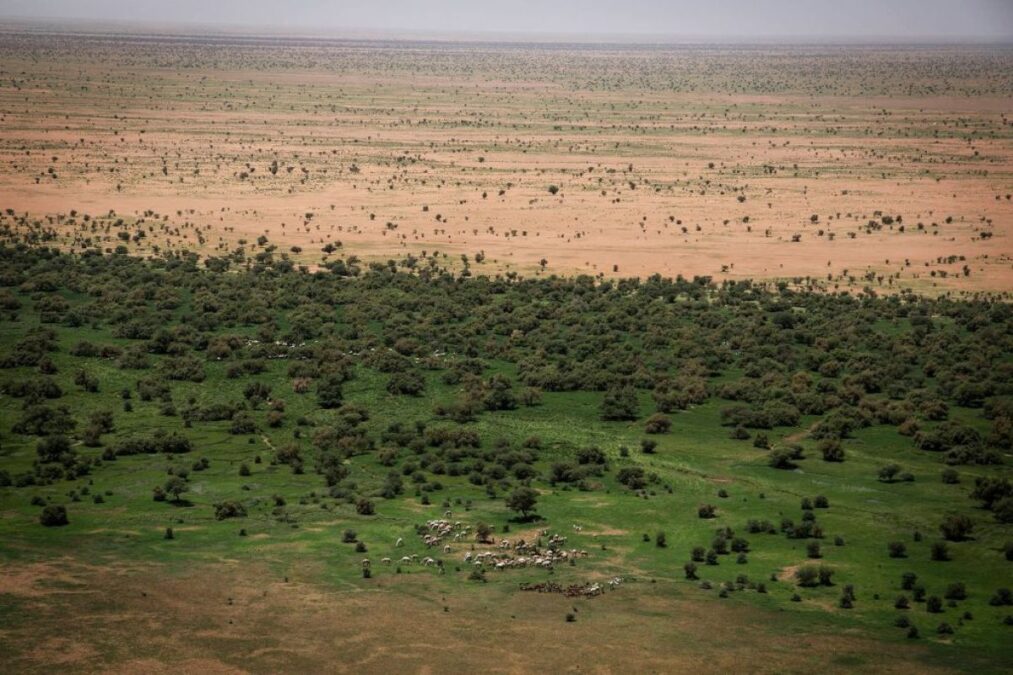
The Great Green Wall Programme is a flagship initiative of the African Union, involving more than 11 African countries. The programme was conceived to restore degraded landscapes, curb desert encroachment, improve biodiversity and strengthen the resilience of communities living within the Sahel-Sahara region.
In Nigeria, the initiative covers 11 frontline states—Adamawa, Bauchi, Borno, Gombe, Jigawa, Kano, Katsina, Kebbi, Sokoto, Yobe and Zamfara.
The agency is mandated to establish a 15-kilometre-wide and 1,500-kilometre-long Green Wall belt across the northern corridor to promote environmental sustainability, improve food security, reduce poverty and mitigate the adverse impacts of climate change.
Environmental experts have long argued that locating agencies within their operational territories enhances efficiency by reducing administrative bottlenecks, lowering response times and facilitating direct engagement with host communities.
For the Great Green Wall Programme, the relocation is expected to bring multiple benefits. These include improved supervision of afforestation projects, faster decision-making, closer collaboration with state governments and traditional institutions, and more effective mobilisation of local communities that are central to the success of environmental restoration efforts.
The move is also expected to strengthen inter-state coordination among participating northern states and improve the agency’s capacity to respond to emerging environmental threats such as drought, deforestation, soil erosion and desert encroachment.
Beyond environmental gains, analysts believe the relocation could stimulate economic activities in Kano and surrounding states through increased government presence, job creation and greater investment in environmental and climate-resilience projects.
Lawal said Kano was selected because it hosts the APCU facility, a federal government asset established in 1988 under the World Bank-supported Arid Zone Afforestation Programme. The complex, which served as a major centre for afforestation activities, has remained largely underutilised since the programme ended in 1996.
By relocating the agency to the facility, the government will not only reduce the cost of operating from rented premises in Abuja but also maximise the use of existing public infrastructure.
The minister stressed that the decision reflects a broader policy direction aimed at decentralising government operations and ensuring that agencies function within the environments where their mandates can be most effectively executed.
He added that the new location would facilitate stronger partnerships with state governments, local authorities, development partners and host communities, all of whom play critical roles in the implementation of the Great Green Wall Programme.
Since the programme commenced in Nigeria in 2013 and was upgraded to a full-fledged agency in 2015, it has recorded significant achievements across the northern region. These include the establishment of more than 100 shelterbelts, construction of approximately 159 solar and wind-powered boreholes, engagement of 600 youths as forest guards, and development of about 240 hectares of community orchards and woodlots aimed at improving livelihoods and environmental sustainability.
Lawal expressed confidence that operating from Kano would enable the agency to consolidate these gains and expand its impact across the frontline states.
He said the relocation would ultimately strengthen Nigeria’s response to climate change, improve environmental resilience, create sustainable economic opportunities and enhance the livelihoods of millions of people living in vulnerable communities across northern Nigeria.
According to him, bringing the headquarters closer to the programme’s beneficiaries marks a significant step toward achieving the long-term objectives of the Great Green Wall initiative and ensuring sustainable development across the region.

Join BusinessDay whatsapp Channel, to stay up to date
Open In Whatsapp


