Ghana is set to host a Hyundai automotive manufacturing plant and a new university under a landmark partnership with South Korea, marking a significant step in the country’s drive to become a leading industrial and manufacturing hub in West Africa.
The agreement, announced following high level talks in Seoul, underscores South Korea’s growing economic engagement with Africa and reflects a broader shift by African governments toward attracting investments that support local production, skills development and technology transfer rather than relying solely on commodity exports.
Read also: Bank of Ghana denies reports of planned sale of $250 million headquarters
According to Shore Africa, the planned Hyundai facility is expected to strengthen Ghana’s industrial base, create jobs and expand opportunities for local participation in automotive value chains. The accompanying university project is designed to support workforce development by equipping young Ghanaians with skills needed for modern industries.
The investment comes at a time when competition for foreign direct investment is intensifying across Africa, particularly in sectors linked to advanced manufacturing, energy and the global transition to cleaner technologies. For Ghana, the project aligns with efforts to tackle unemployment, boost exports and attract long term industrial capital.
Read also: Ghanaian government to fund 1,000 World Cup tickets for diaspora fans
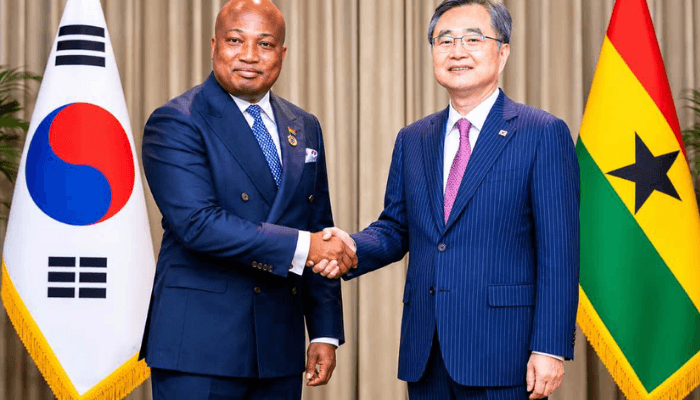
The deal was reached during the 2026 Korea Africa Foreign Ministers’ Meeting in Seoul, where Samuel Okudzeto Ablakwa, Ghana’s Foreign Affairs Minister, co-chaired discussions with Cho Hyun, South Korea’s Foreign Minister.
Announcing the outcome of the talks, Ablakwa said the partnership would deepen economic cooperation between the two countries and support Ghana’s industrial development goals.
“South Korea has agreed to establish a Hyundai car manufacturing plant in Ghana and support the creation of a university,” he said, describing the agreements as part of efforts to strengthen bilateral ties and expand opportunities for economic growth.
Beyond automobile manufacturing and education, both countries agreed to broaden cooperation in artificial intelligence, energy and critical minerals, sectors that have become increasingly important in the global race for technological leadership and clean energy resources.
Read also: Ghana halts year-long easing cycle as inflation picks up
Officials from both sides also highlighted the importance of value addition, technology transfer and skills development, areas where South Korea’s experience in transforming itself into one of the world’s leading manufacturing economies is seen as particularly relevant for Ghana.
The discussions further explored ways to improve mobility between the two countries. Ghana and South Korea are working toward a broader visa waiver arrangement that could eventually extend beyond diplomatic passport holders to include additional categories of travellers, making it easier for business people, students and investors to move between both nations.
The latest agreements come as Ghana and South Korea prepare to mark 50 years of diplomatic relations in 2027, a milestone both governments say presents an opportunity to deepen economic cooperation and build a partnership focused on industrial growth, innovation and shared prosperity.
For Ghana, the Hyundai project represents more than a new factory. It is a test of the country’s ambition to position itself as a manufacturing destination capable of attracting global investors, creating skilled jobs and moving further up the industrial value chain.

Join BusinessDay whatsapp Channel, to stay up to date
Open In Whatsapp