

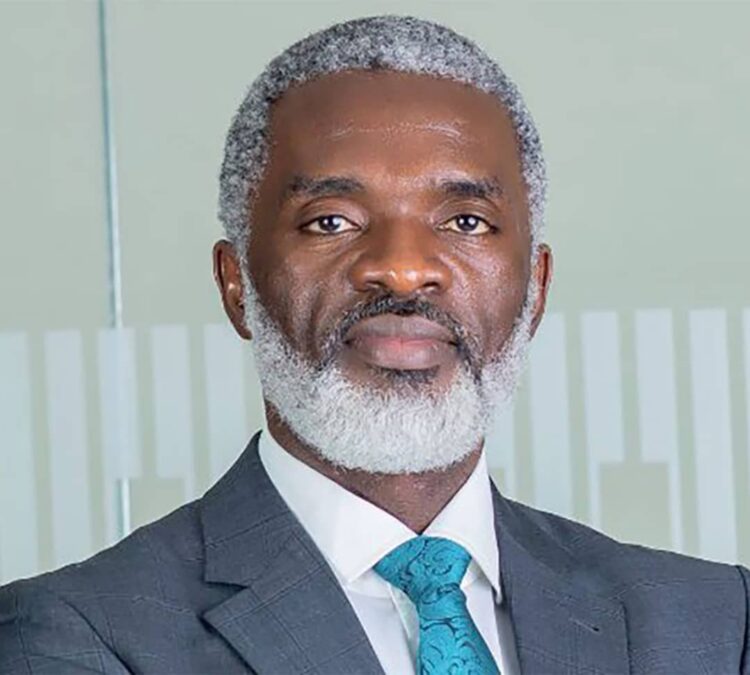
When Sam Abu assumed office as Country Senior Partner for PwC Nigeria and Regional Senior Partner for the firm’s West Market Area on July 1, 2023, he took on responsibility for leading one of Nigeria’s leading professional services firms during a period of significant economic and business transformation. His appointment came at a time when organizations across Nigeria and West Africa were navigating a rapidly evolving operating environment shaped by technological change, regulatory developments and shifting market dynamics.
Abu assumed leadership of PwC Nigeria at a pivotal moment for the firm and the wider business environment. The role demanded far more than technical expertise. It required deep institutional knowledge, the confidence of clients and stakeholders, a broad regional perspective, and the ability to provide steady leadership through economic uncertainty
Sam Abu brought all four.
With more than two decades of experience across PwC in Nigeria and the United Kingdom, Abu represents the kind of professional who has grown through the discipline of audit, advisory, governance and client service. His career has been built not on noise, but on credibility — the quiet authority of someone who understands how businesses work, how institutions are strengthened, and how trust is built over time.
A Leadership Moment Shaped by Change
Abu’s appointment came at a consequential moment for Nigeria and West Africa. Across the region, companies were dealing with inflationary pressure, currency volatility, energy constraints, tax reforms, regulatory shifts, changing technology, talent disruption and the growing demand for environmental, social and governance accountability.
For a professional services firm such as PwC, these conditions expanded the meaning of client service. Businesses no longer needed only auditors, tax advisers or consultants. They needed strategic partners capable of helping them interpret uncertainty, build resilience, strengthen governance and compete in a more complex operating environment.
That is the context in which Abu’s leadership matters.
As Country Senior Partner, he leads PwC Nigeria’s positioning in Africa’s largest economy. As Regional Senior Partner for the West Market Area, he carries a wider mandate: to help shape the firm’s work across a region that remains critical to Africa’s growth story. It is a dual role that requires local sensitivity and regional ambition, technical depth and commercial imagination
Built from the Core of the Profession
Before becoming the firm’s top leader in Nigeria and the West Market Area, Abu held several senior leadership positions within PwC. He served as West Market Area Assurance Leader and Financial Services Leader for Nigeria, roles that placed him at the centre of corporate reporting, financial-sector transformation, regulatory expectations and institutional risk.
That background is significant.
Assurance is the discipline from which trust is most visibly produced in the corporate world. It is where numbers are tested, systems are examined, controls are challenged and public confidence is protected. To lead from that foundation is to understand that credibility is not an accessory to business; it is the infrastructure on which markets depend.
In Nigeria, where investors constantly assess policy risk, governance quality and institutional reliability, that kind of professional formation is especially valuable. Abu’s career has placed him close to the boardroom questions that matter most: How do companies grow without losing control? How do banks and financial institutions manage risk? How do corporations respond to regulation without becoming paralysed by it? How do businesses build systems strong enough to survive disruption?
These are not abstract questions. They are the daily realities of operating in a market where opportunity is large, but execution is often difficult.
The West Africa Mandate
Abu’s regional role gives his leadership a broader strategic frame. West Africa is not a single market, but a collection of economies with shared possibilities and uneven institutions. It is young, urbanising, entrepreneurial and increasingly digital. It is also exposed to fiscal pressures, currency risks, infrastructure gaps and political transitions.
For PwC, the West Market Area is therefore more than a geography. It is a platform for helping clients navigate one of Africa’s most dynamic but demanding business environments.
Abu’s task is to ensure that PwC remains relevant to that reality: advising multinationals, local champions, family businesses, public institutions, development organisations and emerging companies as they confront the next phase of growth. In practical terms, this means strengthening the firm’s capabilities across assurance, tax, consulting, deals, risk services, technology, sustainability and regulatory advisory.
But it also means something less mechanical: helping clients see around corners.
Professional services firms are often judged by technical delivery, but their deeper value lies in judgment. In markets such as Nigeria and West Africa, judgment is everything. It is the ability to read policy signals, understand institutional behaviour, anticipate regulatory direction, interpret macroeconomic shifts and help decision-makers act before disruption becomes crisis.
Continuity Without Complacency
Leadership at a firm such as PwC requires balancing long-standing strengths with the demands of a changing marketplace. As client expectations evolve and businesses confront new opportunities and risks, the focus remains on strengthening capabilities, investing in talent and ensuring the firm continues to deliver value in a dynamic environment
His leadership approach reflects a focus on institutional strengthening, collaboration and long-term growth. This includes continued investment in leadership development, capability building and the people who will help shape the future of the firm and its clients.
Trust as a Business Strategy
The word “trust” can sound abstract until it is missing. In markets, trust lowers transaction costs. In companies, it strengthens governance. In public institutions, it improves accountability. In professional services, it is the product.
Abu’s leadership is therefore best understood through the discipline of trust-building. PwC’s work in audit, tax, advisory and consulting depends on the belief that its advice is rigorous, independent and useful. That belief is earned over years, but it can be damaged quickly if quality, ethics or judgment fail.
This is why the leadership of a firm like PwC Nigeria matters beyond the firm itself. Its work touches financial institutions, consumer companies, energy businesses, technology firms, public-sector bodies, development organisations and investors. Through assurance and advisory services, it contributes to the wider architecture of confidence in the economy.
For Nigeria, this is not a small matter. As the country pursues reforms, seeks investment, expands its tax base, digitises public systems and attempts to restore macroeconomic stability, it will need stronger institutions and more credible corporate behaviour. Professional services firms cannot solve those challenges alone, but they can help raise the quality of decision-making.
That is where Abu’s leadership has national relevance.
A Leader for a More Demanding Business Age
The era in which firms could rely only on reputation is fading. Clients now want speed, insight, technology-enabled solutions and measurable outcomes. They want advisers who understand artificial intelligence, cybersecurity, sustainability, regulatory complexity, tax transparency, capital allocation and organisational transformation.
PwC Nigeria, under Abu, must therefore operate in a business environment where the questions are becoming more complex. How should Nigerian companies adopt AI without weakening controls? How should banks respond to new capital requirements and digital-payment risks? How should energy companies balance hydrocarbons, gas monetisation and transition pressures? How should family businesses institutionalise governance? How should public institutions improve delivery and accountability?
These are the kinds of questions that define the future of professional services in Nigeria.
Abu’s advantage is that he comes from the centre of the profession but is leading in a period that requires expansion beyond traditional boundaries. The modern professional services leader must be part accountant, part strategist, part institutional builder and part interpreter of change.
The Quiet Weight of Stewardship
There is a tendency to associate leadership with visibility alone. Yet enduring leadership is often measured by the strength of institutions, the quality of decisions and the impact created over time. Sam Abu’s leadership reflects a commitment to building trust, developing people and helping organisations navigate complexity with confidence
His story is not merely that he became Country Senior Partner of PwC Nigeria. It is that he reached that position through the credibility of long practice, the discipline of technical work and the trust of a global firm operating in one of Africa’s most important markets.
Sam Abu now leads PwC Nigeria and its West Market Area at a moment when businesses are being forced to become more resilient, more transparent and more future-ready. His task is to ensure that PwC remains not only a respected professional services firm, but a critical partner to the companies and institutions trying to navigate the next chapter of Nigeria and West Africa’s growth.
That is the measure of the role. And it is the scale of the opportunity before him.

Join BusinessDay whatsapp Channel, to stay up to date
Open In Whatsapp


