There is something profoundly philosophical about humour. Humour is never merely laughter; it is social diagnosis wrapped in comic clothing. It is society’s sly way of telling uncomfortable truths without immediately drawing blood. Beneath every memorable joke lies a wounded social truth struggling for expression. The greatest societies have always understood this. From Aristophanes in ancient Greece to African trickster folktales, satire has historically functioned as society’s hidden courtroom, a place where power is interrogated through laughter and arrogance is punished through irony. Irony, especially, possesses a frightening moral symmetry.
It is fate wearing a mischievous smile. It is the dramatic moment when systems designed for the humiliation of others suddenly recoil upon their architects. The hunter falls into his own trap. The architect becomes trapped inside his own building. The machinery of manipulation turns inward and begins consuming its creators. It is when the language once deployed against the people returns, transformed, to interrogate its creator. Irony punishes arrogance without using a whip. It humiliates power using memory. That is why the recent humorous reaction to the frustration of former Minister of Power, Bayo Adelabu, resonates far beyond ordinary political banter. What appeared initially as social media comedy has evolved into one of the sharpest metaphors for Nigeria’s contemporary democratic crisis.
Adelabu had reportedly questioned how a candidate in the APC primaries could allegedly poll over 578,143 votes when party membership figures in Oyo State supposedly fell below that threshold. It sounded like a legitimate concern. Yet, the public response was devastatingly ironic:
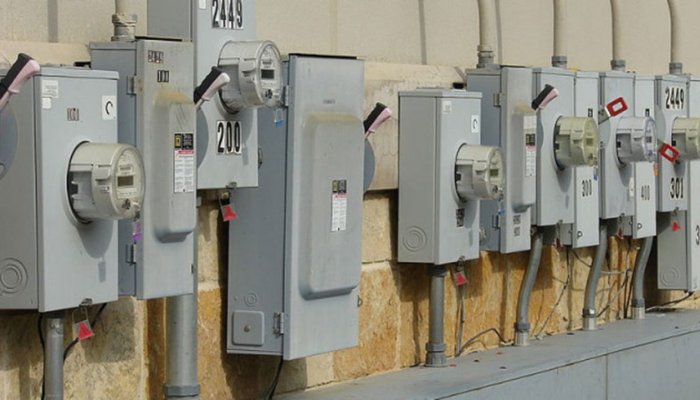
“Oga, it is called ESTIMATED COUNTING – just like Nigerians were subjected to ESTIMATED BILLING for electricity they never consumed.” And instantly, a joke became national political philosophy.
The brilliance of the humour lies not merely in its wit but in its sociological accuracy. Nigerians immediately recognised the analogy because estimated billing has long become one of the most painful symbols of institutional arbitrariness in the country. For years, citizens complained of outrageous electricity bills despite prolonged blackouts, epileptic supply, and dysfunctional infrastructure. Consumers paid not for measurable service delivery but for speculative calculation. Darkness itself became expensive. Now, many Nigerians believe politics operates according to similar logic. Votes, like electricity units, appear capable of mystical multiplication, as the recently concluded national primaries of the ruling Party, APC showed. At polling booths, party officials reportedly counted voters standing in queues with a curious numerical rhythm that resembled less the logic of arithmetic than the choreography of incantation. Viral videos captured officials counting thus: 1, 2, 3… then suddenly leaping into abstraction—50, 100, 200, 400, 600, 1000, 1200. In many cases, the visible queues themselves appeared to contain no more than a few hundred persons, yet the officially generated outcomes ascended effortlessly into the thousands.
The ‘estimated billing’ metaphor becomes even more powerful when situated within the unfolding controversy surrounding the Electoral Act 2026. Here, irony graduates from simple humour into full tragic theatre. According to news report by Taofeek Oyedokun (BusinessDay 24 May 2026), many lawmakers who celebrated the Electoral Act 2026 as a revolutionary democratic reform have now become casualties of the same law they helped create. What was intended as an instrument for sanitising party primaries has reportedly transformed into a political guillotine consuming its architects. The irony is almost Shakespearean. When members of the National Assembly passed the Electoral Act 2026, it was hailed by many party faithful as a courageous attempt to deepen internal party democracy, weaken godfatherism, and sanitise Nigeria’s chaotic nomination process. The abolition of indirect primaries under Section 84(2) was presented as democratic purification. Direct primaries and consensus arrangements were expected to empower ordinary party members and dismantle elite manipulation.
But politics, like fate, enjoys mockery. The same political elites who designed the law soon discovered that institutions possess no permanent loyalty. Once unleashed, mechanisms of control acquire independent momentum. They begin operating beyond the intentions of their creators. Now the casualty list reads like a catalogue of political irony. Nicholas Mutu, one of the longest-serving lawmakers in Nigeria’s House of Representatives, reportedly lost his ticket after decades in parliament. Julius Ihonvbere, House Majority Leader and powerful parliamentary figure, allegedly failed to secure re-nomination. Ned Nwoko lost out in Delta North. Danjuma Goje was defeated. Gbenga Daniel was displaced. Ipalibo Banigo reportedly wept after defeat. The machine spared almost nobody. What makes the situation fascinating is that many of these politicians once enthusiastically supported the same legal framework now politically suffocating them.
History has a cruel sense of humour. The anti-defection provisions further intensified the irony. Under Section 77(2), political parties were required to submit detailed digital membership registers ahead of primaries. Previously, aggrieved aspirants simply defected to rival parties after losing tickets. The new law effectively blocked that escape route. Suddenly, the architects of political restriction found themselves imprisoned inside their own institutional cage. The law became a trap. The trap consumed the trap-makers. This is precisely where the metaphor of “Estimated Billing Politics” acquires deeper analytical significance. Just as estimated billing represented the institutionalization of arbitrary calculation within the electricity sector, the emerging electoral controversies suggest the institutionalization of arbitrary legitimacy within politics itself.
In electricity: Consumption becomes estimated.
In politics: Popularity becomes estimated.
In governance: Performance becomes estimated.
In anti-corruption: Accountability becomes estimated.
Even democracy itself increasingly appears vulnerable to estimation.
This is not merely political comedy. It is a profound crisis of institutional credibility. The former INEC commissioner, Mike Igini, reportedly warned that aspects of the Electoral Act 2026 represented “a tragedy” and “a regression.” His intervention is significant because it exposes the dangerous gap between democratic ideals and political implementation. Laws, by themselves, do not automatically produce justice. Institutions merely reflect the moral culture operating them. A beautifully drafted electoral law can still become an instrument of exclusion when captured by raw political power. That appears to be the unfolding contradiction.
Direct primaries, theoretically democratic, reportedly generated logistical chaos, intimidation, and manipulation. Consensus arrangements, intended as peaceful alternatives, allegedly became mechanisms for imposing preferred aspirants. Governors and party leaders reportedly deployed “consensus” not as reconciliation but as political ‘coronation’ conquest. Thus, democratic vocabulary remained intact while democratic substance weakened. This is classic Nigerian political semiotics: language performing legitimacy while reality performs domination.
One is reminded of the French philosopher Jean Baudrillard’s theory of hyper-reality, a condition where representations become more real than reality itself. Nigerians are repeatedly invited to inhabit official simulations disconnected from lived experience. Power supply improves statistically while generators roar endlessly. Inflation is “managed” while hunger expands visibly. Party democracy is “deepened” while candidates are mysteriously imposed. Now electoral outcomes themselves appear susceptible to metaphysical arithmetic.
This is why the humour surrounding Adelabu’s complaint resonated so powerfully across the country. Nigerians recognised the symbolic continuity between estimated electricity billing and estimated political legitimacy. Both emerge from systems where transparency weakens and arbitrary calculation flourishes. The phrase “Band A to Band C magic” captures this brilliantly. Under electricity distribution classifications, citizens were grouped into service bands theoretically linked to supply duration. Yet, many Nigerians complained that promised service levels existed mainly in regulatory documents rather than practical reality. Similarly, contemporary politics increasingly resembles a system of “Count A to Count C” democracy. Band A promises twenty hours electricity. Count ‘A’ promises overwhelming electoral victory, wherein weird arithmetical magical counting pole-vaults from 50 through 100 to over 1000. Both sometimes appear more convincing on paper than in ordinary life. This reveals a deeper national pathology: the banditisation of numbers.
Nigeria’s crisis is no longer merely economic or political; it is epistemological. Public trust in official figures has dangerously deteriorated. Population statistics, subsidy calculations, poverty figures, election numbers, budgetary claims, and institutional reports are increasingly greeted with suspicion. Citizens no longer merely question governance outcomes.
They question the arithmetic producing them. That collapse of numerical trust is devastating for democracy because democracy fundamentally depends on belief in measurable fairness. Once citizens conclude that everything is “estimated,” cynicism replaces citizenship. And yet, paradoxically, humour becomes society’s survival mechanism.
In deeply troubled societies, comedy evolves into resistance. Satire becomes the last refuge of truth. When formal accountability structures weaken, humour becomes the people’s unofficial parliament. The comedian, the satirist, the meme creator, and the sarcastic commentator begin performing functions abandoned by institutions. That is why the “Estimated Billing Politics” metaphor carries such explosive analytical power. It compresses decades of public frustration into one unforgettable symbolic reversal.
But beyond laughter lies warning. No society can permanently normalize institutional opacity without consequences. Arbitrary systems eventually become uncontrollable. The same mechanisms used against ordinary citizens today may tomorrow consume powerful elites. That is the great lesson of the Electoral Act 2026 saga. Many lawmakers believed they were designing instruments to regulate others. Instead, they constructed a machine indifferent to personal ambition. Once operational, the system acquired its own momentum. The victims now include its designers. This pattern is ancient and universal. Authoritarian laws eventually ensnare their sponsors. Propaganda machines eventually target their creators. Corrupt institutions eventually betray their beneficiaries. No one permanently controls systems built without moral safeguards.
Nigeria’s tragedy is that institutions are too often designed around temporary political convenience rather than enduring democratic principles. Politicians frequently support restrictive mechanisms when they appear advantageous, forgetting that political fortune is notoriously unstable.
Today’s beneficiary becomes tomorrow’s casualty. That is why Adelabu’s frustration symbolizes something larger than an intra-party dispute in Oyo State. It reflects the boomerang effect of institutional injustice. The same culture of opacity tolerated in one sector inevitably spreads into others:
Estimated billing in electricity.
Estimated consensus in politics.
Estimated legitimacy in governance.
The contagion becomes national.
Ultimately, the greatest danger is psychological normalisation. Citizens begin adjusting expectations downward. Absurdities become routine. Institutional dishonesty becomes culturally tolerated. Democracy transforms into performance theatre while governance becomes statistical fiction. But nations cannot sustainably survive on fictional arithmetic.
Nigeria urgently requires a return to measurable credibility – in electricity distribution, electoral administration, economic management, and democratic procedures. Citizens deserve systems governed by transparency rather than magical calculations. Otherwise, humour will continue performing the work abandoned by institutions. And perhaps that is the final irony. The Nigerian people may no longer trust official figures completely, but they instantly recognize truthful satire when they hear it. That is why one humorous response about estimated billing succeeded where countless official speeches fail. It captured the national mood perfectly. For in today’s Nigeria, the greatest fear is no longer darkness itself. It is the growing suspicion that even democracy may now be billed – and counted – through estimation.
To conclude, the “Estimated Billing Politics” metaphor should therefore serve as a national mirror. It reflects a country struggling with credibility deficits across multiple sectors. It reveals the interconnectedness of institutional dysfunction. And it demonstrates how public memory weaponises irony against power. For ordinary Nigerians, the joke is cathartic. It offers temporary emotional revenge against years of frustration. The people who once defended estimated billing now taste estimated counting. Cosmic balance appears briefly restored.
Nonetheless, beyond the catharsis lies a deeper democratic imperative. Nigeria must move from estimation to verification, from opacity to transparency, from magical numbers to accountable arithmetic, and from performative governance to measurable delivery. Otherwise, every future election risks resembling another electricity bill: estimated, outrageous, unbelievable, and impossible to verify. In the end, perhaps the greatest lesson from this episode is philosophical. Power is temporary. Systems endure. And irony never forgets. The same wheel of fate that elevates today’s victor may tomorrow convert him into a bewildered complainant asking impossible questions about impossible numbers. At that point, society may simply respond: “Oga, relax; it is estimated democracy.”
.Agbedo, a professor of Linguistics, University of Nigeria Nsukka, Fellow of Netherlands Institute for Advanced Study, is a public affairs analyst.

Join BusinessDay whatsapp Channel, to stay up to date
Open In Whatsapp