Nigeria’s worsening border crisis is forcing fresh questions about how Africa’s largest economy can stop the flow of illegal weapons, armed groups, and traffickers moving through hundreds of unmanned crossing routes scattered across its frontiers with Niger, Benin, Chad, and Cameroon.
A 2026 report presented to Nigeria’s House of Representatives revealed a catastrophic surveillance gap: out of nearly 2,000 international entry routes across the country’s northern frontiers, fewer than 90 are actively manned by security personnel. This leaves over 1,000 illegal corridors entirely unmonitored.
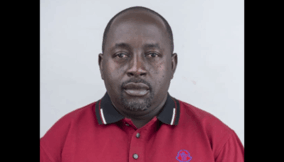
That conversation has gained momentum following the selection of Steven Ndukwu, a Nigerian filmmaker and content creator with over 100 million online views, for a U.S. border operations tour organised by the U.S. Department of State through its Bureau of Global Public Affairs Foreign Press Center programme.
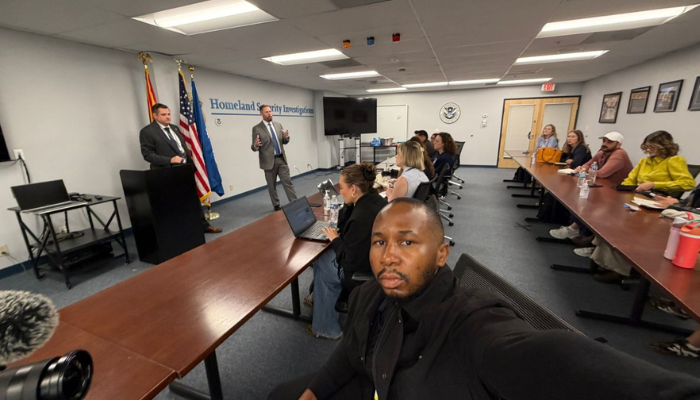
The May 17–23 reporting tour, titled “Securing Our Border and Restoring Operational Control,” gives selected international media personnels behind-the-scenes access to operations along the U.S. southern border in Tucson, Arizona, and San Diego, California — including how surveillance systems, intelligence coordination, and multiple security agencies work together to monitor movement and respond to threats.
Ndukwu, known for his immersive travel documentaries told from an African storytelling perspective, recently completed a 30-day adventure that became one of his most talked-about projects. His video on the realities of life in America — showing that the country is not always the paradise many Africans imagine — has amassed nearly one million views and over 5,000 comments, resonating deeply with African audiences who saw their own assumptions and experiences reflected in his storytelling.
An estimated 70% of illegal small arms circulating across West Africa are believed to end up in Nigeria, helping fuel terrorism, kidnapping, banditry, and separatist violence across different parts of the country.
Ndukwu, in a statement, said one of the biggest lessons he hopes to observe is how different American agencies coordinate operations using technology and shared intelligence systems rather than relying only on physical barriers.
“Nigeria has border problems that are not so different from what the U.S. deals with,” he said. “What I want to bring back is a simple understanding of how different agencies work together and how technology is used to monitor and control movement.”
He added that the experience could help Nigerians ask harder questions about why similar systems are not being implemented more aggressively along borders with neighbouring countries.
Unlike the centralised structure of the Department of Homeland Security, Nigeria’s border architecture is often criticised for institutional rivalry, poor intelligence-sharing, and slow response coordination.
Beyond security, Ndukwu said the invitation also reflects growing recognition of African filmmakers and content creators within global policy and security conversations.
“It tells me that the U.S. sees Nigerian creatives as people worth investing in,” he said. “When a government flies a filmmaker across the world to show them how they operate, that is not a small thing.”
According to him, such exchanges improve bilateral understanding between Washington and Abuja while also giving African storytellers opportunities to report international security stories from firsthand experience rather than through Western media interpretations.
“This is a chance to be in the room, see things firsthand, and bring that back to African audiences directly,” he said. “Every time an African filmmaker gets that kind of access, it opens the door wider for the next one.”
Ndukwu also said the tour could reshape how he tells stories about migration, border governance, and transnational crime in the future.
“There is a big difference between reading about something and actually being there,” he said. “After this tour, when I cover border security or migration, I will be telling those stories from experience, not just research.”
While experts caution that America’s border model may not fully fit African realities, they say the lessons around surveillance technology, intelligence-led operations, and inter-agency coordination could still offer Nigeria practical ideas for securing borders that remain critical to national stability and regional security.

Join BusinessDay whatsapp Channel, to stay up to date
Open In Whatsapp