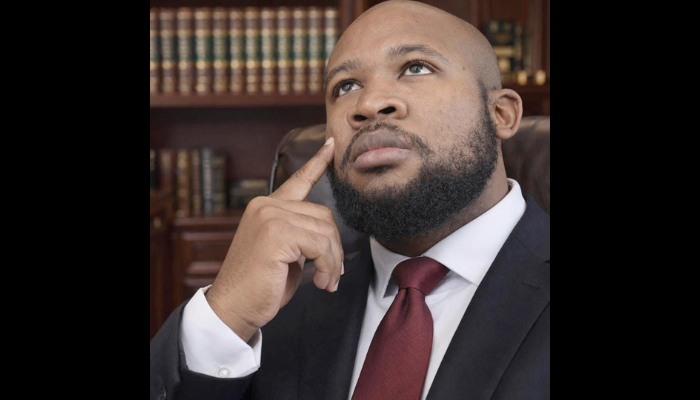
Charles Awuzie is a Nigerian South African-based thought leader, author, businessman, techpreneur, and cybersecurity expert. He is the founder and CEO of Gemsbok Group, the creator of GemsbokGPT, the founder of the Big Brain Naija reality television show, and the convener of the Charles Awuzie Mentorship Programme (CAMP) Conference. He has now turned his interest to the Nigerian security sector and the potential it promises, with the convening of the first Nigerian Private Security Conference on June 13 in Abuja. In this interview with REMI FEYISIPO, he spoke about the security challenges facing the country, investment opportunities it offers among other issues. Excerpts:
Security, personal or national, is big business. What do you think is the monetary value or estimate of Nigeria’s private security market. What category of people does this market hope to serve and why?
Nigeria’s private security market is already worth billions of dollars and will continue growing rapidly because insecurity increases demand for protection and surveillance.
The market serves businesses, estates, schools, hospitals, governments, banks, oil and gas facilities, telecom companies, religious centres, and ordinary citizens. As urbanisation and technology adoption increase, the demand for modern security services will continue to expand.
What services does a professional private security business offer. What innovation, technology, and people drive this business?
Professional private security today goes far beyond guards standing at gates. It includes surveillance systems, command centres, cybersecurity support, intelligence analysis, tracking systems, access control, emergency response, executive protection, and risk management. I must give credit to the official Association of Licensed Private Security Practitioners of Nigeria for their role in advancing the private security sector in Nigeria.
Technology now plays a central role. AI surveillance, drones, biometrics, data analytics, cybersecurity systems, and predictive intelligence are becoming critical tools. The industry is driven by trained professionals, former military and police personnel, technology experts, analysts, engineers, and operators.
Nigerians should be interested because security affects everyone. A stronger private security industry means more jobs, safer businesses, stronger communities, and improved investor confidence.
There is this belief that genuine peace and security are in the mind, and that the use of force and scheming business initiatives to achieve security would only lead to more problems and insecurity. Do you believe this?
Peace begins in the mind, but security systems are still necessary because not everybody chooses peace. We must combine security enforcement with moral rebuilding, education, national unity, justice, and economic opportunity. Nigeria must rebuild trust among communities and reduce the desperation that fuels crime and violence.
What advice do you have for Nigerians on how to protect themselves, families, communities, and the country at large from the agents of insecurity?
Nigerians must become more security-conscious and community-oriented. We should report suspicious activities, support lawful security efforts, avoid spreading misinformation, and invest in safety awareness. We also need stronger community cooperation because insecurity thrives where communities are divided.
Most importantly, we must not lose hope in Nigeria. I believe this country still has the capacity to rise, reform, and build a safer future for generations to come.
Which kind of leadership and policy do you think can sustainably drive the private security market in Nigeria?
We need visionary leadership that understands that modern security is collaborative, technology-driven, and intelligence-focused. Policy must encourage regulation, professionalism, accountability, local manufacturing, technology adoption, and proper oversight. Beyond the conference, I hope to continue contributing through policy advocacy, technology development, cybersecurity innovation, training, and public-private partnerships.
If you were the president of Nigeria, how would you ensure the sustainable security of the lives and properties of Nigerians. By the way, have you thought of contesting for any major political office in Nigeria or South Africa?
If I were president, I would prioritise intelligence systems, technology integration, economic empowerment, border control, police reform, and community security structures. I would also aggressively invest in education, jobs, and innovation because insecurity is not only a military problem. It is also economic and social.
As for politics, my focus right now is impact through technology, business, mentorship, and national development conversations. I am currently politically neutral. I want to inspire unity without aligning with any political party for now.
There seems to be a sudden interest on your part in security matters and investments, outside your usual business and technology niches. Why is that. Did you, in recent times, experience any security challenges while in Nigeria, or know people who are victims of insecurity, that led to this interest?
Security has always been connected to technology, business, and national development. Over the years, through my work in cybersecurity, artificial intelligence, blockchain investigations, and technology infrastructure across Africa, I began to realise that physical insecurity and digital insecurity are now deeply connected. You cannot build sustainable businesses or attract serious investments in an environment where people do not feel safe.
Personally, I have interacted with victims of kidnapping, terrorism, armed robbery, and fraud across different parts of Nigeria. Some are businesspeople, some are students, some are ordinary families trying to survive. At some point, you stop seeing insecurity as just newspaper headlines. It becomes personal because it affects real human beings. Part of my job involves dark web forensics and tracing terrorism funding on the blockchain. My company built Africa’s first forensic tool for such investigations. So, you can understand how much we understand how insecurity is funded.
As someone who travels frequently between South Africa and Nigeria, I have also observed how insecurity affects investor confidence. Many foreign investors ask the same question before discussing business opportunities: “How safe is Nigeria?” That question alone tells us how important security has become to our economy.
So, this is not a sudden interest. It is a natural evolution of my work. Technology without security is incomplete. Economic growth without security is unstable. Human potential cannot thrive where fear dominates everyday life.
You are based in South Africa. How would you compare South Africa’s private security sector with that of Nigeria. What can Nigeria learn from South Africa, and how can we partner with them, regarding the private security business?
South Africa has one of the largest and most structured private security industries in the world. Their sector is heavily regulated through the Private Security Industry Regulatory Authority (PSIRA), and private security companies play major roles in surveillance, armed response, and community protection.
Nigeria can learn the importance of regulation, training standards, technology adoption, and coordination with law enforcement. At the same time, Nigeria has a larger market and enormous growth potential. Partnerships between Nigerian and South African operators can improve training, technology transfer, and investment opportunities.
There is talk about you convening the first Nigerian Private Security Conference on June 13 in Abuja. Why private security and not national security. What inspired this conference, and what innovation does it hope to bring into the Nigerian security sector?
The conference is focused on private security because private security is one of the most underutilised components of Nigeria’s national security architecture. Many Nigerians still think private security only means gate guards. But globally, private security has evolved into intelligence gathering, surveillance systems, cybersecurity support, drone monitoring, emergency response, forensic support, and community protection.
The idea behind the conference is simple: government alone cannot carry the security burden of over 200 million people. The private sector must become a structured and regulated partner in national security.
What inspired the conference was the urgent need to start a serious national conversation around reforming and modernising the private security ecosystem in Nigeria. We want to bring together lawmakers, security agencies, defence institutions, technology companies, investors, and operators to discuss practical solutions.
The innovation is not just technology. The innovation is collaboration. We are trying to create a modern ecosystem where technology, policy, intelligence, and private sector capacity work together instead of operating in silos.
The theme of the conference is: ‘Building a modern security ecosystem’. According to the theme, are you alluding to the fact that the current security system in Nigeria is not modern enough? In that case, which countries’ modern security systems do you think we can adopt to address our private and national security challenges?
I believe Nigeria has made efforts, and our security forces continue to make sacrifices daily. However, the threats facing the country have evolved faster than many of our systems. Criminals now use technology, drones, encrypted communication, financial networks, and cross-border coordination. Security must evolve, too. When we say “modern security ecosystem,” we are referring to a system that combines intelligence, technology, community engagement, private sector participation, and rapid coordination.
South Africa offers lessons in private security regulation and surveillance integration. Israel offers lessons in intelligence coordination and emergency response. The UAE demonstrates smart city surveillance and integrated command systems. The United Kingdom shows how public-private security collaboration can work within strong regulation.
Nigeria does not need to copy any country completely. We must build our own model based on our realities, culture, and legal framework.
It is revealed that the chairman of the conference is Nigeria’s minister of defence, Christopher Musa. What inspired his choose as the chairman of the conference?
General Christopher Musa represents leadership during one of the most challenging periods in Nigeria’s security history. Under his leadership, we have seen renewed focus on coordination, intelligence-driven operations, and stronger military engagement against terrorism and violent crime.
His choice as the chairman of the conference reflects our belief that the conversation around private security must align with national security priorities and government direction. We are not trying to create competition between government and private operators. We are trying to encourage partnership and structure.
General Musa also understands modern warfare and the importance of technology in security operations. His experience will help guide conversations around regulation, operational standards, and how private security can responsibly support national security objectives.
The conference is scheduled to host exhibitions. Would the exhibitions be security-related. And how would the exhibitions impact the conference’s participants?
Yes. The exhibitions will focus on security technologies, surveillance systems, AI-driven solutions, cybersecurity tools, tracking systems, defence manufacturing, emergency response technologies, and training solutions. The good news is that we have been cleared by the Defence Industries Corporation of Nigeria (DICON) for the exhibition. In fact, the amazing Director General (DG) of DICON, Major General Babatunde Alaya, is one of our respected Panelists.
Participants will not only hear discussions. They will see practical demonstrations of technologies that can improve security outcomes in Nigeria. For example, local manufacturers and innovators will have opportunities to showcase indigenous solutions. International companies will also explore partnerships and investment opportunities in Nigeria’s growing security market. The exhibition aspect is important because security today is heavily driven by innovation and technology.
Poor people and underprivileged communities in Nigeria bear the brunt of insecurity more. What is in it for them in this conference?
This is actually one of the biggest reasons behind the conference. Insecurity hurts poor people the most because they often lack access to protection, insurance, or emergency support.
One of our goals is to promote community-oriented security systems supported by technology and proper regulation. We also want to encourage job creation through the private security industry. A modernised industry can absorb millions of young Nigerians into professional security, technology, intelligence, and support roles. We also hope that the policy discussions from the conference will influence reforms that strengthen community safety structures, surveillance infrastructure, and emergency response systems.
Ultimately, safer communities create better opportunities for education, farming, business, and everyday life.

Join BusinessDay whatsapp Channel, to stay up to date
Open In Whatsapp