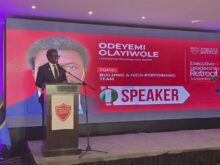
Today, we are privileged to speak with Ridwan Akogun, an environmental and natural resource specialist whose work spans sustainable development, Arctic resource governance, infrastructure planning, environmental policy, and humanitarian coordination. From leading UN-supported development initiatives impacting millions in Nigeria to shaping strategic land-use and resource management frameworks in the United States Arctic, Ridwan has built a career at the intersection of environmental stewardship, public policy, and socio-economic development.
Ridwan currently serves with the State of Alaska Department of Natural Resources, where he works as an Environmental Specialist and Natural Resource Specialist supporting some of the most complex natural resource governance initiatives in the United States. His work contributes directly to land-use planning, conservation policy, infrastructure governance, and long-term resource management across Alaska’s vast Arctic and sub-Arctic regions. Before this, he managed major UN-supported programs in Nigeria focused on food security, sustainable development, livelihoods, and humanitarian response.
As we often do when highlighting professionals regarded as leaders and exceptional contributors within their field, today we sit down with Ridwan to discuss his journey, his impact across multiple continents, and the future of environmental governance and sustainable development.
Interviewer: Ridwan, thank you for joining us today. Your work spans environmental policy, natural resource governance, humanitarian development, and sustainable planning across both Nigeria and the United States. Can you briefly introduce yourself and tell us what drives your work?
Ridwan: Thank you for having me. I am an environmental and natural resource policy professional with a background in sustainable development, land-use planning, environmental governance, and socio-economic policy. My work has largely focused on designing systems and frameworks that balance environmental sustainability with long-term economic and community resilience.
What drives me is the understanding that environmental policy is not only about conservation. It is also about people, infrastructure, food security, economic opportunity, and national stability. Whether I was coordinating humanitarian and development programs in Nigeria or working on Arctic resource governance in Alaska, the goal has always been to help create systems that are sustainable, equitable, and future-oriented.
Interviewer: Your current role with the State of Alaska Department of Natural Resources involves extremely significant responsibilities. Can you tell us more about the scope of your work there?
Ridwan: At the State of Alaska Department of Natural Resources, I serve as an Environmental Specialist and Natural Resource Specialist, where I support critical natural resource and infrastructure governance efforts across the U.S. Arctic.
A major part of my work involves leading statutory land-use and resource development planning across approximately 75 million acres of land. Through this work, we have secured four adopted regional plans and facilitated approximately 8.5 million acres of conservation and public-use designations, while also improving permitting and leasing procedures tied to infrastructure and resource development.
I also contribute to the implementation of resource management frameworks governing over 85% of Alaska’s surface estate. These frameworks influence investment decisions, permitting systems, conservation planning, and economic development strategies over long-term planning horizons.
Additionally, I serve as a subject-matter expert and advisor on highly complex natural resource governance issues, including legislative and policy matters affecting land management, infrastructure planning, and environmental regulation.
Interviewer: Alaska is strategically important to the United States, especially in terms of energy and Arctic positioning. How does your work contribute to broader national interests?
Ridwan: The Arctic is becoming increasingly important globally due to energy resources, shipping routes, critical minerals, climate change, and geopolitical competition. My work supports the governance systems that help ensure the responsible and strategic development of these resources while protecting ecological systems and local communities.
For example, the land-use frameworks and infrastructure planning systems we develop help guide decisions relating to energy projects, mining operations, transportation corridors, conservation zones, and public-use areas. These decisions have implications not only for Alaska but for U.S. energy independence, environmental resilience, and long-term strategic positioning in the Arctic region.
Interviewer: You also conducted major research work through the University of Alaska Anchorage Institute of Social and Economic Research. What did that involve?
Ridwan: That work focused heavily on impact assessments and scenario-based planning for energy, mining, tourism, shipping, and infrastructure development across Arctic and sub-Arctic Alaska.
I led assessments covering over 15,000 square miles, evaluating ecological, economic, and cultural trade-offs associated with major development initiatives. I also developed spatial risk and scenario models analysing extractive industries, transportation pressures, tourism growth, and environmental vulnerability.
One particularly important outcome was contributing policy recommendations that were adopted into four Environmental Impact Assessment plans, reducing projected habitat-impact risks across priority development corridors by approximately 20%.
The broader objective was to ensure that development decisions were evidence-based, sustainable, and aligned with both environmental protection and long-term economic viability.
Interviewer: Before moving to the United States, you managed large-scale development and humanitarian programs in Nigeria. Can you tell us about that experience?
Ridwan: Certainly. In Nigeria, I served as a Project Manager for UN-supported programs under the Federal Capital Territory Administration. One of the largest initiatives I managed was the National Home-Grown School Feeding Programme, which delivered food security and economic stimulus support to approximately 9.4 million pupils across multiple states.
That program was significant because it addressed both education and poverty simultaneously. It improved the educational outcome of school pupils while also strengthening local agricultural supply chains and community-level economic participation.
I also coordinated emergency procurement and humanitarian response operations for internally displaced persons across conflict-affected regions, supporting over 50,000 IDPs in alignment with the United Nations Office for the Coordination of Humanitarian Affairs-led humanitarian frameworks.
In addition, I led capacity-building and livelihoods programs that trained approximately 3,500 beneficiaries using enterprise development frameworks aligned with International Labour Organisation and United Nations Development Programme standards. Those initiatives achieved very strong outcomes in terms of business formation, graduation rates, and women’s participation.
Interviewer: Your academic background is also interdisciplinary, spanning business, public policy, and natural-resource management. How has that shaped your approach?
Ridwan: I believe interdisciplinary thinking is essential in modern environmental governance. I earned my MBA from the University of Abuja Business School and later completed a Master of Public Policy at the University of Alaska Anchorage, where I focused on the intersection between socioeconomics and natural-resource management.
That combination has helped me approach environmental policy not only from a technical perspective, but also from economic, governance, and human-development perspectives. Environmental systems are deeply interconnected with infrastructure, labor markets, food systems, indigenous rights, and economic policy. Effective governance requires understanding those relationships holistically.
Interviewer: Finally, what do you hope your work contributes globally over the long term?
Ridwan: I hope my work contributes to building governance systems that allow societies to responsibly manage natural resources while still promoting economic opportunity, environmental resilience, and human well-being.
Globally, countries are increasingly dealing with climate pressures, energy transitions, food insecurity, infrastructure demands, and ecological risks simultaneously. My goal is to continue contributing to policy, planning and projects that help governments and institutions navigate those challenges sustainably and strategically.
Interviewer: Ridwan, thank you for sharing your story and insights with us. Your work demonstrates how environmental governance and public policy can directly shape sustainable development, economic resilience, and long-term national interests across different regions of the world.
Ridwan: Thank you. I appreciate the opportunity to share my journey and work.

Join BusinessDay whatsapp Channel, to stay up to date
Open In Whatsapp