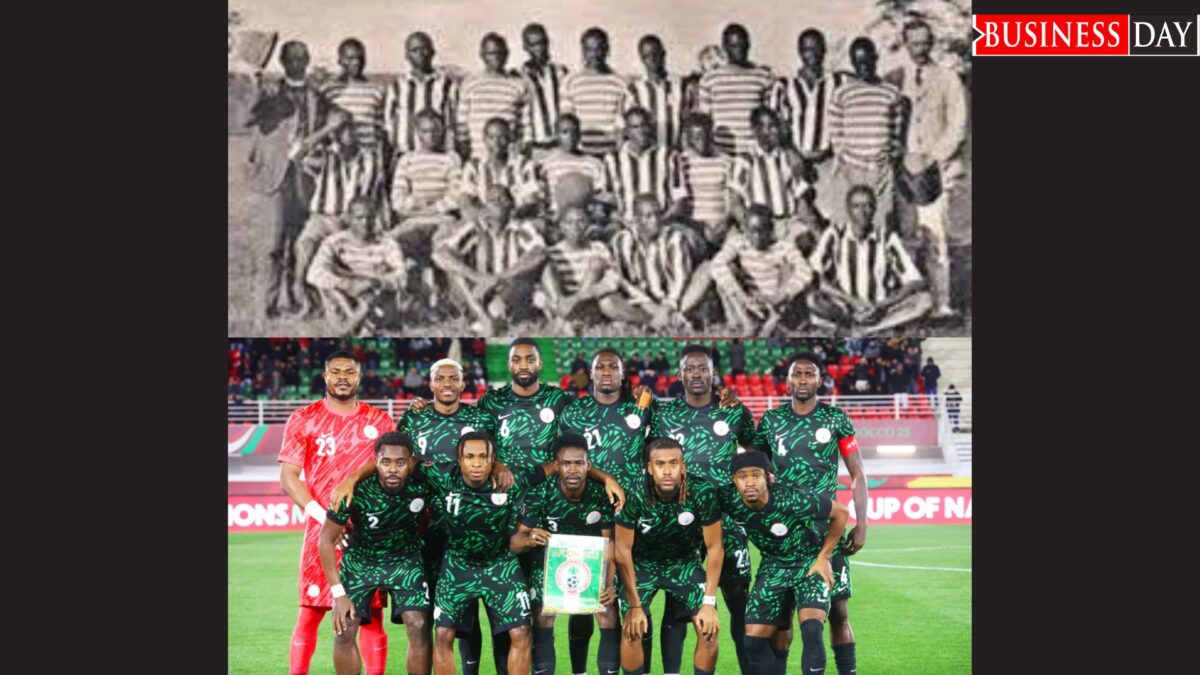
The history of Nigerian football pre- and post-colonisation is very well documented. In the colonial era, our affiliation was with the English FA, and their records and archives are intact. The Nigerian takeover of football in the post-colonial era was via the Nigerian Olympic movement led by Sir Justice Adetokunbo Ademola, supported by Israel Adebajo. They financed the process and got the English FA to back Nigeria’s application for FIFA affiliation as a requirement for Nigeria’s planned football participation in the 1960 Rome Olympics. The FIFA affiliation application went in through CAF in 1959 and was ratified at the FIFA Congress in 1960.
Sir Ademola brought in GKJ Amachree as the first chairman of the indigenous NFA and Israel Adebajo as treasurer. Government interference led to their sacking, and after the 1966 coup, GKJ Amachree came back as chairman. Adebajo, however, focused his attention on developing his football club, which eventually produced 10 starting players for Nigeria’s Green Eagles in their first major international football appearance at the 1968 Mexico Olympics. They encountered the legendary Brazilian team and forced a 3-3 draw after trailing in the match. Nigeria’s first football Olympics appearance was a project 10 years in the making, as Nigeria failed to qualify for the 1960 and 1964 Olympic Games. 28 years later, Nigeria won football gold in the 1996 Atlanta Olympics, after the first of six World Cup appearances in USA 94.
Nigerian football is currently down and out as a result of government interference, corruption, greed and conflict of interest with the administrators and their vested sporting commercial interests.
Is it not a disgrace that in Nigeria today, only one stadium in Uyo consistently meets FIFA standards? This is despite massive investment in sports infrastructure, with abandoned and derelict national stadia both in Abuja and Lagos.
At a time when the infrastructure was intact, Nigeria hosted AFCON twice, in 1980 & 2000, and FIFA junior tournaments twice: the U-17 World Cup in 2009 (October 24 – November 15, 2009) and the U-20 World Cup in 1999 (April 3 – April 24, 1999).
The Nigerian Premier Football League is currently being held together by some very brave souls, who are doing a yeoman’s job. They deserve both our sympathy and support. Contrary to popular belief, the NPFL was not killed by digital and social media or the European leagues. It was decimated by match-fixing, greed and corruption.
DStv invested over US$100 million in OB vans to cover the league and paid the previous NPFL managers handsomely for TV rights. The administrators in charge then, through their related marketing companies, cornered 85% of the TV rights revenues to the detriment of the clubs. They lacked the capacity to organise a functional league, despite strong interest from telecom companies, banks, conglomerates and oil companies that demand transparency and accountability. As a result, we have two generations of Nigerian Gen Z & X that have never been to a stadium in Nigeria to watch a football game but pay the premium to watch Afrobeats concerts.
The question I am frequently asked is why are the Flaming Flamingos not playing in the Premier League? My answer: First, it’s expensive, not profitable and lacks a viable revenue model for sustainability. Second, it’s a fraudulent system, as matches can be bought and sold and refs, match commissioners and assessors are compromised. I was in Ibadan last week to watch IICC Shooting Stars FC, and it was a disgrace. The decisions of the referee against the Shooting Stars were vividly absurd. Two clear goals were disallowed, and an obvious penalty was denied. Why? The season ends next week; ICC currently sits third on the log, trying to qualify for continental football or win the league. So the ref has been compromised by the teams above and below IICC on the log and also the visiting team opponents on the day.
The expense budget for an NPLF season starts at 2.5 billion naira, and most clubs spend more. This comes without the commensurate revenue, so even if you win the league, maybe you get 200 million naira. No TV rights, no merchandise, no gate takings and no meaningful sponsorship revenue.
In comparison, each English Premier League club is projected to receive roughly between about £120 million and £195 million in central TV/broadcast and commercial distributions alone in the 2025/26 season, depending on final league position and live TV appearances. Deloitte’s Annual Review of Football Finance reports that Premier League clubs generated about £6.3 billion in revenue in the 2023/24 season, and projections for the 2025/26 season are £6.8 billion. The American National Football League (NFL) generated a little over $23 billion US dollars in total revenue last season. The flagship Super Bowl season finale generated in excess of 1 billion dollars, with advertising for 30‑second TV spots selling for roughly 7 million dollars each.
Football in Nigeria is a loss-making venture, where 95% of the players are civil servants with government-owned clubs and wealthy private owners who subsidise football in Nigeria.
The myth of selling players abroad is such that our players have now become commodities. It’s more human trafficking and modern slavery. Our hopeful players are scattered all over the world doing menial jobs. Nigerian players are also no longer prominent in the top European leagues; other West African countries have taken over.
If you have any doubts about what I am talking about as we prepare for the World Cup, ask yourself how many Nigerian referees have been selected for Afcon. How many of our referees have been to the World Cup? Zero!
If you are still having any doubts about the state of your football in Nigeria, think again: when we had limited World Cup slots for Africa, Nigeria qualified easily.
This year, a record 10 African countries are going to the World Cup next month, and Nigeria is not amongst them, considering our football pedigree. The entire NFF board and management are still in place and have not been sacked, as we continue to celebrate, encourage and reward failure.
This NFF is also a non-entity and organisation without proper registration. It is merely a conduit used to pacify and facilitate FIFA funding to Nigerian football administrators. In January 2012, a Federal High Court in Abuja ordered the disbandment of both the Nigeria Football Federation and the Nigerian Premier League, effectively disbanding the NFF.
The NFA and decree “Act” 101 are still in place and also have budgetary allocation from the National Assembly. In a strict legal sense under Nigerian law, the present-day Nigeria Football Federation (NFF) is not incorporated by any specific act of the National Assembly and operates largely as an unincorporated association using FIFA-style statutes, while the old “Nigeria Football Association” (NFA) is the only body explicitly created and recognised in statute, and court judgements have nullified the NFF.
Football administrators in Nigeria operate a dual structure. They use the NFF to collect FIFA and CAF funding and the NFA to collect budgetary allocations and direct government largesse.
The only way forward for Nigerian football is the repeal of Decree 101, privatisation, and the return to a proper football association structure.
The original legacy club owners who started professional football in Nigeria should take over the responsibility for running football in line with FIFA statutes. Government should provide legal backing by giving a charter to the Legacy Club owners, as they have to ICAN, NBA, NIA and other professional bodies that oversee their members.
Football in Nigeria today is akin to the entire Nigerian Bar Association’s executive management and leadership, being run by engineers instead of lawyers.
Adetilewa Adebajo; Chairman, Stationery Stores Football Club Limited

Join BusinessDay whatsapp Channel, to stay up to date
Open In Whatsapp