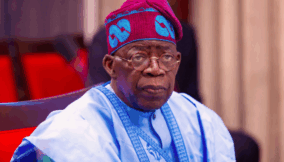
As President Muhammadu Buhari inaugurates his cabinet today, Nigerians will apparently begin to have a breath of fresh air. Critics have however, expressed fears that given the body language of the chief occupant of the Aso Rock Villa, a regime of redundancy may be in the offing.
For several months after his accession to the power stool, President Buhari ran the government as a sole administrator. His body language, critics say, created the impression that were it not for the provisions of the Constitution, he would not have appointed ministers whom he had jocularly described as “noisemakers”.
Nigerians are today waiting with bated breath to hear those among the 36 screened ministers that will be allocated with portfolios and those who will be in the group being described as “ministers without portfolios.”
Anxious Nigerians would also be expecting to hear those among the ministers that would declare to their compatriots that they would offer their services as ministers ‘pro-bono’.
Recall that some of the screened ministers had indicated interest that they were ready to serve their fatherland free-of-charge.
In the last few days, President Buhari has consistently told Nigerians that the country was broke and as a result, his government would not be able to pay ministers.
Buhari had in a recent interview in New Delhi, India, said: “Where is the money? Nigeria cannot pay salaries. This country was materially vandalised and morally so and you are in a position to know even more than myself unless you are testing my knowledge whether I know it or not…Of course, Nigeria is broke.”
Justifying his choice of 36 minister nominees, the President said that he cannot work out outside the constitution and that ministers must be appointed in conformity with the constitution of the Federal Government that stipulates that ministerial appointment must reflect the 36 states of the country. According to him, these minister nominees though representing their states, some will not have portfolios but will be part of his cabinet.
“We cannot work outside the constitution; there must be a cabinet representative from each state. There use to be forty two ministers but I think we can barely keep half of that now because we cannot afford it.
“Others may not be substantive ministers but they will sit in the cabinet because that is what the constitution said and we can’t operate outside the constitution. We are reducing the number of ministries we can’t afford to pay.’
“Where is the money? Do you know the Federal Government has to help 27 states out of 36 to pay salaries?”
Speaking in a monitored television programme in Lagos, Jiti Ogunye, a legal practitioner, said Buhari was not under compulsion to employ 36 ministers; he however, disagreed with the “Nigeria is broke” mantra.
According to Ogunye, “The provisions of the Constitution are not chains; they are not manacles. My view is that the provision of Section 147 of the Constitution doesn’t mean it is compulsory to have 36 ministers on the basis of the 36 states.”
“Section 147 (Subsection 1) provides that there shall be ministers and the office of the ministers in the government of the federation shall be established by the President; he has the discretion to establish the number of ministries he wants. I do not take the view that, given the way the provision is presently worded, the President is under a duty to appoint 36 ministers,” he said.
On the indication that the government may not be able to pay all the ministers over paucity of funds, the lawyer said: “I would advise that President Buhari have a reasoned position of the matter. The argument cannot be that we can’t pay ministers. If we can’t pay ministers, can we pay the President? Saying you can’t pay ministers means Nigeria is going bankrupt.
“They are working statutorily, they must be paid. But, if the argument is that government had been too unwieldy in the past, and now government is asking how did we get here, and then, how do we check the excesses?”
Ogunye then gave detailed explanation on the principles of federal character.
“The principle of federal character is a mechanism for managing diversity and plurality; ethnic, religious and political. The President had displayed federal character by giving the hint that he’s satisfied with the requirement of the constitution by appointing 36 persons as ministers,” he said.
Analysts have also faulted the claim by some ministers-designate that they were willing to serve for free. According to them, “It is rather hypocritical for people who did all manner of lobbying for the posts to turn round to claim they were ready to serve for free. Is it for love of country or what? We must not take these people seriously and the President must not attempt to sign people on as ministers without paying such persons; this is because, that could serve an alibi to siphon the public till. If past ministers who had everything to themselves could involve themselves in such a massive looting we are reading about, it is a matter of conjecture what could happen in a regime where some render their services pro-bono.”
Observers have also urged the President to avoid political consideration in the allocation of portfolios.
Observers have also urged the President to avoid political consideration in the allocation of portfolios.
Analysts say the advice became necessary following the recent appointments of the President which drew flaks and were allegedly not reflective of the principle of equity and fair play.
A commentator who craved anonymity said, “There are few of them in the pack that have track record of achievements in their past engagements and Nigerians know them. For instance, imagine if the President decides to send a person of Babatunde Fashola to the Culture ministry? That would be a disservice! In fact, some people have said to my hearing that they are planning to send Fashola to the FCT, but I said to them, the man would fare better as works minister going by what he did in Lagos State when he was governor. I am saying that politics should not come into play in the distribution of portfolios in the overall interest of the country.
“This is one of the dangers of the blind screening that was done. Had the President attached portfolios to the nominees, Nigerians would have had the opportunity to raise the alarm if they noticed that inappropriate distribution was made. I think going forward, and as part of the change that is being trumpeted about, blind screening must stop. I think that the reason for this blind screening is not clear; it is aimed at something sinister. I hope we will not continue on that path.”
Zebulon Agomuo

Join BusinessDay whatsapp Channel, to stay up to date
Open In Whatsapp