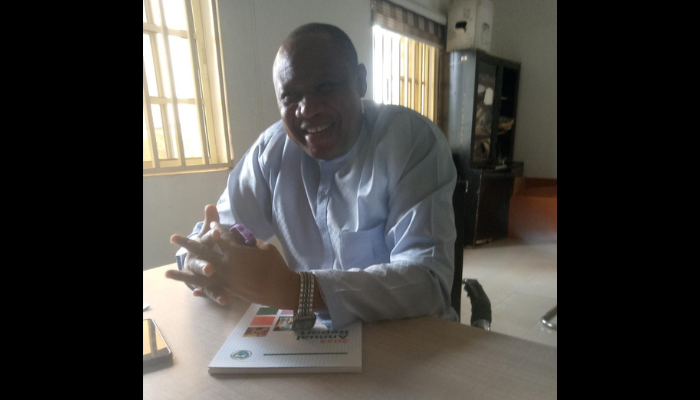
Edwin Ignatius is the coordinator of the Nigeria Shippers’ Council (NSC), Kogi State. His office is in Lokoja under North Central zone. In this interview with VICTORIA NNAKAIKE, he spoke on the achievements of his office, the challenges, the way forward, among other issues in the sector. Excerpts:
May we know what the Council under your care does?
Basically, the council is under Marine A blues of the Marine council. Being a regulatory agency, particularly we regulate what has to do with cost.
We provide a level playing ground for all our operators because we have a lot of stakeholders under the regulatory over sight of Nigeria Shippers Council. Basically, all activities that have to do with logistics, transportation, provision of services and even the users of those services, the port sector, the nexus to facilitate the importation and export activities that have to do with international trade, among others. What we do particularly is to regulate the activities of all the stakeholders that include the terminal operators, logistics, service providers, the inland dry port, freight forwarders, shippers (the importers and exporters, those that take consignment from Nigeria to wherever in the world. We regulate the activities of the haulage operation. We ensure that there is efficiency in the provision of services such as fair play to all the companies. We educate the stakeholders, inform them of trends in the industry, internal trade operation of shipping companies, changes that have to do with shipment. We also help them in terms of negotiation; give them the tools they will need to negotiate effectively in terms of freight cost with foreign shipping organisations and companies.
One major aspect of our services is dispute resolution. Shipping has to do with timing, anything that stops the movement of consignment increases the cost of business. Of recent, there was a serious challenge at the Nigeria’s port sector and basically it has to do with cost-related challenges like the terminal operators. So, the shipping companies tend to increase the cost of shipment. Nigeria’s freight forwarders and shippers are not comfortable with that rate. So, shippers council has to come in between the two parties and looked into the economic charges and resolved all the issues.
Talking about smuggling in of hard drugs through the ships in the inland water ways and high seas; what has the establishment been doing to help check the illicit activities?
It’s not our responsibility to combat things like hard drugs but we are poise to actually assist not just in the inland water ways but on the high sea. The federal government has just introduced and approved what we call the International Cargo Tracking (ICT) motor, a facility that is meant to assist the federal government to have a pre-knowledge of whatever that is coming into the country in terms of the source, the country or whatever including small guns that are being smuggled into the country.
So, the cargo tracking motor is an instrument that will be used to advise the national security, the DSS, so that even before such consignment comes into the country, it will be nabbed at the port. That is the essence of the international tracking motor. For the inland water per se, we work with the marine police, Navy. We are equally working with Nigeria Inland Waterways Authority. We synergise with these agencies of government. We cooperate to checkmate activities at the inland water ways actually.
From time to time, we hear that boats capsized. What are your establishment doing towards helping NIWA curtail the ugly trend?
NIWA is a sister agency of Nigeria Shippers’ Council; we have been working with NIWA. Like I said earlier, we are a regulatory agency, we ensure that there is a level playing field; we also are concerned on cost of doing business. One of the major determinants of cost is where there is insecurity. You know insecurity brings unpredictably premium and all that; this increases kind of cost of navigation, movement of cargo in the waterways. Unfortunately, Nigerians being whom we are at times, used the waterways in the night to cut cost, where the waterways are not properly lit. There is clear policy on use of waterways. NIWA has come up with a policy that ensures that people utilise these waterways at a particular period of the day. For now, our channels are not completely free from the wreck; there was a study; we call it C-LINK carried at by Navy, NIWA in collaboration with Shippers’ Council sponsored by Afreximbank and it was done from Janata in Kogi Sate here down to Buutu to the sea.
It was a nautical survey that was meant to unearth the major causes of accidents on the waterways and all of that, and the study revealed that there are wrecks buried inside the waterways and those wrecks have not been removed, they are still there because it is capital intensive to clear them.
Shippers Council is still on that, so that those things will be removed. If those things are not removed and you just carry your small boat to ply the waterways and all that, of course, definitely there will be issues. That’s one of the reasons you see frequent boat accidents. NIWA still comes up with accord that ensures that everybody that utilises inland waterways must use lifejackets. But most people don’t utilise it. It’s really unfortunate because if anything happens to anybody even though if boat capsizes, if the passengers are on life jacket, there is no way they will die. These are some of the challenges.
How would you advise the state and federal governments on how to reduce the casualties, especially by way of enforcement?
The truth of the matter is that the federal government under President Tinubu and the Minister of Marine and Blue Economy and the collaboration of the Executive Secretary of Nigeria Shippers’ Council, have done extremely well to put in structures that will actually give the maritime space both in Nigeria and Africa its pride of place. You know under the International Maritime Organisation (IMO) under this regime we have come to occupy the central role; this is the role that had eluded Nigeria for so many years. There was a retreat done in Lagos by the Minister of Marine and Blue Economy that brought all the stakeholders, agencies, parasatals together and a KPI was designed for each of this establishments in terms of the movement of cargo, construction and development of transport infrastructure and all of that. In terms of strengthening security and digitalisation, give Nigeria maritime eco-system global line in the international communities. A lot has been done by this administration of which we only have to express our gratitude in the industry for this milestone. Achievement under this administration, we were able to come up with the inland dry port, about two inland dry ports have been commissioned, you don’t have to carry your consignment from Lokoja to the port cities before you can export your consignment. Those things can actually be done right in the hinterland and all that. So, we are grateful to the federal government for that. We are praying that for us at the North Central zone that the federal government will also give attention to the inland dry port at Jos, so that consignments that will come will not just be rigid, but will be revitalised, we are also hoping that the Lokoja vehicle transit park project that is situated at Okonu will also come alive; it will be given due attention because of what we have experienced in time past. Just about last month and during December there was heavy traffic between Lokoja and Abuja, commuters had to spend like two to three days on the road. And am grateful that on this matter I cried everywhere and I was able to get the attention of the Executive Secretary of the Nigeria Shippers Council. Just this week, I received a call from the Executive Secretary, Akutah Pius Ukeyima on what to be done to actually resolve that challenge all together and am happy to say that so much is happening. We have series of engagements with Kogi State government and we are bringing in everybody that matters. In this month of May, we are going to ensure that the project is given all the attention so that Nigerians will be relieved of such crisis.
What are the challenges this organisation is facing?
The challenges basically have to do with inter agency rivalry, these are the issues when we work together; when we have collaboration with Nigeria Ports Authority, NIMASA, NIWA, the Railways, Air Port Authority. Anywhere that there is the movement of cargo, be it in the air, water, road or via the rail, our interest is there because the cargo may be either government-own or individuals or Nigerians that need ships for import and export- definitely, it is our responsibility to protect them. Our area of covering is very wide and large. We have to develop capacity to work with stakeholders in the real sector; we have to develop capacity to work in the air, inland water ways. It’s a professional organisation that requires knowledge, researching because we carry researches, just like I told you we have to engage a research on C-LINK that opened up the viability of the inland route and all that. Even here in Lokoja, we have to carry out two researches of the transit route. And also, the other side aspect of the challenge has to do with legal framework-
What gives us the capability to go out there to regulate effectively. We have done some kind of enforcement at Lagos and before you know it, we had court case. We were in court with the shippers’ companies, associations, and others.
We have been in court for their challenging our powers to ensure that the right things are done. They took us to court to challenge our authority, but thank God even at the lower courts, we won the case. They appealed to the Court of Appeal, we still won, even to the Supreme Court.
This is our base, our country. We have the right to put regulations to ensure that everybody follows according to rules and regulations. Funding is also one of the critical challenges we are having in the sector, though the Chief Executive Officer and his management team are trying their best with the meagre resources, we were able to carry out some responsibilities in the Nigeria Shippers’ Council.

Join BusinessDay whatsapp Channel, to stay up to date
Open In Whatsapp