….Oshiomhole wants heavier levies on super rich
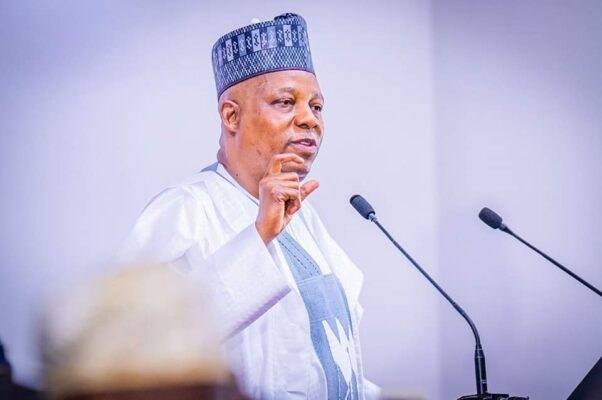
Kashim Shettima, Nigeria’s Vice President, has defended the Federal Government’s tax reforms, describing them as pro-people, pro-business policies designed to lift millions of Nigerians out of poverty and reposition the country for sustainable economic growth.
Represented by Tope Fasua, Special Adviser to President Bola Tinubu on Economic Affairs, at the 28th Annual Tax Conference of the Chartered Institute of Taxation of Nigeria on Tuesday in Abuja, Shettima said the reforms were aimed at building an economy that rewards productivity, innovation and transparency.
Shettima painted a picture of what the Tinubu administration hopes to achieve through ongoing fiscal reforms, saying the government envisions a Nigeria where ordinary citizens can prosper regardless of their social background.
According to him, the administration wants to build “a Nigeria where the son of the petty trader in Kano and the daughter of the farmer in Ekiti are empowered by an economy that doesn’t just export raw materials but exports innovation.”
He added that the government was working towards a future where Nigerian-made products become globally competitive and where the nation’s tax administration becomes a benchmark for Africa.
The Vice President, however, acknowledged that the government still faces major challenges, especially in convincing Nigerians about the benefits of the reforms.
He said many citizens were yet to understand the “pro-poor” nature of the tax measures, noting that individuals earning N1 million and below annually would pay no tax under the new regime, while small businesses with annual turnovers below N100 million would also remain exempt.
“Many Nigerians simply cannot believe it because it has never happened before,” he said, insisting that Tinubu was not anti-business or anti-people, but committed to ensuring Nigerians thrive.
Shettima stressed the need for aggressive public enlightenment to counter what he described as misinformation and false narratives surrounding the reforms.
“Information dissemination on these reforms is key and we must never yield the entire space to the traitors of government who seek to impugn the good efforts of our leader by substituting progressive information with concocted information and falsehoods,” he stated.
He described tax reform as more than a technical fiscal exercise, saying it should be viewed as “an act of patriotism” and a pathway towards reclaiming Nigeria’s economic destiny.
Also speaking, Innocent Ohagwa, 17th President and Chairman of Council of the Chartered Institute of Taxation of Nigeria, described the newly introduced tax regime as the most comprehensive overhaul of Nigeria’s fiscal structure in more than three decades.
Ohagwa said the reforms were central to the administration’s ambition of growing Nigeria into a $1 trillion economy by the end of the decade.
According to him, Nigeria had historically struggled with poor revenue generation and excessive dependence on borrowing, but the new reforms were beginning to reverse the trend.
He disclosed that the country’s revenue-to-debt servicing ratio, which stood at 120 per cent in December 2022, had dropped to 68 per cent by the end of 2025.
He said streamlining the tax code and broadening the tax base would help Nigeria transition “from a nation that borrows to survive to one that invests to thrive.”
Ohagwa also noted that the reforms would help curb illicit financial flows, reduce informality in the economy and improve accountability through enhanced technological surveillance by the National Revenue Service.
Meanwhile, Joseph Tegbe, Minister of Power, commended the ongoing reforms and described the current moment as one requiring “radical reformers” across all sectors of national life.
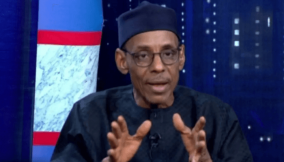
Similarly, Senator Adams Oshiomhole threw his weight behind the reforms, arguing that taxation is fundamental to governance and national development.
Oshiomhole said governments do not create wealth but rely on taxation to provide infrastructure, healthcare, education and social safety nets.
He argued for a more progressive tax system in which wealthy Nigerians contribute significantly more to national development.
According to him, individuals earning above N20 million monthly and owners of private jets should face higher tax obligations similar to practices in advanced economies.
The former Edo State governor also urged Nigerians to make taxation a major issue in political debates, saying citizens must question politicians on their fiscal policies, subsidy positions and plans for social welfare.
“For me, this is what the debate should be about,” he said.
In her welcome address, Caroline Ndubisi, Chairperson of the conference and National Chairperson of the Society of Women in Taxation, described the gathering as a crucial platform for shaping the future of Nigeria’s tax system.
Ndubisi said taxation remained central to Nigeria’s economic transformation and called for systems that are fair, transparent and trusted by citizens.
She stressed the importance of digital transformation in tax administration, noting that Nigeria must build a tax structure capable of competing globally.
“We must embrace digital transformation in tax administration. We must ensure that our systems are inclusive, leaving no sector behind,” she said.
She further urged tax professionals to see themselves not merely as interpreters of tax laws but as “advocates of economic stability.”
The conference focused on the theme, ‘Tax Reforms and Global Relevance: Positioning Nigeria’s Tax System for Sustainable Future’, with participants emphasising the need for transparency, inclusiveness and stronger public trust in fiscal governance.

Join BusinessDay whatsapp Channel, to stay up to date
Open In Whatsapp