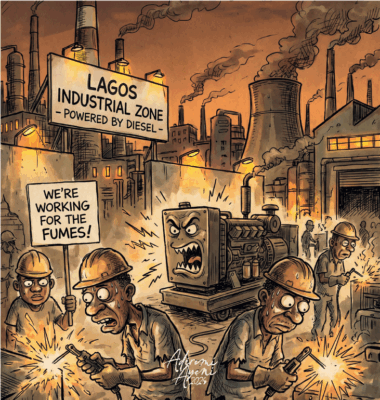
Nigeria’s industrial future cannot continue to depend on factories and businesses generating their own electricity through diesel generators and private power systems. That is the uncomfortable truth at the heart of the country’s electricity crisis. For too long, the national conversation around power has focused mainly on household supply, how many homes receive electricity, how many hours of light people enjoy, and how often the grid collapses. These are important concerns, but they often miss the larger economic question: who powers producti
Nigeria’s industrial future cannot continue to depend on factories and businesses generating their own electricity through diesel generators and private power systems. That is the uncomfortable truth at the heart of the country’s electricity crisis. For too long, the national conversation around power has focused mainly on household supply, how many homes receive electricity, how many hours of light people enjoy, and how often the grid collapses. These are important concerns, but they often miss the larger economic question: who powers producti