Sustainability reporting is gaining traction in Nigeria’s capital market, with the Securities and Exchange Commission Nigeria signalling plans to strengthen regulatory oversight and enforce higher disclosure standards among listed companies.
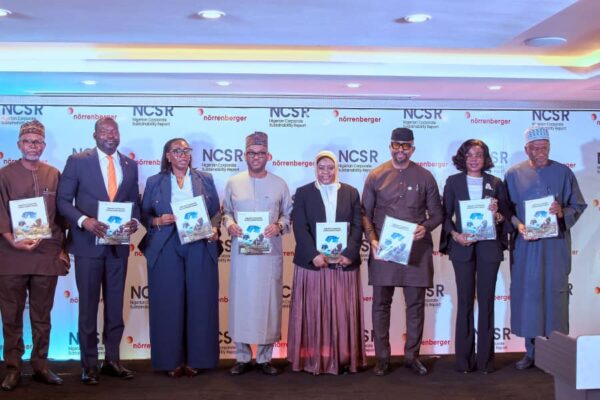
Emomotimi Agama, director-general of the Commission, made this known on Tuesday at the launch of the Nigerian Corporate Sustainability Report (NCSR) published by Norrenberger Research, in Abuja.
He described the initiative as timely and critical to the evolution of the country’s investment landscape.
Agama also stressed that global capital flows are increasingly driven by environmental, social and governance (ESG) considerations, noting that sustainability disclosure is no longer optional but a fundamental requirement for accessing long-term investment.
Read also: Nigeria banking liquidity jump outpaces private sector credit expansion
“The decisions made in boardrooms today about carbon footprints, human capital, governance structure, and community impact are decisions that will echo across generations. The world’s capital allocators have come to understand this, and they are reorienting accordingly. Nigeria must not be left behind.
“Institutional investors are no longer treating ESG considerations as filters. They are the primary determinants of capital allocation decisions.
“Nigerian companies that wish to access the vast pool of patient, long-term capital must understand one unambiguous reality: the price of entry is disclosure, credible, consistent and verifiable,” he said
The SEC boss revealed that Nigeria is already aligning with international standards, particularly frameworks developed by the International Sustainability Standards Board (ISSB), including IFRS S1 and S2, which are fast becoming the global baseline for sustainability reporting.
He added that the Commission is engaging with global institutions such as the World Bank and the International Organization of Securities Commissions (IOSCO) to deepen implementation and ensure Nigeria is not left behind in the evolving ESG landscape.
According to Agama, the Commission will respond to findings from the NCSR by tightening guidance on sustainability disclosures, increasing engagement with listed firms, and introducing incentives to encourage early adoption of robust ESG frameworks.
Read also: 10 startups secure $560,000 to combat Nigeria’s heat crisis
“We will not wait for the market to drift towards best practices; we will lead,” he said.
Agama further highlighted the scale of Nigeria’s capital market growth, with market capitalisation rising significantly in recent years, underscoring the need for stronger governance and accountability frameworks.
He pointed to emerging opportunities in green bonds, sustainability-linked instruments and blended finance as critical tools for addressing Nigeria’s infrastructure deficit and supporting inclusive development.
On his part, Tony Edeh, group managing director of Norrenberger, said the report was designed to close the information gap around sustainability practices and provide investors with credible insights for decision-making.
“The verdict is clear: companies that are ESG-compliant outperform their peers by 28 to 30 per cent,” he said, adding that a small number of leading firms currently account for a significant share of market value and sustainability performance.
Edeh noted that these companies, including major players in banking, telecommunications and manufacturing, represent the “cream” of Nigeria’s capital market and are already aligning with global sustainability expectations.
He expressed confidence that more firms would meet ESG standards before the end of the decade.
Also speaking at the event, John Owan Enoh, the Minister of State for Industry, Trade and Investment commended Norrenberger for advancing sustainability discourse and addressing critical data gaps in Nigeria’s corporate sector.
Read also: Finance minister moves to resolve over N4trn debt to contractors
The minister emphasised that reliable ESG data is essential for policymaking, risk assessment and attracting foreign investment, noting that global investors are increasingly prioritising markets with strong sustainability credentials.
He called for stronger collaboration between government, the private sector and development partners to drive responsible business practices, enhance transparency, and support long-term economic growth.
“As a government, we recognise that achieving sustainable economic growth, industrial transformation, climate resilience, and inclusive development cannot be accomplished by the public sector alone.
“There is an urgent need for stronger public-private partnerships that bring together government institutions, financial institutions, research organisations, development partners, and the corporate sector to collectively address national development challenges.
“Partnerships such as this create opportunities for knowledge sharing, policy alignment, innovation, and capital mobilisation. They also help to strengthen the institutional frameworks required to drive sustainable industrialization, improve governance standards, and support long-term economic competitiveness,” he said
The report, developed by Norrenberger, is the first comprehensive assessment of sustainability disclosures among Nigerian listed companies. It provides a structured benchmark for evaluating corporate ESG performance using publicly available data.

Join BusinessDay whatsapp Channel, to stay up to date
Open In Whatsapp