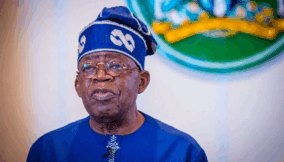
How to reach the $1trn economy as mandated by the Bola Ahmed Tinubu administration has been subject of most parleys and seminars around Nigeria.
Again, experts at the Garden City Premier Business School’s 2026 First CEO Quarterly Breakfast Meeting have identified small and medium enterprises (SMEs), value addition, and technology adoption as critical drivers of the $1 trillion push.
This is as participants agreed that without reliable electricity, stronger industrial policies, and increased private sector participation, the nation’s push for a $1 trillion economy could face significant delays.
Speaking during a panel session, Joseph Eyakephovwan, financial expert and oil and gas accounting practitioner, said Nigeria must urgently unlock opportunities across key sectors by focusing on value chains rather than exporting raw materials.
“Inside crude oil alone, we can get a lot of byproducts,” he said, questioning the continued under-utilisation of resources.
“Why do we have forests that harbour criminals instead of agric estates filled with cash crops and food crops?”
He stressed that value addition across agriculture and energy sectors remains essential, noting that government policy and private sector funding must work hand-in-hand.
“There must be value-addition whether in agriculture or energy. We just need the technology. The government comes with policy, the private sector comes with the needed funds,” he added.
Also speaking, Emeka Obi, a financial consultant, underscored the role of SMEs and digital transformation in wealth creation.
“SMEs are the real sector that will push the economy to $1 trillion. IT transformation is key to wealth creation, and public-private partnerships are important,” he said.
Earlier, Silver Opuala-Charles, a professor of economics and President of the Garden City Premier Business School, said Nigeria must move beyond rhetoric and adopt practical strategies to achieve its economic ambitions.
“Nigeria’s aspiration to build a $1 trillion economy must go beyond empty promises and focus on actionable strategies that drive real economic growth,” he said.
In his keynote address, Mallam Idris Shuaibu, a business leader and former Managing Director of Dangote Flour Mills Plc, highlighted structural challenges, particularly in power and manufacturing, warning that failure to address them could stall growth.
“Electricity is the most important. The kind of money this country has sunk into the power sector without result makes my heart bleed,” he said.
He also criticised Nigeria’s dependence on exporting raw materials, urging a shift towards local processing and industrialisation.
Participants at the forum agreed that achieving a $1 trillion economy would depend on deliberate policy reforms, improved infrastructure, and sustained collaboration between public and private sector players.
A highlight of the event was the conferment of a CIML Fellowship and an honorary doctorate degree from IIC University of Technology, Cambodia, on Ahmad Baba Ahmad for his leadership contributions.
Oil and evil circle:
The paradox how Nigeria produces oil but imports fuel was reechoed.
A stark critique of Nigeria’s economic structure took centre stage at the event as Idris Shuaibu, keynote speaker, described the country’s oil-dependent model as fundamentally flawed.
Speaking on the theme, ‘Nigeria towards $1 trillion economy and prospects for wealth creation,’ Shuaibu declared: “Nigeria is a hopeless country where crude oil is produced and fuel is imported,” underscoring what he termed a deep-rooted contradiction in the nation’s economic framework.
The former Managing Director of Dangote Flour Mills Plc argued that Nigeria’s path to a $1 trillion economy lies in reversing its long-standing dependence on raw material exports and prioritising local value addition, particularly in manufacturing and processing.
“We export sesame seeds to India who crush it into vegetable oils. Why can’t we do that in Nigeria?” he queried, adding that similar patterns exist across commodities such as cashew nuts, hides and skins.
Drawing parallels with reforms in the cement sector under former President Olusegun Obasanjo, Shuaibu noted: “Nigeria used to be a net importer of cement until Obasanjo put a policy to it; today Nigeria is a net exporter.”
He further criticised weak regulatory enforcement, stating: “Our government has a laissez-faire attitude to standards. If we must achieve a $1 trillion economy, we must be serious with quality control.”
Highlighting structural gaps in financial inclusion, he said: “We have 130 million Android phone users… but out of 230 million populace, we have just 70 million bank account holders.”
Shuaibu identified critical sectors requiring urgent investment to drive growth, including agricultural technology, healthcare, digitalisation, insurance, oil and gas refining, and electricity, which he described as the most crucial.
“Why can’t we get the electricity sector right? The kind of money this country has sunk into power without result makes my heart bleed,” he said.
Earlier in his opening remarks, Opuala-Charles stressed that Nigeria must move beyond rhetoric to achieve its economic ambitions.
“Nigeria’s aspiration to build a $1 trillion economy must go beyond empty promises and focus on actionable strategies that drive real growth,” he said.
The business leaders and policy experts further warned that Nigeria’s ambition to build a $1 trillion economy would remain unattainable without decisive reforms in manufacturing, power, and value addition across key sectors.
This seemed to be the consensus at the breakfast meeting. The President of the School, demanded that Nigeria must move beyond ‘empty promises’ and focus on actionable policies that drive growth.
“We must go beyond rhetoric. Public discourse like this will not only enrich our understanding of major economic possibilities, it will also provide valuable insights that can guide business strategy, entrepreneurial and investment decisions,” he said.
“SMEs is the bedrock of any economy. Why are we not targeting manufacturing? We export sesame seeds to India who crush it into vegetable oils — why can’t we do that in Nigeria?” he queried.
The MD/CEO of Time-Line Consult Limited pointed to policy-driven success in the cement sector as a model for industrial growth.
“Nigeria used to be a net importer of cement until policy reforms were introduced. Today, Nigeria is a net exporter,” he added.
The keynote speaker also highlighted gaps in quality standards, financial inclusion, and digital utilization.
To achieve the $1 trillion target, Shuaibu called for massive investments in agriculture, healthcare, digitalisation, insurance, oil and gas, and power infrastructure.
“Electricity is the most important. The kind of money this country has sunk into the power sector without result makes my heart bleed,” he said.
Panelists at the event echoed similar concerns, emphasizing the need for value addition across sectors and stronger collaboration between government and the private sector.
“SMEs are the real sector that will push the economy to $1 trillion. IT transformation is key, and public-private partnerships are essential,” he said.
The event also featured discussions on leveraging oil and gas by-products, expanding agricultural estates, and deploying technology to boost productivity across industries.
Other experts warned that without clear industrial policies and strict quality standards, Nigeria’s economic aspirations would remain elusive.
If we must achieve a $1 trillion economy, they said, we must be serious with quality control and standards.
Participants agreed that without reliable electricity, stronger industrial policies, and increased private sector participation, Nigeria’s push for a $1 trillion economy could face significant delays.

Join BusinessDay whatsapp Channel, to stay up to date
Open In Whatsapp