Nigeria’s vast land wealth, estimated at over $300 billion, is being framed not as a resource gap, but as a technology and data problem.
Experts at the Geospatial Builders Conference (GBC 2.0) in Lagos argued that the country’s land assets remain ‘dead capital’ largely because they are invisible to digital and financial systems.
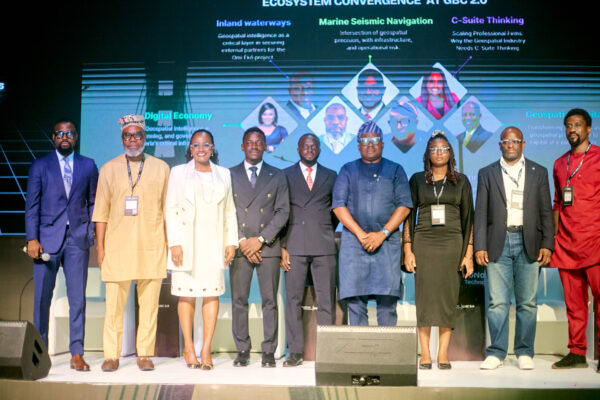
Convened by TwoNode Technologies, the conference brought together more than 200 stakeholders across geospatial engineering, policy, and land administration with a deliberation that without robust geospatial infrastructure, land cannot function as a modern economic asset.
As Nigeria pushes toward digital transformation, the challenge is no longer if the country has assets but if it has the systems to make them count.
Experts noted that nearly 95 percent of land in Nigeria exists outside formal, digitised, and verifiable systems, which means most properties lack the identity, traceability, and standardised records required for financial transactions such as loans, insurance, or investment.
Speaking on behalf of the Office of the Surveyor, Emmanuel Omotanmi said an estimated 95 percent of land in Nigeria exists outside formal, bankable systems.
According to him, while land ownership is widespread, most properties lack identity, verification, and traceability, which are key requirements for financial use.
“Banks do not lend on land. They lend on certainty,” he said, stressing that without structured geospatial frameworks, land cannot function as an economic asset.
Peter Ritchie, managing director of Icon Geoinformation Services, described geospatial data as foundational economic infrastructure, which places it in the same category as payment rails or digital identity systems.
Experts noted the need for integrated geospatial frameworks platforms that combine satellite imagery, cadastral mapping, digital registries, and analytics into unified systems.
Such infrastructure would not only improve land valuation and dispute resolution but also enable land to be used as collateral in a secure, scalable way.
Olawale Ojikutu, director at Lagos State Lands Bureau, highlighted how improved data systems could enhance valuation accuracy and streamline compensation processes, particularly in urban development and infrastructure projects.
Nigeria’s next wave of economic growth may depend less on discovering new resources and more on digitising existing ones.
Abiola Laseinde, Convener of The CIO Awards Africa, called for a shift in mindset within the geospatial sector from fragmented, small-scale operations to enterprise-driven platforms capable of scaling nationally.
She noted that the shift will require not just better tools, but stronger collaboration between government, private sector, and technology providers.


Join BusinessDay whatsapp Channel, to stay up to date
Open In Whatsapp