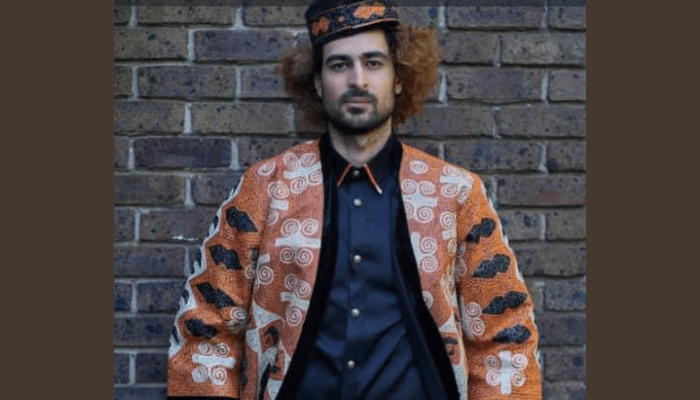
From transforming indigenous textiles into global fashion statements to advancing sustainable innovation through Minayo Textile, the Gee Royale creative director is reshaping how Nigerian fashion tells his story to the world. Gbenga Emmanuel Enikanosaye is a fashion designer and textile innovator whose work bridges African heritage and contemporary global design. As Creative Director of Gee Royale, he reimagines traditional textiles into modern, narrative-driven fashion while advancing sustainable innovation through his Minayo Textile research. In this interview with KENNETH ATHEKAME, he spoke on cultural identity, sustainability, and the evolving Nigerian fashion landscape. Excerpts:
You describe fashion as a living cultural archive. How does this philosophy influence your design decisions at Gee Royale?
I see fashion as something that carries memory, history, identity, and culture. When I design for Gee Royale, I’m not just focused on aesthetics; I’m thinking about meaning. Every piece should communicate something, whether about heritage, society, or personal expression. That mindset influences my choice of fabrics, silhouettes, and finishing.
Your work blends Afrocentric and Eurocentric aesthetics. How do you navigate this duality within the evolving Nigerian fashion landscape?
For me, it’s not a conflict; it’s a conversation. Growing up in Nigeria while being exposed to global fashion, both worlds naturally inform my design language. I incorporate Afrocentric elements such as motifs, storytelling, and symbolism, then balance them with Eurocentric structure and finishing. As the Nigerian fashion space evolves, this blend feels increasingly relevant and widely accepted.
In an industry often driven by trends, how do you maintain authenticity while staying commercially relevant?
Trends are transient, but identity endures. I focus on building a strong design voice first. Once that is established, I can interpret trends through my own lens rather than replicate them. Commercially, I ensure my pieces are wearable and relatable, while still retaining my signature style.
How would you assess the current state of the Nigerian fashion and textile industry in terms of innovation and global competitiveness?
Nigeria is rich in creativity, without question. However, in terms of structure, textile production, technology, and large-scale manufacturing, there is still significant progress to be made. Globally, we are respected for creativity, but to compete at the highest level, we need stronger systems and greater investment in textile innovation.
What unique opportunities does Nigeria offer designers willing to explore indigenous materials like Adire and Aso-Oke?
Nigeria offers what many countries do not. Fabrics like Adire, Aso-Oke, and Akwete are not just materials; they carry deep cultural narratives. Designers who engage with them meaningfully can create distinctive pieces for the global market. The real opportunity lies in reinterpretation, not mere replication.
In what ways can Minayo Textile contribute to repositioning Nigeria as a hub for textile innovation globally?
Minayo has the potential to redefine perceptions of African textiles not just as traditional, but as innovative and forward-thinking. With further development, it can position Nigeria as a hub where new textile techniques are created, not just preserved.
What role did collaborations with figures like Ade Bakare and Dr Laetitia Forst play in validating your research?
Collaborating with Ade Bakare and Dr Laetitia Forst added both depth and credibility. Ade Bakare brought industry expertise and practical insight, while Dr. Forst contributed an academic perspective. Together, they strengthened both the creative and research dimensions of the project.
Having participated in the British Council-supported ReRoll Station Lab, how has circular fashion influenced your production model?
The ReRoll Station Lab reshaped my perspective on sustainability. It encouraged me to think more critically about waste, reuse, and lifecycle. Today, I am more intentional in fabric usage, production processes, and designing pieces with longevity in mind.
What practical steps can Nigerian designers take to adopt sustainable practices despite limited resources?
Start small. Sustainability does not require large capital. Designers can reduce waste in cutting, reuse offcuts, produce in small batches, and prioritise quality over quantity. Incremental changes can have a meaningful impact.
Do you think sustainability is becoming a necessity or remains a luxury in the African fashion industry?
It is gradually becoming a necessity. While it may still seem like a luxury due to cost and awareness, the future of fashion both globally and in Africa will depend on sustainable practices.
Your collections, such as Ekplisso, NOD, and Syncretism, are deeply narrative-driven. How do you translate abstract cultural concepts into wearable designs?
I begin with research and storytelling, then translate those ideas into form through fabric, texture, and silhouette. The goal is to simplify complex concepts into wearable designs without losing their essence.
The NOD collection pays tribute to Fela Anikulapo Kuti. How do you approach designing around iconic cultural figures without becoming literal?
With someone like Fela, I avoid literal representation. Instead of using his image, I interpret his energy, his rebellion, activism, and boldness through colour, structure, motifs, and the overall attitude of the pieces.
With your background in formal tailoring and training at Yaba College of Technology, how important is technical training in Today’s creative economy?
Technical training is essential. Creativity is powerful, but without skill, it remains limited. My background in tailoring instilled discipline and an understanding of structure, enabling me to execute ideas effectively. As I often say, human creative potential is limitless, but it must be refined or it risks remaining in its crude state.
Do you think the Nigerian fashion industry places enough value on craftsmanship compared to branding and visibility?
Not sufficiently. While branding and visibility are important, craftsmanship remains the foundation. Without it, the work lacks durability and depth.
Having showcased internationally, including in Adelaide, how do global audiences interpret your work compared to Nigerian audiences?
Global audiences often view my work through an artistic and cultural lens, while Nigerian audiences connect more personally with the references. Both perspectives are valuable, but they differ in interpretation.
How did winning awards such as MVAA Best Fashion Designer of the Year impact your career trajectory?
The awards provided visibility and credibility. They opened doors and, more importantly, reinforced my confidence that my work was being recognised.
Your work has attracted notable clients such as PLO Lumumba. How do such collaborations shape your brand narrative?
Collaborations with individuals like PLO Lumumba add depth to the brand. They align my work with strong intellectual and cultural identities, reinforcing the narrative behind what I create.
You are actively involved in mentoring emerging designers. What gaps do you see in fashion education in Nigeria Today?
There is a disconnect between theory and practice. Many young designers lack hands-on experience and exposure to the business side of fashion. Bridging that gap is crucial.
What advice would you give to young Nigerian designers trying to balance creativity, business, and cultural identity?
Stay grounded in your identity while remaining open to learning. Understand the business side, not just the creative process. Above all, be patient building something meaningful takes time.

Join BusinessDay whatsapp Channel, to stay up to date
Open In Whatsapp