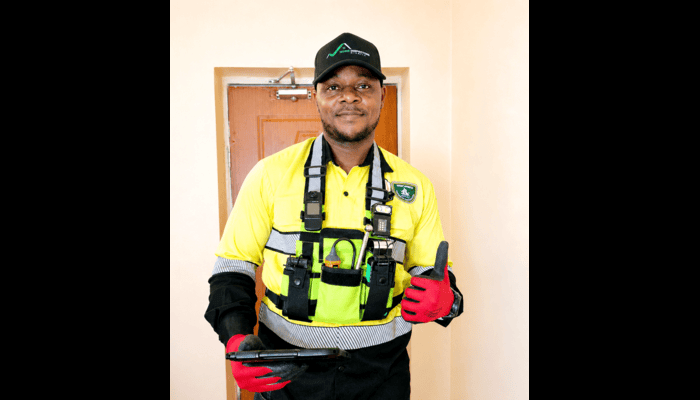
Casper Chidubem, president, Home Inspectors Nigeria Limited speaks on the real estate sector, quality of buildings, and the role of inspectors. He noted that construction quality can no longer be assumed, but proven, adding that poor quality has been normalised in the industry, writes Iheanyi Nwachukwu, Excerpts.
You describe inspection as a “critical gap”, how large is this gap in financial terms?
It’s a silent but very significant loss.
From what we see in practice, Nigerians routinely lose between 5 percent and 20 percent of project value to defects, rework, and poor execution. When you scale that across the housing and construction market, the figure runs into hundreds of billions of naira annually, much of it tied to issues that could have been prevented with proper oversight. The more concerning aspect is not just the scale of the loss, but the fact that poor quality has been normalised. Defects are often treated as part of the process rather than a failure of it. That mindset allows inefficiency and waste to persist unchecked.
What does the rise of companies like yours say about the state of Nigeria’s real estate sector?
It shows that the market is beginning to question what is being sold. For a long time, property decisions were based on what a buyer could see, what a developer said, and what was assumed to be standard practice. That approach is no longer holding up.
There is a clear shift toward verification over trust. Buyers and investors are realising that construction quality cannot be assumed, it has to be proven. The rise of inspection services reflects a deeper issue: a credibility gap in how projects are delivered. That gap is what led us to begin developing InspectAfrica, to move inspection from a service into a more structured and standardised system.
Do you see a link between inflation/cost pressures and declining building quality?
Yes, very clearly. As material and labour costs rise, many projects experience pressure to maintain budgets or margins. In that environment, quality is often where compromises occur. These compromises may take the form of material substitutions, reduced specifications, or shortcuts in execution. What makes this particularly challenging is that these decisions are rarely visible at the point of handover. They are embedded within the building and only become apparent over time, often after the owner has taken possession. Without independent oversight, these compromises remain undocumented, but they eventually surface as failures that the end user has to bear.
How does Nigeria compare to other African markets in inspection standards?
Nigeria is still largely informal when it comes to inspection. In more structured markets like South Africa, inspection is standardised, independent, and integrated into project delivery. In Nigeria, it is often contractor-controlled, inconsistent, and reactive.
This creates a system where quality depends on goodwill rather than verification, and that is a fundamental weakness.
At the same time, it presents an opportunity. Because the system is not yet fully defined, there is room to introduce structure. Through InspectAfrica, we are working toward building a standardised inspection ecosystem that can bring consistency to how quality is assessed across projects.
Can you share a case where an inspection prevented a major investment mistake?
We’ve seen several cases where inspection changed the outcome of a transaction.
In one instance, a client was about to proceed with purchasing a property that appeared to be in good condition. Our inspection uncovered serious concealed defects in the electrical and roofing systems, issues that were not visible during normal viewing and would have required significant and expensive corrective work after purchase. The client was able to renegotiate and avoid taking on what would have become a costly problem. The key point is simple: Most defects are not discovered; they are built into the property.
Who pays for your services more: individual homebuyers, developers, or institutional investors?
At the moment, the majority of our clients are individual homebuyers and diaspora investors. These groups tend to have the highest exposure because they often make decisions based on limited physical access or incomplete information. In many cases, they rely on trust rather than verification, which increases their risk.
Developers, on the other hand, are slower to adopt independent inspection, even though they stand to benefit from improved quality control and credibility. However, that is beginning to change as the market becomes more competitive and as buyers start to place greater value on transparency and verified quality.
How do you compete with informal inspectors or engineers already embedded in construction projects?
We don’t approach it as competition because the roles are fundamentally different.
Engineers and site professionals who are embedded within projects are part of the delivery process, and their responsibilities are tied to construction. Our role is independent of that process.
We are not involved in building; we are involved in verifying what was built or is being built. That means assessing work objectively, identifying defects, and documenting findings without bias. That independence is what gives our reports credibility and why clients increasingly see value in third-party verification.
What are the biggest operational challenges you face, especially in Lagos and Abuja?
The biggest challenge is operating in a system where there is no consistent standard for construction quality. Every project is different, and every contractor applies their own approach. That means inspection is not just about identifying defects, it is also about interpreting practices, applying consistent benchmarks, and often correcting assumptions about what is acceptable.
Scaling that across cities like Lagos and Abuja adds another layer of complexity. Maintaining consistency becomes critical, especially as demand grows.
This is one of the reasons we are aligning with InspectAfrica standards—to bring structure to training, reporting, and inspection delivery as we scale.
Are property defects becoming more common, or are buyers just more aware?
It is a combination of both. Cost pressures and the speed of construction are contributing to an increase in defects, while at the same time, buyers are becoming more aware of the risks involved.
What has changed most significantly is perception. There is a growing realisation that what looks finished is not necessarily well-built. That shift in awareness is important because it drives demand for better quality and more reliable verification.
What role should government agencies play in enforcing building quality?
Government has a critical role, but it needs to evolve beyond its current focus.
At present, there is significant emphasis on permits, documentation, and approvals, but less attention is given to actual construction quality and on-site compliance. There needs to be a shift from approval to enforcement, with greater focus on what is happening during construction rather than just before it begins. However, regulation alone will not solve the problem. There is also a need for independent verification systems, standardised inspection frameworks, and better data on building performance. Without these, enforcement remains inconsistent and standards remain theoretical.

Join BusinessDay whatsapp Channel, to stay up to date
Open In Whatsapp