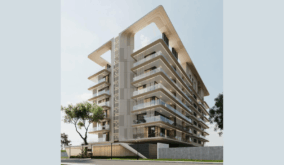
UPDC Real Estate Investment Trust (REIT) is the most thriving investment trust in Nigeria today, controlling a sizeable share of the market. It delivered a strong first-quarter 2026 performance, with profit growth rising by 36 percent.
This growth was driven primarily by a sharp increase in rental income and a steady expansion of its asset base. The rental performance signals improved occupancy levels and better pricing across its property portfolio, reflecting a gradual recovery in Nigeria’s commercial real estate segment.
The company foresees growth in the market when more investors step in. So far, only three Nigerian REITs —Union Homes REIT, SFS REIT, and UPDC REIT —have shown some resilience. Together, they recorded a rental income of N2.16 billion in 2023, according to a Knight Frank Africa Horizons report, which put the value of the Nigerian REITs market at $600 million in 2024.
UPDC REIT, one of the largest and most diversified, has demonstrated strength and resilience over the years. The company’s property portfolio spans more than 100 properties, including office towers, shopping centres, residential complexes, and student hostels across Lagos and Abuja.
Its flagship assets include Victoria Mall Plaza in Lagos, the Kingsway Building in Marina, UAC House in Abuja, and a hostel in Pan-Atlantic University, Epe.
Odunayo Ojo, UPDC’s managing director and chief executive officer, noted recently that the REIT market in Nigeria has not grown over the years, blaming it structural problem which, he explained, stems from market is regulation by Security and Exchange Commission (SEC).
He said that because REITs have to distribute a lot of their income on a yearly basis, it cannot retain earnings and finds it difficult for the company to grow. “REITs cannot attract capital, they cannot retain income. But those things are done for a reason; REITs are supposed to be a special asset class,” he said.
Ojo, who spoke at a media parley and presentation of the company’s full year 2025 financial performance, hoped that, over time, there will be a gradual adoption of the REIT product, disclosing that SEC was doing a lot to loosen a lot of the restrictions in the market, thereby encouraging new entrants and new investments.
Over all, the REIT in Nigeria is lagging behind peers in spite of its growth potential reflected in the country’s over 200 million population, housing deficit estimated at 28 million units, and an active rental market where 80 percent of the population lives in rented accommodation.
It is a specialised investment instrument that many people are not participating in. Investors are encouraged to make enquiries on the REITs through their stockbrokers or fund managers. REITs, on their own, should also do their best to educate the investing public on the benefits of investing in them, which include high cash payouts and distributions, among other gains.
The REIT is an investment that is suited to a certain kind of investors. It constantly pays dividends, unlike companies that may suffer some fluctuations in their profit earnings.
Over the years, the REITs market has grown into a multi-trillion-dollar industry with an estimated value of $4 trillion. Reports have it that about 44 countries are enacting legislation to create REIT structures. It adds that more than 85 per cent of global REIT asset value is concentrated in just five countries, nearly 80 percent of which is in the United States.
South Africa dominates Africa’s REIT landscape, with a market capitalisation of approximately $8.5 billion, while Nigeria trails at $600 million, followed by Kenya’s $300 million. Ghana, Morocco, and Egypt are laying legislative groundwork, but have yet to see actual REIT listings.
In Nigeria, returns on REITs have remained discouraging. Investors earn only about 7percent, far below the 15 percent offered in South Africa and 9 percent in Kenya. This gap reflects both operational inefficiencies and structural bottlenecks holding back the sector’s growth.
Until recently, with the new tax reform which promises tax exemption for REITs, Nigerian REITs risked double taxation, at both the trust and investor levels which erodes yields and discourages large-scale participation.
Besides regulatory overlaps between the SEC, the Federal Inland Revenue Service (FIRS), and the Nigerian Exchange (NGX) all of which create compliance headaches, liquidity is also a critical barrier.
The few listed REITs are thinly traded, making it difficult for investors to buy or sell units without steep discounts. Institutional investors such as pension funds, insurers, and sovereign wealth funds, key players in global REIT markets, largely avoid Nigeria’s REITs due to these liquidity risks. Retail participation is also weak because public awareness is low.

Join BusinessDay whatsapp Channel, to stay up to date
Open In Whatsapp