The federal government’s move to structure long-term financing for agricultural mechanisation is opening a new investment frontier across Nigeria’s agribusiness value chain, with the potential to unlock large-scale productivity gains and reduce import dependence.
Talks with Springfield Agro Limited, unveiled at the commissioning of a grains processing facility in Kano, signal a shift from policy-led intervention to market-backed financing frameworks aimed at scaling tractor access across all 774 local government areas, a statement by the Ministry of Agriculture and Food Security informed.
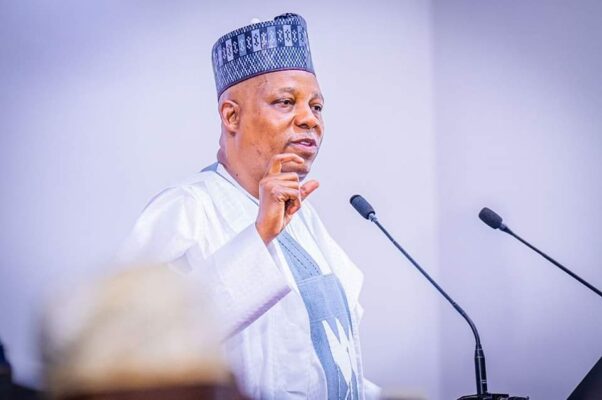
Kashim Shettima, Nigeria’s vice president, represented by Abubakar Kyari, minister of Agriculture and Food Sceurity, framed the initiative as a capital mobilisation strategy, linking mechanisation directly to financing, processing capacity, and private sector confidence.
The proposed model targets one of agriculture’s biggest constraints — the high upfront cost of equipment — by introducing structured, long-tenor funding that could deepen credit penetration in the sector and crowd in private capital.
The development comes amid a broader push to industrialise agriculture through integrated investments spanning inputs, mechanisation, and processing.
At the centre of this strategy is Kano, where the newly commissioned Afcott Grains sesame and grains processing facility is expected to produce 40,000 tonnes of sesame and 25,000 tonnes of grains annually, strengthening export capacity and local value addition.
The project, backed by the Kewalram Chanrai Group, reflects rising investor appetite in agro-processing, with over 500 jobs projected and strong local content participation.
For policymakers, the alignment of Springfield Agro’s tractor assembly operations with financing discussions highlights a deliberate attempt to localise agricultural equipment manufacturing, reduce imports, and build a sustainable mechanisation ecosystem.
Springfield Agro’s existing Mahindra tractor assembly plant underscores the industrial upside, combining technology transfer, domestic production, and job creation within a single value chain.
The financing talks are also tied to the Green Imperative Programme, under which government has begun rolling out mechanisation support nationwide, signalling a pipeline of bankable projects that could attract institutional investors.
Analysts say the convergence of financing, processing infrastructure, and input production suggests a coordinated effort to reposition agriculture as a scaled, investment-ready sector, rather than a subsistence activity.
Kano State’s role as host to both processing and input facilities further strengthens its position as a northern agribusiness hub, with state-backed investments in irrigation and extension services improving project viability.
With Nigeria’s food import bill still elevated, the emerging model — anchored on financing, local manufacturing, and export-oriented processing — could redefine the sector’s economics by shifting it toward productivity, surplus generation, and foreign exchange earnings.
The Federal Government maintains that sustained collaboration with private investors will be critical to executing this transition and unlocking long-term growth across the agricultural value chain.

Join BusinessDay whatsapp Channel, to stay up to date
Open In Whatsapp