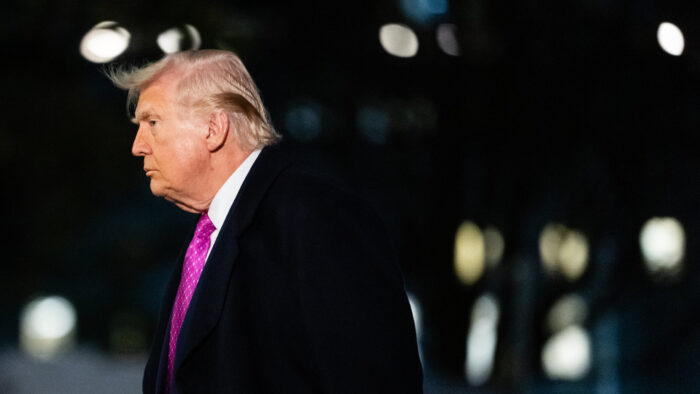
Donald Trump, US president, has announced an open ended extension of the United States ceasefire with Iran, stepping back from a planned military strike just hours before the truce was due to expire, while keeping a controversial naval blockade firmly in place.
In a statement on Tuesday, Trump said Washington would delay any attack to give Tehran more time to present a proposal to end a conflict that has lasted seven weeks, killed thousands and unsettled the global economy.
“I have therefore directed our Military to continue the Blockade and, in all other respects, remain ready and able, and will therefore extend the Ceasefire until such time as their proposal is submitted, and discussions are concluded, one way or the other,” Trump said.
The decision followed a request from Shehbaz Sharif, Pakistani Prime Minister, and Pakistan’s military leadership, who have been mediating talks between the two sides. Sharif welcomed the move, saying he hoped it would allow diplomacy to take its course.
“I sincerely hope that both sides will continue to observe the ceasefire and be able to conclude a comprehensive ‘Peace Deal’,” he said.
The ceasefire, originally agreed on April 8, had been due to lapse on Wednesday. Trump’s latest move suggests Washington is willing to prolong negotiations, though without setting any clear deadline.
Uncertainty over Iran response
There was no immediate official reaction from Tehran. However, the semi official Tasnim News Agency reported that Iran had not requested an extension and would announce its position later.
Iranian officials have sharply criticised the continued US naval blockade, describing it as a violation of the truce. Abbas Araghchi, Irans Foreign minister, earlier called the move “an act of war”.
“Iran knows how to neutralise restrictions, how to defend its interests, and how to resist bullying,” Araghchi said.
A senior adviser to parliament speaker Mohammad Baqer Qalibaf dismissed Trump’s announcement outright.
“Trump’s ceasefire extension is certainly a ploy to buy time for a surprise strike,” said Mahdi Mohammadi, adding that the blockade amounted to ongoing military aggression.
Claims of division in Tehran challenged
Trump defended his decision by pointing to what he described as divisions within Iran’s leadership, following a series of US Israeli strikes that killed senior figures, including former supreme leader Ali Khamenei.
“The Government of Iran is seriously fractured,” Trump said.
That claim has been disputed by observers and officials inside Iran. Reporting from Tehran, journalists and analysts say power remains tightly held, now under Khamenei’s successor, Mojtaba Khamenei.
“Iran has a very unified leadership since the assassination of former Supreme Leader Ayatollah Ali Khamenei, “Members of this team are currently in the centres of decision in Tehran.”
Read also: Meet Taiwo Oyedele, the tax reform strategist now Nigeria’s finance chief
Talks face deep divisions
Despite the ceasefire, major disagreements remain. Washington is pushing for a complete shutdown of Iran’s nuclear programme, limits on missile development and a reduction in support for regional allies.
Tehran has rejected those demands, insisting on its right to enrich uranium for civilian purposes and refusing to scale back its military capabilities.
Another key sticking point is Iran’s stockpile of highly enriched uranium. Trump has claimed Tehran agreed to let the US remove the material, but Iranian officials deny this.
The future of talks remains uncertain, with a second round expected in Islamabad but not yet scheduled. For now, the ceasefire holds, but tensions remain high, with both sides signalling they are prepared for either diplomacy or renewed conflict.

Join BusinessDay whatsapp Channel, to stay up to date
Open In Whatsapp