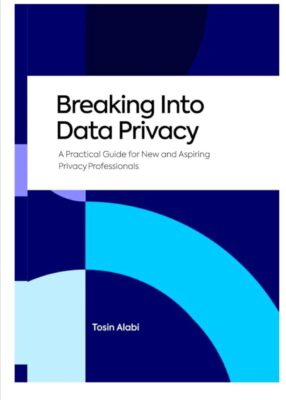
Publisher: Tozapro LLC
Pages: 137
ISBN: 9798267234085
Reviewer: KENNETH ATHEKAME
There is no polite way to say it: your data is not private. In Breaking Data Privacy, Tosin Alabi dismantles one of the most comforting illusions of the digital age: the belief that users control their personal information. What emerges is a stark portrait of a system designed not to protect individuals, but to profit from them.
Alabi wastes little time setting the tone. The modern internet, he argues, is not structured around privacy but extraction. Every click, search, and swipe feeds an ecosystem that thrives on surveillance. What appears as convenience free apps, seamless services, personalised experiences is underpinned by an aggressive and largely invisible data economy. Users are not simply customers; they are raw material.
The strength of the book lies in its clarity. Alabi walks readers through the lifecycle of data with precision: how it is generated, captured, stored, and eventually monetised. Each interaction contributes to a growing digital profile, one capable of predicting behaviour, shaping decisions, and exposing vulnerabilities. The process is constant, often opaque, and rarely understood by those it affects most.
At the centre of this system are powerful technology companies that have turned data into currency. Alabi is unsparing in his critique. The business model is simple offer access in exchange for information but the balance of power is not. Corporations extract value at scale while users assume the risks, from identity theft to manipulation and loss of autonomy. The idea of “free” digital services, the book suggests, is one of the most successful marketing illusions of the modern era.
Governments, too, come under scrutiny. Alabi raises concerns about the expanding scope of state surveillance and the increasing ability of authorities to monitor citizens through digital channels. While acknowledging the need for some level of data collection in governance and security, he warns that oversight is often weak and accountability limited. The line between protection and intrusion is becoming dangerously thin.
One of the book’s more compelling arguments centres on data breaches. These incidents, now frequent and almost routine, are not treated as isolated failures. Instead, Alabi frames them as symptoms of a deeper structural problem: a system that collects vast amounts of data without investing equally in its protection. Weak security frameworks, human error, and cyberattacks combine to create persistent vulnerabilities. For individuals, the consequences are real financial loss, reputational damage, and long-term exposure.
Where Breaking Data Privacy gains added urgency is in its focus on emerging markets, particularly across Africa. As digital adoption accelerates, regulatory safeguards are struggling to keep pace. Many countries face gaps in legislation, enforcement, and public awareness, leaving users exposed in an increasingly complex digital environment. Alabi’s warning is direct: without proactive intervention, these markets risk becoming easy targets in a global system already tilted against them.
Still, the book is not merely diagnostic. Alabi offers a clear call to action. He advocates stronger and more adaptive regulatory frameworks, stricter enforcement of data protection laws, and a shift in corporate behaviour towards greater accountability. Transparency, he argues, should not be optional, and user consent must be meaningful rather than performative.
Individuals are not exempt from responsibility. The book challenges readers to rethink their digital habits, limit the information they share, use stronger security measures, and pay closer attention to how platforms operate. In a system driven by data, passivity carries a cost. Awareness, while not a complete solution, is a necessary first step.
Stylistically, Alabi keeps the book accessible. He avoids technical jargon and instead opts for clear, direct explanations that make complex issues digestible. This approach broadens the book’s appeal, positioning it as a resource not just for policymakers and industry insiders, but for everyday users navigating a data-driven world.
That said, the book is not without flaws. At times, its critique of institutions feels sweeping, with limited distinction between varying practices across companies and governments. The discussion of Africa, while timely, could also benefit from deeper, case-specific analysis to strengthen its local relevance.
Even so, these shortcomings do not diminish the book’s core achievement. Breaking Data Privacy succeeds in exposing the mechanics of a system most users take for granted. It connects everyday digital behaviour to a larger economic and political structure, one that operates largely out of sight but with profound consequences.
Alabi’s message is both simple and unsettling: the digital economy runs on data, and that data is yours until it isn’t. The real danger is not just the erosion of privacy, but the quiet normalisation of its loss. In a world increasingly shaped by information, the cost of convenience is no longer hidden. It is simply ignored.

Join BusinessDay whatsapp Channel, to stay up to date
Open In Whatsapp