

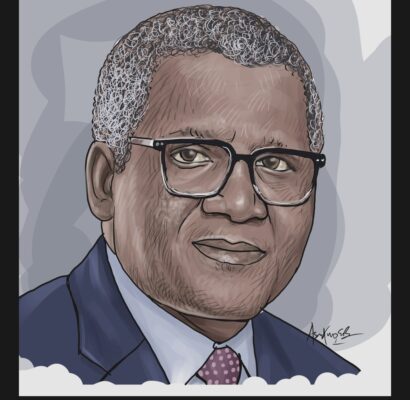
Aliko Dangote, Africa’s richest man and President of Dangote Group, has said that entrenched foreign interests are undermining Africa’s industrial development and slowing the continent’s push toward economic self-sufficiency.
Dangote made the remarks while speaking at the Investing in Africa Forum, held on the sidelines of the ongoing IMF/World Bank 2026 Spring Meetings in Washington DC.
He said Africa’s industrial ambitions, particularly in manufacturing and value addition, have been constrained by external forces that benefit from the continent’s continued dependence on imports of processed goods.
According to him, even critical sectors such as refining have suffered prolonged underdevelopment due to competing global interests.
Read also: SEC sets N7.5bn capital floor to shield investors in FTZE public offerings
“We haven’t really had any refinery in Africa for donkey years. Even the ones that they started in other areas, other countries, they have not been able to… there are so many interests of not allowing that to happen,” he said.
Dangote argued that while foreign investment remains important, African economies must first strengthen internal confidence and investment capacity to reduce perceived risks that discourage external capital.
“Foreigners will invest, but foreigners are also very smart people. Anything you talk about risk, they want to look at it 10 times. So how can we de-risk? The only way is we Africans must lead and show that perceived risk is not real risk,” he said.
He stressed that African investors must take the lead in funding domestic projects in order to attract global capital, noting that external investors are more likely to follow when they see strong local commitment.
“If I am not investing in Africa, there is no way I will go and convince anybody outside the continent to come and invest. So I must now show that this risk is a perceived risk. Of course, there is risk everywhere, but you must know how to mitigate it,” he added.
Dangote also called for a shift in capital flows within the continent, urging African investors to repatriate and invest their wealth locally rather than holding funds abroad.
“For us in Africa, I keep advising my colleagues… don’t keep that money in a foreign bank, bring it back home, invest. The place is good. You make a lot of money,” he said.
He further pointed to Africa’s limited value addition as a major structural weakness, citing Zambia’s copper exports as an example of missed industrial opportunities.
“A place like Zambia, they are busy exporting copper. We want to process that copper before it is exported,” he said.
Dangote also disclosed ongoing expansion plans for his refinery project, saying it would significantly boost Africa’s refining capacity and global positioning.
“We are taking the refinery to 1.4 million barrels per day, and that will make it the largest refinery in the world,” he said.

Join BusinessDay whatsapp Channel, to stay up to date
Open In Whatsapp


