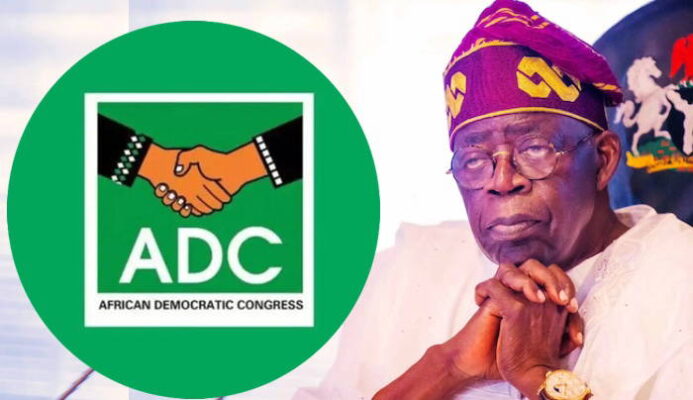
The African Democratic Congress (ADC) has accused President Bola Tinubu’s administration of infiltrating and attempting to destabilise the party. The ADC has recently emerged as a primary platform for a coalition of opposition politicians, including former allies of the erstwhile President Muhammadu Buhari.
Part of a broader strategic alliance aimed at the 2027 general election, the ADC alleges that Tinubu and his associates are conducting clandestine meetings with key members. The party further claims the presidency is using federal appointments to erode internal structures and weaken opposition unity.
ADC becomes rallying point for opposition figures
The ADC has become a focal point for figures opposing Tinubu’s re-election, including Atiku Abubakar, Peter Obi, and Nasir el-Rufai. Investigations by the BusinessDay political desk indicate that the coalition intends to leverage growing discontent among the “Buhari bloc”—individuals who facilitated Buhari’s rise to power but feel marginalised by the current administration.
Internal leadership crises have also plagued the ADC, with some members accusing the presidency of orchestrating chaos to hinder the party’s operational capacity. However, the All Progressives Congress (APC) has dismissed these allegations as “pitiful” attempts to gain relevance.
Tensions and the ACN-CPC legacy
Several prominent loyalists from the previous administration currently face significant political and legal challenges. Historically, tensions between Tinubu and Buhari stemmed from the 2023 APC presidential ticket struggle, where northern governors eventually pushed for a southern candidate, thwarting Buhari’s influence.
While both leaders maintained a public show of unity, a “cold war” persisted. Tinubu’s camp reportedly felt Buhari was insufficiently supportive during the primaries and subsequent general election campaign. This divergence has continued into policy, with stakeholders noting Tinubu’s shift away from his predecessor’s management style.
High-profile loyalists navigate legal scrutiny
Notable figures from the Buhari era are now reportedly active in opposition movements or facing investigation:
Rotimi Amaechi: The former transport minister is allegedly heading committees focused on party registration for the opposition.
Abubakar Malami: The former attorney-general and justice minister is identified as a key player in the coalition while facing scrutiny regarding his tenure.
Hadi Sirika: The former aviation minister is noted as a disgruntled APC member working against the current administration.
Rauf Aregbesola: The former interior minister and Osun State governor is part of the disaffected “CPC loyalists”.
Nasir el-Rufai: The former Kaduna State governor has been seen leading initiatives with opposition figures like Abubakar and Obi.
Yahaya Bello: The former Kogi State governor is under investigation by the Economic and Financial Crimes Commission (EFCC) for alleged money laundering.
Chris Ngige: The former labour minister is facing trials for alleged contract fraud.
Saleh Mamman: The former power minister is embroiled in investigations regarding allegations exceeding N22bn.
Strategic shifts and the 2027 outlook
Disgruntled officials perceive intense EFCC scrutiny as political victimisation. Policy shifts, such as the removal of the fuel subsidy and the floating of the naira, have created a sharp contrast to the Buhari era, further alienating loyalists. These forces are now considering the formation of a unified opposition party or defecting to the Social Democratic Party (SDP).
Despite reports of sidelining the Congress for Progressive Change (CPC) bloc, some members have reaffirmed their loyalty to the APC. Senator Tanko Al-Makura has reportedly been utilised to engage and appease this faction. As of April 2026, many CPC stakeholders, including Katsina State Governor Dikko Umar Radda and Nasarawa State Governor Abdullahi Sule, remain within the party.
Tinubu’s plan for the CPC bloc
Investigation reveals that President Tinubu intends to empower the remaining loyal CPC faction to strengthen the APC for 2027. This strategy involves leveraging the CPC network for grassroots mobilisation, particularly in the North, and offering representation in government to secure long-term influence.
By engaging with the bloc led by Al-Makura, the administration aims to present a united front against external coalitions. This faction has committed to championing the administration’s economic reforms, distinguishing themselves from figures like el-Rufai who have distanced themselves from the presidency.

Join BusinessDay whatsapp Channel, to stay up to date
Open In Whatsapp