…government turns to China expertise for relief
In the quiet settlement of Yankifi, tucked inside Brigade Quarters in the Nasarawa local government area of the Kano metropolis, piped water has never flowed from the taps — at least not in living memory. For Suleiman Rabiu, an artisan, the absence of running water is not a temporary inconvenience but a lifelong reality.
“Since I started living here over 30 years ago, I have never seen water come out of the tap,” Rabiu said. Instead, his family depends entirely on mairuwa — informal water vendors who navigate Kano’s dusty streets with carts and trucks, selling what should be a basic public service.
The staggering cost of informal supply
The financial burden of this scarcity is significant. A single jerrycan now sells for ₦200, while a full truckload of 14 jerrycans costs ₦2,400 and barely lasts two days. “In a week, we spend up to ₦7,000 just on water,” Rabiu explained. “At the end of the month, it is over ₦20,000. And that is only for basic use”.
Rabiu’s story echoes across Kano. In Sabon Gari, one of the city’s busiest commercial districts, trader Ayodele John faces a similar burden. “I have lived here for 20 years, and we have always bought water,” John said. “For washing alone, I spend about ₦30,000 monthly”.
Infrastructure decay and population pressure
For Bala Musa Albasu, a retired staff member of the Kano State Water Corporation, the crisis is both personal and professional. Even in Kofar Mata, within Kano Municipal, his community has gone a decade without a reliable water supply. “The biggest problem Kano residents face today is water scarcity,” Albasu said.
Albasu, who worked in the water corporation for 30 years, attributed the current situation to years of neglect. Rapid population growth without corresponding investment in infrastructure has left the system overwhelmed. Metropolitan Kano requires about 750-million litres of water daily, while statewide demand exceeds 975-million litres.
Government intervention and the China partnership
Current supply falls hundreds of millions of litres short due to ageing infrastructure, erratic electricity, and non-functional facilities. Of the state’s 22 water treatment plants, only a few—such as Challawa and Tamburawa—are operating effectively.
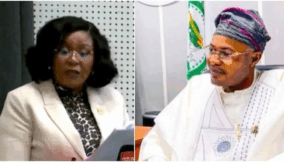
Governor Abba Kabir Yusuf recently cited leakages and obsolete equipment as primary hurdles.
In response, the state government has begun rehabilitating key infrastructure, including the nearly century-old Challawa waterworks. More than ₦1bn has been invested in high-capacity pumps to boost output. To further address the deficit, Kano plans to partner with CGC Nigeria Limited, a Chinese engineering firm with extensive experience in Nigeria’s water sector.
A lived reality of sacrifice
Authorities believe the partnership could bring the technical expertise and financing needed to overhaul failing pipes. However, the government has also warned of sanctions for those diverting public water supplies for irrigation or other misuses.
For residents like Rabiu and John, these plans offer little immediate comfort. Back in Yankifi, life continues around the daily search for water as families ration every drop. Until the taps finally deliver, Kano’s water crisis remains a lived reality measured in sweat, sacrifice, and the rising cost of survival.

Join BusinessDay whatsapp Channel, to stay up to date
Open In Whatsapp