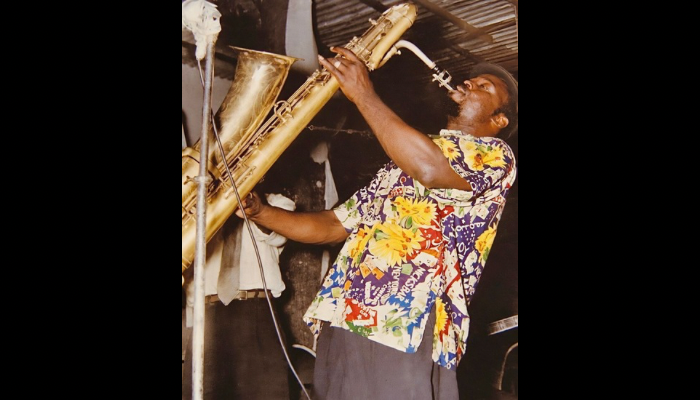
There are musicians who become famous, and there are musicians who become eras. Bobby Benson belongs firmly to the second category. To write about him is not simply to revisit the career of a gifted Nigerian bandleader, singer and entertainer. It is to enter the noisy, stylish, fast-changing world of urban Nigeria in the decades when modern popular culture was learning how to dress, dance, speak and seduce. Bobby Benson was not just part of that transformation. He helped stage it.
But his greatness was not only technical. He had instinct for performance architecture. He knew how a band should look, how a room should feel, how a song should travel from stage to street. He helped shape a culture in which the Nigerian musician could be not merely an entertainer, but a public personality around whom nightlife, fashion and urban prestige could revolve.
Taxi Driver: The Street as Orchestra
If one song best captures Bobby Benson’s genius for turning everyday life into popular art, it is Taxi Driver. It is one of those recordings that sounds deceptively simple until one listens closely to what it is doing. On the surface, it is witty, playful and instantly memorable. Underneath, it is a clever exercise in musical storytelling.
The brilliance of Taxi Driver lies in its conversational ease. Benson understood that city life had its own rhythm, and that ordinary speech, if handled well, could become music. The song carries the pulse of Lagos movement: traffic, banter, social performance, flirtation, improvisation. It turns a routine urban encounter into theatre. Rather than reaching for grand abstraction, Benson lets the street speak, and in doing so, he gives the song its lasting vitality.
Musically, Taxi Driver is light-footed and disciplined. It does not overwhelm the listener with complexity, but it is carefully constructed. The arrangement supports the humour without flattening it. The band moves with elegance. The melody is catchy without being cheap. The result is a piece of popular music that feels lived-in. That is why it has survived. It is not just a hit; it is a document of urban social texture.
Gentleman Bobby: Self-Invention in Song
If Taxi Driver shows Benson as an observer of city life, Gentleman Bobby presents him as a master of persona. This is one of the songs that helped solidify his public image as more than a singer. He becomes, in effect, a character in his own legend.
The title alone carries significance. “Gentleman” in that era was not merely a compliment. It suggested polish, confidence, urbanity and cultivated presence. In Gentleman Bobby, Benson leans into that image with wit and composure. The song operates partly as entertainment and partly as self-mythologising. He is presenting himself to the audience, but he is also presenting an ideal of modern masculine style.
What makes the song compelling is that it never feels stiff. It swings. It smiles. There is a subtle pleasure in how Benson turns image into rhythm. He is not boasting in the crude sense. He is performing elegance. The track captures his ability to make sophistication feel accessible rather than intimidating. He is the star, but he is also the host, inviting the listener into his world.
Niger Mambo: Cosmopolitan Confidence
Then there is Niger Mambo, a title that alone announces cultural movement. Here Benson’s cosmopolitan instincts come fully into view. The song reflects an artist alive to transnational currents, unafraid to borrow from wider dance idioms while rooting the sound in a recognisably West African sensibility.
The mambo influence is not accidental decoration. It speaks to an era when African musicians were in conversation with the Atlantic world, translating and adapting rhythms across borders. What Benson does so well in Niger Mambo is avoid sounding derivative. The song does not feel like imitation. It feels like appropriation in the best artistic sense: a global rhythm made to pass through local intelligence.
There is joy in the arrangement. One hears a bandleader interested in energy, movement and polish. The track carries the confidence of a musician who understands that Nigerian audiences could appreciate sophistication without losing their appetite for immediacy. Niger Mambo is dance music, yes, but it is also evidence of Benson’s musical ambition. He wanted his sound to travel without losing its home.
The Showman’s Ear
To review Bobby Benson properly is to notice how often his songs balance accessibility and craft. He was never trapped by the false choice between popularity and quality. That is one reason his work mattered so much. He had the instincts of a bandleader, the timing of a comic observer and the vanity, in the most productive sense, of a true performer. He knew that presentation mattered. He knew that audiences remembered atmosphere. He knew that music had to move bodies, but also had to leave behind image and memory.
This is why even the titles associated with him carry so much personality. Nylon Dress, Mafe, Iyawo se wo lose mi and others belong to a repertoire shaped by humour, social commentary, romance and urban theatricality. Benson was not making austere art for closed circles. He was making public music: music for the dance floor, for conversation, for reputation, for the city.
Bobby Benson as Cultural Institution
His legend is also inseparable from the world he built around performance. Benson was among those early Nigerian entertainers who grasped that a musician could create not only songs, but institutions. His clubs and hospitality ventures became extensions of his artistic persona. They were places where music, status and nightlife met. In this sense, he anticipated a later model of African celebrity: the artist as brand, curator and entrepreneur.
That institutional dimension deepens his legacy. He was not merely passing through the culture. He was helping organise it. Younger musicians could look at Bobby Benson and see a possible future: not just musical success, but social influence. That mattered enormously in a country where entertainment was still defining its professional shape.
Why the Legend Endures
Bobby Benson endures because he occupies that rare place where history, memory and sound reinforce one another. He was foundational without becoming academic. He was stylish without becoming shallow. He was popular without becoming disposable. His songs still matter because they were built from recognisable life but elevated by flair, musical intelligence and performance discipline.
In Taxi Driver, he made the street sing. In Gentleman Bobby, he turned personality into music. In Niger Mambo, he proved that Nigerian sound could be outward-looking and self-assured at the same time. These are not minor achievements. They are the marks of an artist helping define what modern Nigerian entertainment could be.
Bobby Benson was not just a star of his day. He was one of the men who taught Nigerian popular music how to carry itself — with rhythm, wit, glamour and a sense of occasion. That is why the legend has lasted. Not because people are sentimental about the past, but because the work still reveals the shape of a man who understood the city, understood the crowd and understood the power of a song to become social memory.

Join BusinessDay whatsapp Channel, to stay up to date
Open In Whatsapp