

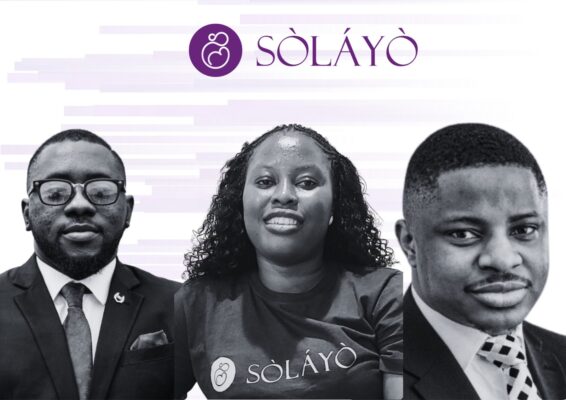
A Lagos-based health startup is turning WhatsApp into a frontline maternal care tool, betting that instant messaging and artificial intelligence can help close one of Africa’s deadliest healthcare gaps.
Solayo Africa, founded by Oladiipo Damilola, alongside Theresa Oyewole and George Odiana, has built an AI-powered chatbot called Moma that delivers pregnancy and postnatal guidance directly through WhatsApp. The platform aims to reduce delays in care by giving women real-time access to medical advice without requiring hospital visits.
The model is simple: a pregnant woman sends a message, often “Hi Moma” and receives tailored responses based on her stage of pregnancy, symptoms, and medical needs. The chatbot tracks users from early pregnancy through childbirth and into a child’s first year, offering weekly updates, symptom checks, breastfeeding advice, and vaccination reminders.
For Nigeria, where maternal mortality remains among the highest globally, the stakes are significant. The country accounts for roughly 28.5 percent of global maternal deaths, according to United Nations data. A Nigerian woman faces a 1 in 19 lifetime risk of dying during pregnancy or childbirth, compared with 1 in 4,900 in developed countries. In many rural areas, limited access to skilled health workers and delayed response to complications continue to drive fatalities.
Conditions such as eclampsia, haemorrhage, and sepsis, leading causes of maternal deaths are largely preventable if detected early. Solayo’s founders say Moma is designed to shorten the time between symptom recognition and medical action.
Read also: Nigeria bets on satellites, startup partnerships to unlock $1.5bn digital economy growth
“Access is the core problem. Women don’t always lack hospitals, they lack timely information and guidance,” Damilola told BusinessDay.
WhatsApp as healthcare infrastructure
Rather than building a standalone app, Solayo chose WhatsApp to bypass barriers such as high data costs, low smartphone storage, and digital literacy challenges. The messaging platform is already widely used across Africa, making it a familiar entry point for healthcare delivery.
The approach aligns with emerging evidence across sub-Saharan Africa. Studies in Cameroon and Ghana have shown that WhatsApp-based health interventions can increase antenatal attendance and facility-based deliveries. In South Africa, the MomConnect programme has reached nearly five million mothers using similar channels.
Solayo extends that model by combining AI-driven guidance with human medical oversight. While Moma handles routine queries on symptoms, nutrition, and infant care, more complex cases are escalated to healthcare professionals through a premium service.
This hybrid system allows the platform to scale while maintaining clinical reliability, a key concern in AI-led healthcare tools.
Beyond information: Linking care and commerce
Unlike many digital health platforms that focus solely on education, Solayo integrates additional services into the same WhatsApp interface.
The company has built a curated marketplace where expectant mothers can purchase maternity and newborn supplies in bundled packages. It also partners with hospitals and health maintenance organisations to connect users to physical care when needed.
The strategy reflects a broader understanding of maternal health in Nigeria, where women often manage not just medical needs but also the logistics of childbirth, from sourcing supplies to budgeting for hospital fees.
“Pregnancy is not just clinical. It is economic and logistical. We designed the system around how women actually experience it,” Oyewole said.
Read also: Africa startup funding rebounds to $272m in February, but big deals dominate recovery
Data, trust and independence
Handling sensitive health data remains a major challenge for digital health platforms in Africa, where regulatory frameworks are still evolving. Solayo says it encrypts user interactions and does not share data with third parties, positioning itself ahead of many local compliance standards.
The company is also building a commercial model that reduces reliance on donor funding. Revenue from subscriptions and marketplace transactions supports operations, offering insulation from fluctuations in international aid, a vulnerability exposed by recent cuts to global health programmes.
That independence could prove critical as African startups increasingly seek sustainable healthcare solutions without external dependence.
Scaling across Africa
Nigeria’s estimated seven million annual births present a large initial market. But Solayo’s ambitions extend beyond one country.
The company is targeting expansion across Africa, where similar gaps in maternal care persist and WhatsApp usage is widespread. The model’s portability, requiring only a smartphone and internet access, makes it adaptable to multiple markets with limited healthcare infrastructure.
For users, the technology operates quietly in the background. A woman messaging Moma in the middle of the night may not think about artificial intelligence, data encryption, or healthcare systems. She asks a question and gets an answer, often within seconds.
In a country where hundreds of thousands of newborns die annually and many maternal deaths occur outside health facilities, that speed can be decisive.
Solayo’s bet is that timely information, delivered through a device already in women’s hands, can shift outcomes at scale.
If it works, a simple WhatsApp message could become one of the most effective interventions in Africa’s maternal health crisis.


Join BusinessDay whatsapp Channel, to stay up to date
Open In Whatsapp


