The one-month war in Iran cost Arab countries up to $194bn
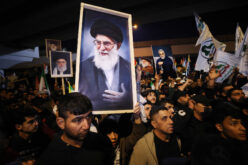
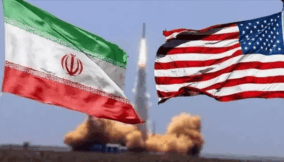
The United Nations Development Programme has warned that the US-Israel war on Iran is inflicting severe economic damage across Arab economies, with losses estimated between $120bn and $194bn after just one month of conflict.
According to the report, regional GDP could shrink by up to 6 percent, while 3.7 million jobs are expected to be lost. An additional four million people risk falling into poverty, underscoring what UN officials describe as deep structural fragility across interconnected economies.
Abdallah Al Dardari said the projections assume a short conflict, warning that prolonged fighting—particularly disruptions to the Strait of Hormuz—could amplify the crisis. Rising oil prices and disrupted trade routes are already feeding inflation and straining supply chains, with the heaviest impact expected in vulnerable states such as Sudan and Yemen.
US judge halts Trump’s $400 million White House ballroom project
A US federal judge has temporarily blocked President Donald Trump’s plan to construct a new ballroom at the White House, ruling that the project lacks proper legal authorisation.
Judge Richard Leon sided with the National Trust for Historic Preservation, which argued that the president overstepped his authority.
Leon emphasised that while the president acts as a steward of the White House, ownership and major structural decisions ultimately lie with Congress.
The ruling, which takes effect in 14 days, leaves room for appeal. Trump defended the project as cost-effective and necessary, dismissing the court’s intervention as unwarranted.
UK boosts military presence in Gulf as Iran tensions escalate
The United Kingdom is deploying additional troops and air defence systems to the Middle East, increasing its regional military presence to around 1,000 personnel.
John Healey, the Defence Secretary said the reinforcements would support allies including Saudi Arabia, Bahrain, and Kuwait, framing the move as defensive amid growing Iranian attacks.
Prime Minister Keir Starmer reiterated that Britain would not be drawn into direct conflict but would protect its interests and partners. The deployment comes as Gulf states warn that attacks on civilian infrastructure risk wider regional destabilisation.
Rare wolf attack shocks Germany as animal captured in Hamburg
Authorities in Hamburg have captured a wolf after it bit a woman in a rare urban attack, marking the first such incident since the species began returning to Germany decades ago.
The woman was treated in hospital after suffering facial injuries during the encounter on a busy shopping street. Officials said the animal appeared disoriented before the attack and was later subdued after being found in a nearby lake.
Wolves, which disappeared from Germany for over a century, have been gradually reintroduced since the 1990s. The incident comes amid renewed debate after lawmakers recently approved measures allowing controlled hunting to manage growing populations.
US job market slows sharply as hiring hits pandemic-era lows
The United States labour market is showing signs of stagnation, with job openings falling to their lowest level in six years, according to data from the US Department of Labor.
The latest JOLTS report shows hiring dropped to levels last seen during the COVID-19 pandemic, while fewer workers are quitting their jobs—typically a sign of reduced confidence in finding new opportunities.
Economists point to uncertainty driven by trade policy, immigration restrictions and the rapid expansion of artificial intelligence as key factors dampening labour demand. The slowdown adds to broader concerns about weakening consumer sentiment.
Abu Dhabi stock markets lose $120bn as Iran war rattles investors
Financial markets in the United Arab Emirates have shed roughly $120bn in value since the outbreak of the Iran war, highlighting investor anxiety over regional instability.
Dubai’s main index has dropped around 16 percent, while Abu Dhabi’s has fallen by 9 percent. The losses come as oil prices surge and uncertainty grows over the duration and scope of the conflict.
While markets in Qatar and Bahrain have also declined, Saudi Arabia and Oman have posted gains, reflecting uneven regional impacts. Globally, US equities have also slipped amid mixed signals from Washington on the trajectory of the war.
AFRICA
Somali forces seize Baidoa as regional leader resigns
Somalia’s federal army has taken control of Baidoa, the key administrative capital of South West state, triggering the resignation of regional president Abdiaziz Laftagareen.
The takeover follows escalating tensions between regional authorities and the federal government, with residents describing a heavy military presence and a city left largely deserted.
Baidoa hosts international agencies and peacekeeping missions, making the political crisis a concern for humanitarian operations in an already fragile region.
Senegal enacts tougher anti-LGBT law despite global criticism
Senegal has approved a controversial new law that increases penalties for same-sex relations and criminalises the “promotion” of homosexuality.
President Bassirou Diomaye Faye signed the bill after lawmakers overwhelmingly backed it, fulfilling a campaign pledge despite warnings from international rights groups.
The United Nations condemned the move as a violation of fundamental rights, including freedom of expression and equality, intensifying debate over human rights protections in the region.
South Africa cuts fuel levy to cushion Iran war impact
South Africa will temporarily reduce its fuel levy to ease rising petrol and diesel prices driven by the Iran conflict.
Finance minister Enoch Godongwana said the government would absorb short-term revenue losses while exploring broader support measures if the crisis persists.
Despite the intervention, fuel prices are still expected to rise sharply, reflecting the global surge in energy costs and its knock-on effects on inflation and household budgets.
Dozens of miners killed in South Sudan as blame dispute intensifies
At least 74 miners have been killed in an attack in South Sudan, with government and opposition groups trading accusations over responsibility.
The killings occurred in the mineral-rich Jebel Iraq region, highlighting persistent insecurity and the presence of multiple armed groups. Authorities have vowed to investigate and bring perpetrators to justice, though no group has claimed responsibility.
The violence underscores ongoing instability despite previous peace agreements aimed at ending years of civil conflict.
Nigeria warns citizens in South Africa after anti-migrant unrest
Nigeria has urged its citizens in South Africa to exercise caution following violent unrest during an anti-immigration protest in Eastern Cape province.
The tensions were partly fuelled by controversy over the recognition of a Nigerian community leader with a traditional Igbo title, which some locals viewed as politically sensitive.
Nigeria’s high commission advised nationals to limit movement and avoid public gatherings, as authorities seek to contain tensions in a country already grappling with complex migration dynamics.

Join BusinessDay whatsapp Channel, to stay up to date
Open In Whatsapp