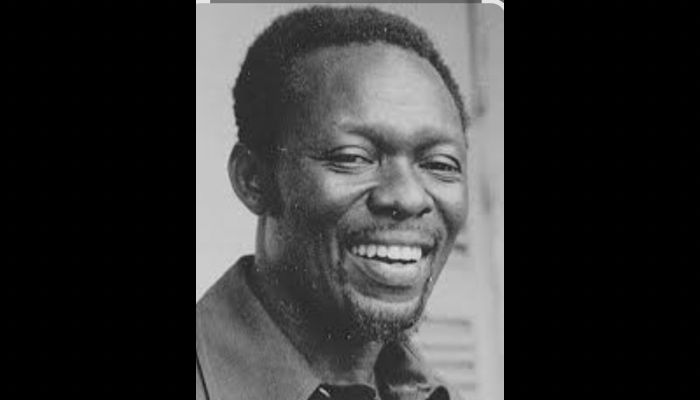
John Chukwu was not merely a performer. He was a cultural pathfinder whose work helped redefine what comedy could look and sound like in Nigeria. Long before stand-up comedy became a polished commercial industry with arena shows, corporate endorsements and household stars, Chukwu had already carved out a place for himself as one of the earliest figures to give Nigerian comedy a distinct public identity.
Before the rise of Ali Baba, Okey Bakassi, Basketmouth and the new generation of quick-witted stage talents, John Chukwu had already begun laying the foundation. He was among the first entertainers to treat comedy not as a side attraction or novelty act, but as a serious performance craft that could command audiences, shape culture and create celebrity. In that sense, his legacy is larger than laughter. He helped open the stage for an entire industry.
A Multi-Talented Original
Part of what made Chukwu remarkable was the sheer range of his creative gifts. He was not confined to one medium or one label. He moved with ease across comedy, acting, writing, broadcasting, music and graphic art, embodying a kind of old-school versatility that is increasingly rare in the modern entertainment business.
His early rise in the 1970s revealed an artist of unusual range. He appeared in films such as Amadi (1975) and Bisi, Daughter of the River (1977), performances that helped establish him as a rising screen talent. On television, he further expanded his appeal as host of the popular NTA programme The Bar Beach Show, where his charisma and ease before the camera became part of his growing public mystique. His creative footprint also stretched into productions such as Kusini, Ajani Ogun and Trees Grow in the Desert. Beyond stage and screen, he explored his literary instincts through a novel, Destined to Live, underlining the depth of his artistic ambition.
Building a Comedy Presence Across Radio and Television
If screen acting introduced him to wider audiences, radio and television turned him into a household voice. Chukwu built a formidable presence across broadcast platforms, with programmes such as Band Wagon Comedy Hour on radio and Laff Mattaz on television becoming favourites among audiences who were drawn to his style, wit and spontaneity.
He worked in an era when Radio Nigeria was home to some of the country’s most memorable broadcast personalities, and his name often stood alongside notable figures such as Ernest Okonkwo, Ishola Folorunsho and Sonny Irabor. It was a vibrant ecosystem of voices and characters, and Chukwu distinguished himself within it through timing, improvisation and his natural command of audience attention.
One of the more revealing details of his career is that he was not initially a full-time staff member at Radio Nigeria. He worked as a contract performer, paid per appearance. Yet his popularity and demand reportedly became so high that he earned more than many permanent employees. That detail says a great deal about his market value at the time. It also points to the early emergence of a celebrity economy in Nigerian entertainment, one in which talent and audience appeal could begin to outweigh formal institutional status.
The Power of Voice, Language and Presence
Chukwu’s appeal was not based on jokes alone. He possessed an uncommon gift for communication. He was known for his linguistic versatility, reportedly speaking and performing across several languages, including Igbo, Hausa, Yoruba, Efik, Urhobo, Italian and English. Whether exaggerated in parts by legend or remembered precisely, the story itself captures something essential about him: he was seen as an entertainer who could cross boundaries with ease.
That ability mattered in a country as diverse as Nigeria. Chukwu did not simply speak to audiences; he connected with them in ways that felt familiar, playful and inclusive. His voice travelled across regions, cultures and class lines. It helped make him not just a comic performer, but a broadly accessible public figure.
He is said to have jokingly described this gift as “local technology,” a phrase that perfectly captures both his humour and his instinct for self-mythology. It also speaks to how naturally he made brilliance appear effortless.
Redefining the Look and Language of Comedy
One of John Chukwu’s most important contributions to Nigerian entertainment was the professionalism he brought to performance. Affectionately known as John God, JayCee or John Suku, he helped transform the image of the comedian and compère. At a time when humour was often associated with roughness, disorder or clownish appearance, Chukwu introduced polish. He brought style, elegance and corporate poise to the stage.
That was no small shift. By dressing sharply and carrying himself with confidence, he challenged the idea that a comedian needed to look dishevelled to be funny. He suggested instead that humour could exist alongside sophistication. In many ways, he anticipated the modern Nigerian comedian: the well-dressed master of ceremonies, the urbane corporate host, the entertainer who can move seamlessly from nightclub to television studio to state banquet.
Today, that model feels normal. In Chukwu’s day, it was revolutionary.
The Master of Ceremony as Star
His command of language, timing and stagecraft made him one of the most sought-after public speakers and masters of ceremony of his era. By many accounts, he became one of the highest-paid MCs of his time, a reflection not only of his popularity but of the premium placed on his presence.
His reputation reportedly travelled all the way into the corridors of power. One oft-repeated story holds that when General Ibrahim Babangida needed him to host an Independence Day celebration, a special envoy was sent to locate him in his parents’ village and bring him back to Lagos. Whether recalled with some embellishment or not, the anecdote reinforces Chukwu’s stature at the height of his influence: he was not just an entertainer but an attraction, someone whose presence could elevate the prestige of an event.
His comedy itself was rooted in spontaneity. He was known for sharp observational humour, quick improvisation and an ability to turn the absurdities of everyday life into instant performance. That capacity for live invention set him apart and made him especially powerful on stage, where timing and instinct are often everything.
From Local Fame to International Reach
At the height of his career, Chukwu’s success took him beyond Nigerian borders. He reportedly toured the United States under the sponsorship of Sam Obadagboin and shared spaces with internationally known comedy figures, including Bill Cosby. Whether as performer, observer or participant in a larger entertainment circuit, the significance of that moment lies in what it represented: Nigerian comedy, through pioneers like Chukwu, was already making contact with global stages before the industry at home had fully matured.
He also moved in elite social circles and was known to be in the company of prominent figures across entertainment and public life. Stories linking him with high-profile personalities, including the musician Eddy Grant during a visit to Nigeria, contribute to the portrait of a performer whose influence extended well beyond the stage.
The Nightclub Years and the Art of Live Performance
Chukwu also built a presence outside traditional media through Klass Nite Club, which he owned and operated. There, his talent found perhaps its purest environment: the live room, the responsive crowd, the immediacy of laughter. At the club, he was able to fully display the blend of humour, commentary and improvisation that made him distinctive.
His performances were not simply comic routines. They were social performances, alive with wit, timing and insight into everyday Nigerian life. He understood that audiences did not only want to laugh; they wanted to recognise themselves in what they were hearing. That made his comedy not only entertaining but culturally resonant.
Philosophy, Reinvention and Spiritual Turn
By many accounts, Chukwu lived with an ethos of determination and fearlessness. He is remembered as someone who believed that hesitation was often the first enemy of success, and that persistence could overcome daunting odds. That mentality appears to have shaped not just his work ethic but the scale of his ambition.
Later in life, his story reportedly took a spiritual turn, with accounts suggesting he underwent a profound religious transformation. That chapter adds another layer to an already expansive life story: artist, entertainer, public figure, then spiritual witness. Whether told as biography or legend, it contributed to the aura that surrounded him.
A Brilliant Life Cut Short
John Chukwu’s death in 1990 brought a tragic end to one of the most remarkable entertainment careers of his era. He reportedly died at just 43, following complications that began after a fall. Accounts of the desperate attempts to save him, including support said to have come from powerful figures such as Ibrahim Babangida and MKO Abiola, only deepened the sense of national shock that followed his passing.
The public mourning that greeted his death testified to the reach of his impact. His body was reportedly flown from Lagos to Enugu on a presidential aircraft, a striking gesture that underscored how widely he was valued. In death, as in life, John Chukwu appeared to occupy a rare place in the national imagination.
The Legacy of a Pioneer
What John Chukwu leaves behind is more than nostalgia. His enduring importance lies in the template he created. He professionalised performance. He gave comedy polish. He expanded the role of the MC. He showed that humour could be intelligent, stylish, multilingual and commercially viable. He helped prove that live entertainment in Nigeria could be built around personality, discipline and presence.
Many of the things now taken for granted in Nigerian comedy and event culture bear traces of his influence. The sharp suit. The poised compère. The comedian as celebrity. The performer who can move fluidly between stage, radio, television and elite public events. Chukwu did not invent humour in Nigeria, but he helped modernise its performance language in a way that changed the possibilities for those who came after him.
To call him a pioneer is accurate. To call him a trailblazer is deserved. But perhaps the deeper truth is this: John Chukwu was one of the early architects of Nigerian entertainment as we know it today. His laughter may belong to another era, but the stage he helped build is still very much alive

Join BusinessDay whatsapp Channel, to stay up to date
Open In Whatsapp