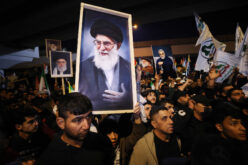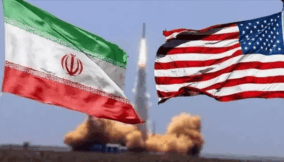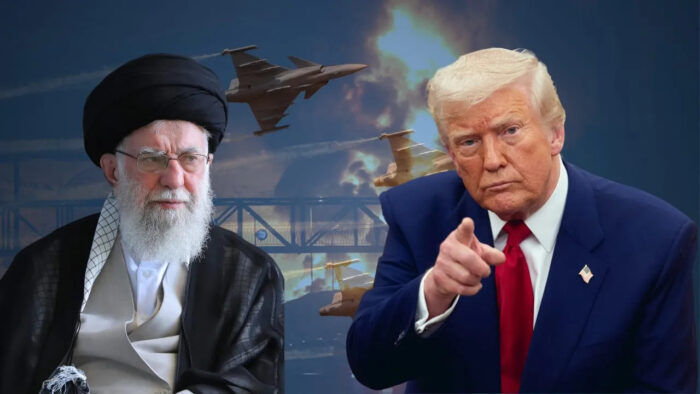
Donald Trump and Iran’s foreign minister issued flatly contradictory accounts on Wednesday of whether the two countries are engaged in negotiations to end nearly four weeks of war, deepening uncertainty over a conflict that has triggered the worst energy shock in history and is drawing warnings of a wider regional catastrophe.
Trump, speaking at an event in Washington, said Iranian leaders “are negotiating, by the way, and they want to make a deal so badly” — but were afraid to admit it publicly for fear of reprisals from their own people. Iranian Foreign Minister Abbas Araqchi offered a direct rebuttal, saying there had been no dialogue or negotiation with the United States, only messages exchanged through intermediaries. “Messages being conveyed through our friendly countries and us responding by stating our positions or issuing the necessary warnings is not called negotiation or dialogue,” he said in a state television interview.
According to Reuters, the White House reportedly declined to disclose specifics of a 15-point proposal it had sent to Tehran through Pakistan, but three Israeli cabinet sources said it calls for the reopening of the Strait of Hormuz, the removal of Iran’s enriched uranium stockpiles, curbs on its ballistic missile programme, and an end to funding for regional allies.
A senior Israeli defence official said Israel was sceptical Iran would agree to the terms, and was concerned that American negotiators might make concessions. Israel is also seeking to preserve its right to conduct pre-emptive strikes under any agreement.
Iran has told intermediaries that any ceasefire must include Lebanon, according to six regional sources familiar with Tehran’s position.
A war with no visible end
The contradictions over talks came as hopes of a near-term resolution faded. Stock markets, which had rallied the previous session on ceasefire optimism, weakened on Thursday as oil prices resumed their climb. “Optimism regarding a ceasefire has faded,” Tsuyoshi Ueno, senior economist at NLI Research Institute, told Reuters.
The military picture has also continued to darken. Admiral Brad Cooper, the Central Command chief leading US forces in the Middle East, said on Wednesday that the United States had struck more than 10,000 targets inside Iran, destroying 92 per cent of its largest naval vessels and reducing its drone and missile launch rates by more than 90 per cent. Two-thirds of Iran’s missile, drone, and naval production facilities have been damaged or destroyed.
The Pentagon is meanwhile planning to deploy thousands of airborne troops to the Gulf, adding to two Marine contingents already en route. The first unit, aboard an amphibious assault ship, is expected to arrive around the end of the month.
Iran has continued to strike back. The Israeli military said it had identified missiles launched from Iran towards Israel on Thursday, a day after completing what it described as a wide-scale wave of strikes on Iranian infrastructure.
The cost beyond the battlefield
With the Strait of Hormuz — through which a fifth of the world’s oil and liquefied natural gas passes — effectively closed, the economic fallout has spread far beyond the region. Airlines, supermarkets, and car dealers are grappling with rising costs and disrupted supply chains, while farmers and fishers are struggling to source diesel.
The World Food Programme has also warned that tens of millions more people could face acute hunger if the war continues into June.
Sultan Al Jaber, chief executive of Abu Dhabi state oil company ADNOC, described Iran’s restriction of the strait as “economic terrorism.” “When Iran holds Hormuz hostage, every nation pays the ransom, at the gas pump, at the grocery store, at the pharmacy,” he said.
Meanwhile, Trump faces growing domestic pressure to find a resolution. A Reuters/Ipsos poll conducted between 20th and 23rd March found 61 per cent of Americans disapproving of US military strikes in Iran, with his approval ratings at an all-time low and mid-term congressional elections on the horizon.
The United Nations Secretary-General António Guterres issued a stark warning on Wednesday. “The world is staring down the barrel of a wider war,” he said from UN headquarters in New York. “It is time to stop climbing the escalation ladder — and start climbing the diplomatic ladder.”

Join BusinessDay whatsapp Channel, to stay up to date
Open In Whatsapp