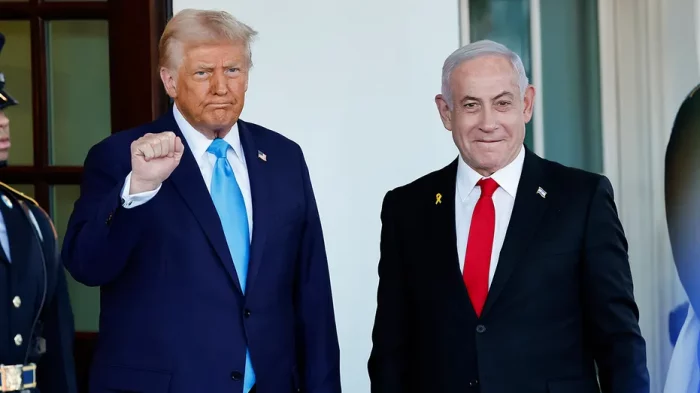
A phone call between Benjamin Netanyahu and Donald Trump less than 48 hours before a joint United States-Israeli strike on Iran has shed new light on how a narrow intelligence window helped shape one of the most consequential military decisions in recent years.
According to a Reuters exclusive, the two leaders spoke after receiving updated intelligence indicating that Iran’s Supreme Leader, Ali Khamenei, would be meeting senior officials at his compound in Tehran.
Read also: How Trump, Netanyahu took on Iran and what comes next
The gathering presented a rare opportunity for what officials described as a “decapitation strike” targeting Iran’s top leadership.
The urgency intensified when new intelligence revealed that the meeting had been moved forward from Saturday night to Saturday morning, thereby shortening the timeframe for action. Three people briefed on the call told Reuters that Netanyahu used the conversation to press the case for immediate action, arguing that such a window might not present itself again.
Read also: Trump denies US role in Iran South Pars strike as Middle East energy crisis deepens
Netanyahu, who has long pushed for a tougher stance against Tehran, also pointed to alleged Iranian efforts to target Trump.
Among them was a 2024 murder for hire plot that US authorities said was orchestrated in retaliation for the killing of Qassem Soleimani, the powerful commander of Iran’s Islamic Revolutionary Guard Corps.
At the time of the call, Trump had already approved the idea of a military operation against Iran but had not finalised the timing or conditions for US involvement, the sources said. American forces had been building up in the region for weeks, fuelling expectations within the administration that a strike was imminent. An earlier potential date had been abandoned due to poor weather.
Read also: Trump weighs risky ground troop options as Iran war enters third week
Reuters could not independently confirm the extent to which Netanyahu’s arguments influenced Trump’s final decision. However, those familiar with the discussion described the call as a critical moment, coming as intelligence suggested the opportunity to target Khamenei was rapidly closing.
On February 27, Trump authorised the operation, known as Operation Epic Fury. The first strikes were carried out early the following morning.
By Saturday evening, Trump publicly announced that Khamenei had been killed, marking a sharp escalation in tensions and a turning point in the long-running confrontation between Washington, Tel Aviv, and Tehran.

Join BusinessDay whatsapp Channel, to stay up to date
Open In Whatsapp