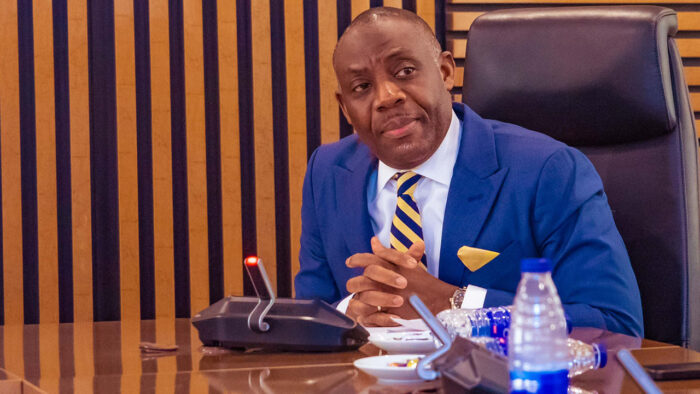
A bold reform is on the horizon for Nigeria’s basic education sector. Tunji Alausa, Minister of Education, has unveiled plans to abolish the National Common Entrance Examination, replacing it with a centralised Learner Identification Number (LIN) system to track pupils’ academic journeys.
Alausa disclosed this during an interactive session with journalists in Lagos over the weekend. He explained that the proposed reforms aim to improve access to education and ensure more robust tracking of pupils across the country.
Continuous assessment to replace traditional exams
The minister emphasised that the common entrance examination will be phased out in favour of a more comprehensive evaluation system. This shift marks a significant departure from the high-stakes testing that has historically governed the transition from primary to secondary school.
“It will be replaced by continuous assessment (CA),” Alausa said. “The CA will reflect the performance of the pupil from primary one. Even if a pupil is transferring from one school to another, he will take his record along to his new school.”
The new system is designed to address gaps in the transition between educational levels, particularly for the large number of pupils who currently fail to progress to the secondary stage.
Statistics reveal alarming dropout rates
Providing data to support the reform, Alausa revealed that millions of pupils enrolled in public primary schools do not continue their education. The discrepancy between primary enrolment and secondary transition remains a critical concern for the ministry.
“We have over 50,000 public primary schools in the country with over 23-million pupils,” Alausa stated. “According to statistics available to us, only a little over 3-million of those pupils move to the junior secondary school level in our public schools.”
He posed a rhetorical question regarding the remaining 20-million pupils not enrolled in public secondary schools, noting that private institutions cannot account for such a vast deficit.
Call for state governments to expand access
The minister underscored that the current situation points to a major access problem, reiterating the need for state governments to increase infrastructure. He confirmed that he has already engaged with the Nigeria Governors’ Forum on the matter.
“The issue is simply a lack of access, and we are working on that. There is a need to build more schools,” Alausa said. He urged state governments to accommodate more students to ensure the transition gap is closed.
Beyond infrastructure, the government is focusing on digital tracking. The introduction of the LIN will begin at the primary level, providing each child with a unique identifier that remains with them regardless of school transfers.
Digital tracking to monitor student retention
The LIN system will enable authorities to monitor student progress in real-time and identify those who drop out of the system. This data-driven approach is expected to provide clearer insights into why students leave school prematurely.
“If someone is expected to be in JSS1 and he is not there, we will be able to know the reason why he is not continuing his education,” Alausa explained. This level of oversight is intended to inform targeted interventions.
Additionally, the minister revealed that efforts are ongoing to revive the National Home-Grown School Feeding Programme to boost enrolment. The initiative may be moved to the Federal Ministry of Education to ensure improved monitoring and accountability.

Join BusinessDay whatsapp Channel, to stay up to date
Open In Whatsapp