The incoming generation of CNG Autogas conversion experts may emerge mostly from the oil region, incidentally. This is because the Niger Delta Development Commission (NDDC) has embarked on specialist training scheme of selected youths in the Niger Delta in the emerging field. The result could be that the best hands in the conversion and related tech businesses may be found in the Niger Delta region. Demand may be very high.
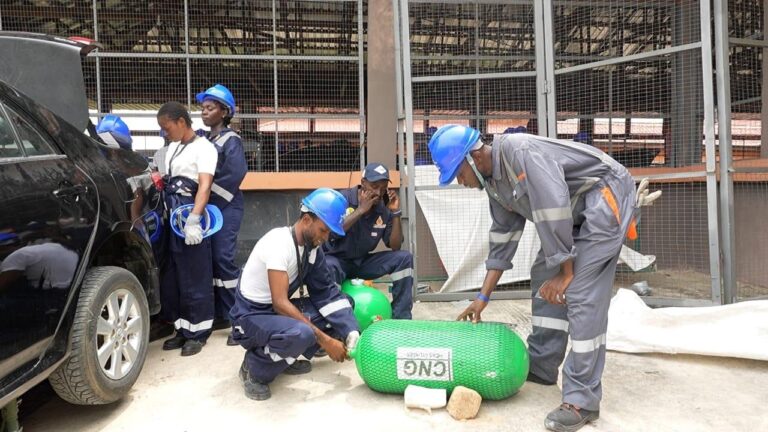
Now, as the pump price of petroleum products continues to climb beyond reach, the NDDC has trained 500 Niger Delta youths in the CNG Autogas Conversion sector to join the army of technicians helping vehicle owners migrate from fuel to gas.
The technicians graduated at a colourful ceremony, after an intensive six-week hands-on training programme at the Dakkada Skills Acquisition Centre in Uyo, Akwa Ibom State.
Addressing the CNG Autogas Conversion technicians, Samuel Ogbuku, the NDDC Managing Director, stated that CNG was a cleaner, safer, and more cost-effective alternative to conventional fuel.
The intervention of the NDDC in this area is believed to be timely. This is because as Nigeria continues to expand the adoption of CNG-powered vehicles, the demand for skilled professionals capable of converting petrol and diesel vehicles to CNG, maintaining these systems, and managing related technologies is rapidly increasing. It is within this context that the CNG Conversion Training Programme is viewed as both timely and strategic.
Many say for what the CNG represents, especially its cost-effective alternative to conventional fuels, it was necessary for the Niger Delta to be properly positioned as a hub for engine conversion services that could serve other parts of the country.
Experts say a glaring factor is that implementation of this policy would create jobs and promote local technology transfer, particularly for youths and women, by supporting auto manufacturing, retrofitting, vehicle conversion, and the development of production infrastructure.
The training programme, conducted in two batches of three weeks each, according to the NDDC, was carefully designed to equip participants with practical expertise in CNG vehicle conversion, system maintenance, and safety standards, in line with global best practices.
No doubt, this initiative from the NDDC would contribute to the development of a more reliable and sustainable transportation sector, stimulate economic growth through job creation, and increase demand for Autogas specialists. Ultimately, they said, it will also help reduce harmful emissions, in alignment with the NDDC’s commitment to environmental sustainability and conservation.
According to the NDDC Managing Director: “We understand the challenges facing our youth, such as unemployment, limited access to skills training and economic uncertainty. The NDDC remains committed to turning those challenges into opportunities,” he said.
He said further: “The more we train our youths in energy conversion facilities, the more youths we train to make them gainfully employed and financially independent. We want to make the Niger Delta the hub of CNG technicians in the country.”
Ogbuku recalled that the Presidential Compressed Natural Gas Initiative (PCNGI) and the NDDC had signed a Memorandum of Understanding (MoU) to facilitate the implementation of the CNG policy in the Niger Delta region.
“President Bola Ahmed Tinubu’s agenda is to equip Niger Delta youths with the skills needed to be self-reliant and useful in the CNG sector, which is the future of the transportation industry.”
“Training youths is also empowering the future, because the youths we equip today are actually shaping tomorrow. Youth are the future leaders, and equipping them with skills, training, and empowerment makes them independent enough to care for themselves and others. By training these youths, we are planning for the future of the Niger Delta and ensuring that its future is secured.”
He further enjoined the graduating youths to use their starter packs wisely, to upgrade their lives, and to apply the knowledge gained to enhance their livelihoods.
In his goodwill message, Gov Umo Eno of Akwa Ibom State commended the NDDC for keying into the CNG initiative, noting that his state was also working on the programme.
The governor, represented by Enobong Uwah, secretary to the Akwa Ibom State Government, observed that the CNG initiative would help transform the Niger Delta region.
He remarked that the Niger Delta had long been the backbone of Nigeria’s energy economy, noting that the future of energy was evolving. The global shift toward cleaner and more sustainable energy solutions presents new opportunities.
Also speaking, Victor Antai, NDDC Executive Director (Projects), noted that the Commission was created with a vision to facilitate the rapid, sustainable development of the region into an economically prosperous, socially stable, ecologically regenerative and politically peaceful area.
According to him, the training, which was organised in two batches of three weeks each, was designed to equip participants with practical skills in CNG vehicle conversion, system maintenance, and safety standards, in line with global best practices.
Antai highlighted some of the benefits of the CNG initiative, including the development of a more reliable and sustainable transportation sector, which would directly stimulate economic growth through job creation and increased demand for autogas specialists, thereby further reducing harmful emissions in line with NDDC’s commitment to environmental conservation and sustainability.
In his own remarks, Ifedayo Abegunde, NDDC executive director (Corporate Services), said the Presidential Initiative on CNG fully manifested President Bola Ahmed Tinubu’s vision of leveraging Nigeria’s gas resources.
He noted that the CNG Initiative was a component of the Federal Government’s intervention to provide succour to Nigerians.
Abegunde echoed the Managing Director’s sentiments and encouraged the youths to be upright citizens of the Niger Delta. He emphasised that they are now well-equipped to demonstrate to the world that Niger Delta youths can make a positive impact on Nigeria, helping to make the region an industrial hub through the skills they acquired in CNG Autogas Conversion training.
From his perspective, Akintunde Sawyerr, a representative of the Presidential Initiative on Compressed Natural Gas, commended the NDDC for its forward-looking approach and alignment with the Federal Government’s vision for clean energy. He described the initiative as futuristic and praised the Commission for advancing the CNG agenda in the Niger Delta region.
He stated that the Presidential initiative on Compressed Natural Gas and Electric vehicles is a flagship programme of the Federal Government of Nigeria, launched in 2023 under the Renewed Hope Agenda.
The Training Consultant, Tunde Rena, highlighted the gains from embracing CNG, noting that the initiative would stimulate investment in Nigeria’s abundant gas market, develop sustainable local gas markets, and grow the economy while expanding the government’s revenue base.
He observed that as Nigeria expands the adoption of CNG-powered vehicles, there is a growing demand for skilled professionals who can convert petrol and diesel vehicles to CNG, maintain systems, and manage related technologies. This is where the CNG Conversion Training Programme becomes critical.
The trainer outlined the key advantages of CNG Autogas vehicles as follows: “They are cost-saving and efficient. CNG is generally cheaper than gasoline and diesel, making it a more economical fuel option.
“They are environmentally friendly and thus known as ‘green fuel’; CNG is cleaner, producing 95% fewer tailpipe emissions and reducing carbon dioxide (CO2) emissions by up to 70% compared to conventional fuels. It is non-toxic and produces no smoke.
“It improves engine life and lower maintenance costs. This is because CNG is clean-burning, does not contaminate or dilute crankcase oil, and this allows for longer intervals between oil changes. It also reduces spark plug fouling, as it is non-corrosive.”
He added that CNG has more safety features: “CNG has a higher ignition temperature and is lighter than air, so it disperses more quickly in a leak, reducing fire hazards compared to liquid fuels. This reduces noise pollution as the engines running on CNG operate more
quietly, providing a better, more peaceful environment in urban areas.”
According to him, “CNG prices tend to be more stable, avoiding the rapid, frequent fluctuations of petrol and diesel prices. These vehicles are becoming a preferred choice for improving air quality and reducing operating costs in many countries globally.”
At the event, Lyna Okara, NDDC Director of Commercial and Industrial Development, affirmed that the CNG training was in line with the NDDC’s mandate to build human capacity and enhance Skills Development in the Niger Delta Region.
“We thank the President of the Federal Republic of Nigeria, Bola Ahmed Tinubu, for initiating this programme under the Renewed Hope Agenda, and we are already seeing its impact. While we have observed the progress in the CNG sector, we look forward to developments in electric vehicles and other emerging technologies. NDDC is ready to partner with anyone committed to ensuring that this country moves forward.”
Okara observed that the training programme would help to bridge the skills gap in the growing green energy sector, creating opportunities for technicians and engineers in the Niger Delta.
She assured that the participants gained expertise in the safe handling and conversion of alternative fuels, reducing risks associated with their use.

Join BusinessDay whatsapp Channel, to stay up to date
Open In Whatsapp