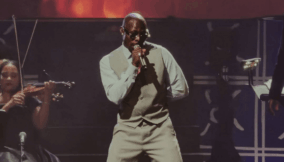
Michael B. Jordan’s triumphant victory at the 98th Academy Awards for his powerhouse dual role in Sinners marks him as the sixth Black actor to claim the Best Actor in a Leading Role statuette. Ryan Coogler, who produced and directed the movie, became the second black filmmaker to win Best Original Screenplay at the Oscars, while Autumn Durald Arkapaw, who was the movie’s cinematographer, became the first woman to ever win Best Cinematography.
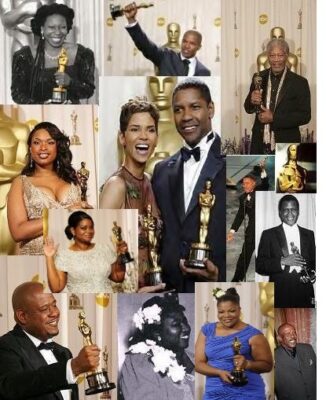
While his win celebrates a new chapter in representation, it also spotlights the groundbreaking Black performers who came before him, pioneers who broke barriers amid intense competition, cultural shifts, and sometimes controversy.
Here’s a closer look at each historic win, including the fierce nominees they defeated and the public reactions that defined the moments. We also examine the sole Black winner in Best Actress and the infamous incident that shadowed one champion’s triumph.
Sidney Poitier: The First Trailblazer (1964 Oscars, Lilies of the Field)
Sidney Poitier became the first Black man ever to win Best Actor for his inspiring portrayal of handyman Homer Smith in Lilies of the Field. He triumphed over a formidable field: Albert Finney (Tom Jones), Richard Harris (This Sporting Life), Rex Harrison (Cleopatra), and Paul Newman (Hud). Newman, one of his direct competitors, publicly announced he would skip the ceremony to throw support behind Poitier, calling the moment a “tribute to a Negro in a Negro-conscious world.”
The media hailed it as Hollywood confronting its “guilty” past on color barriers. Poitier himself reflected on the “long journey to this moment,” emphasising dignity over politics. It remains a landmark of the Civil Rights era.
Denzel Washington: The Second in Nearly 40 Years (2002 Oscars, Training Day)
Denzel Washington claimed his first Best Actor Oscar (and second overall, after a Supporting win for Glory) for his intense turn as corrupt cop Alonzo Harris in Training Day. He beat Russell Crowe (A Beautiful Mind), Sean Penn (I Am Sam), Will Smith (Ali), and Tom Wilkinson (In the Bedroom). On the same night his co-star Ethan Hawke lost Supporting Actor, Washington leaned over and whispered a now-famous piece of wisdom: “You don’t want a prize to elevate your status.
Audiences and critics celebrated it as overdue recognition for a two-time nominee who had long been a box-office powerhouse. Washington’s poised acceptance speech reinforced his status as a role model, with many calling the night a “double victory” alongside Halle Berry’s historic win.
Halle Berry: The Lone Best Actress Milestone (2002 Oscars, Monster’s Ball)
In the Best Actress category, Halle Berry remains the only Black woman to win, taking home the award for her raw performance as grieving mother Leticia Musgrove in Monster’s Ball. She prevailed over Judi Dench (Iris), Nicole Kidman (Moulin Rouge!), Sissy Spacek (In the Bedroom), and Renée Zellweger (Bridget Jones’s Diary).
Popular reaction hailed it as groundbreaking, but Berry herself has since expressed heartbreak. In recent interviews, she’s said, “I’m still eternally miffed that no Black woman has come behind me… I’m continually saddened by that year after year. I thought it meant something, but I think it meant nothing.” The win coincided with Denzel’s that night, creating a historic double for Black performers, yet the lack of follow-through in the category remains a pointed topic in Hollywood diversity talks.
These leading-role victories, spanning six decades, highlight both progress and persistent gaps.
Jamie Foxx: The Biopic Breakthrough (2005 Oscars, Ray)
Jamie Foxx delivered a transformative performance as music legend Ray Charles in Ray, winning Best Actor against Don Cheadle (Hotel Rwanda), Johnny Depp (Finding Neverland), Leonardo DiCaprio (The Aviator), and Clint Eastwood (Million Dollar Baby). Charlize Theron presented the award amid roaring applause for Foxx’s uncanny impersonation and vocal work.
The victory was praised as a triumph of immersion, “Foxx didn’t just play Ray Charles; he became him,” critics say. Public reaction focused on the emotional depth Foxx brought to the role, with many noting it elevated biopics as serious Oscar contenders.
Forest Whitaker: The Complex Anti-Hero (2007 Oscars, The Last King of Scotland)
Forest Whitaker portrayed Ugandan dictator Idi Amin in The Last King of Scotland, edging out Leonardo DiCaprio (Blood Diamond), Ryan Gosling (Half Nelson), Peter O’Toole (Venus), and Will Smith (The Pursuit of Happiness). Reese Witherspoon handed him the trophy, where Whitaker, in his acceptance speech, thanked the people of Uganda and co-star James McAvoy.
Commentators called the win “overwhelming” and praised Whitaker’s fearless dive into a monstrous yet charismatic historic figure.
Will Smith: Triumph and Turmoil (2022 Oscars, King Richard)
Will Smith won for his dedicated portrayal of Richard Williams, father to tennis stars Venus and Serena, defeating Javier Bardem (Being the Ricardos), Benedict Cumberbatch (The Power of the Dog), Andrew Garfield (tick, tick…BOOM!), and Denzel Washington (The Tragedy of Macbeth). But the night is forever defined by the incident moments earlier, after presenter Chris Rock made a joke about Jada Pinkett Smith’s alopecia, Smith walked onstage and slapped him, yelling profanities.
Smith returned to accept the award, tearfully apologizing to the Academy and fellow nominees while referencing his “crazy father” role: “Love will make you do crazy things.” The moment shocked the world, sparking widespread condemnation and support alike.
In the aftermath, the Academy banned Smith from all events and programs for 10 years, stating the behavior violated their code of conduct. Smith later reflected on the ban publicly, acknowledging the lasting fallout. The win itself was widely praised for Smith’s heartfelt performance, but the slap overshadowed the celebration in headlines for years.
Other black actors and actresses Who Have Won Oscars
Beyond the leading categories, Black performers have earned well-deserved recognition in supporting roles and as pioneers:
Best Supporting Actor
Louis Gossett Jr. (1982, An Officer and a Gentleman)
Denzel Washington (1989, Glory)
Cuba Gooding Jr. (1996, Jerry Maguire)
Morgan Freeman (2004, Million Dollar Baby)
Mahershala Ali (2016, Moonlight; 2018, Green Book – the only Black actor with two Supporting wins)
Daniel Kaluuya (2021, Judas and the Black Messiah)
Best Supporting Actress
Hattie McDaniel (1939, Gone with the Wind – the first Black Oscar winner ever)
Whoopi Goldberg (1990, Ghost)
Jennifer Hudson (2006, Dreamgirls)
Mo’Nique (2009, Precious)
Octavia Spencer (2011, The Help)
Lupita Nyong’o (2013, 12 Years a Slave)
Viola Davis (2016, Fences)
Regina King (2018, If Beale Street Could Talk)
Ariana DeBose (2021, West Side Story)
Da’Vine Joy Randolph (2023, The Holdovers)
Jordan’s 2026 win adds fresh momentum to these legacies. As commenters put it, Hollywood still has work to do, but the path these icons forged grows brighter with every name added to the list.

Join BusinessDay whatsapp Channel, to stay up to date
Open In Whatsapp