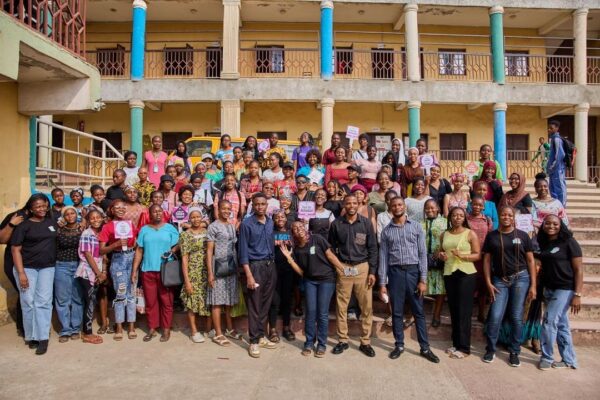
She Code Africa, a pan-African non-profit focused on increasing women’s participation in technology, has partnered with global tech giant HP to launch a digital literacy programme in Abuja targeting 300 women.
The initiative is part of Nigeria’s broader push to achieve 95 percent digital literacy by 2030.
Speaking during the lunch of the training in Abuja, Oreoluwa Adetula, programmes manager of She Code Africa, said the initiative addresses the digital skills gap among young women with limited technology exposure.
Adetula said the training will equip women and girls aged 16 to 35 with foundational digital skills, from basic computer use and internet navigation to productivity tools.
It also covers social media strategies for business growth and introductory exposure to artificial intelligence applications.
The programme aligns with the federal government’s digital economy strategy, which seeks to integrate digital literacy across primary, secondary, and tertiary education. In the near term, it aims to train at least 30 million Nigerians in digital skills by 2027.
“We are in an ever-growing age of technology, and it is important that everyone is carried along. We do not want women to feel left behind,” Adetula said.
She highlighted that many women still lack basic digital tools and knowledge, including email and effective use of smartphones and laptops.
The Abuja programme follows the successful launch of a similar initiative in Ibadan, Oyo State, in 2025, which trained about 200 women.
“With this training in Kubwa, our target is to reach between 200 and 300 women who will gain practical digital literacy skills,” Adetula said.
John Bassey, CEO of JJV Tech Institute and a facilitator at the training, said the programme tackles a critical skills gap in Nigeria.
“Many people use smartphones but do not understand how to maximise them for productivity, education, or business,” Bassey said, noting that over 80 percent of participants initially lacked basic digital competencies, including mouse control and productivity software usage.
The two-week programme covers computer appreciation, internet research, cloud-based tools such as Excel and presentation software, and introductory AI applications. Participants also learn how to build their online presence and promote businesses digitally.
Phoebe Onoja Joseph, a participant, said the training opens doors for women transitioning into digital careers.
“I want to move into the virtual workspace and work remotely. Opportunities like this help people like us build the skills we need,” she said.
She Code Africa trained more than 4,700 people in 2025 and engaged over 8,000 women across Africa through various programmes. The organisation plans to expand further in 2026, targeting underserved communities to close the digital gender gap.

Join BusinessDay whatsapp Channel, to stay up to date
Open In Whatsapp