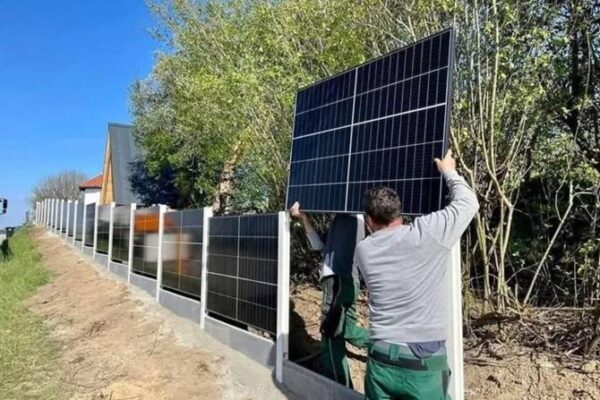
The global solar power market is entering a new phase of expansion as countries accelerate investments in renewable energy. Valued at roughly $250 billion, the sector is projected to exceed $400 billion by 2032, driven by rising energy demand, climate targets and falling solar technology costs.
According to data compiled by the Visual Capitalist below are the 10 countries with the largest installed solar power capacity.
Read also: Nigeria’s petrol price surge sharpens case for solar as energy costs bite
1. China – 887,930 MW
China remains the undisputed global leader in solar power.
The country added 278,009 MW of new solar capacity between 2023 and 2024, recording an annual growth rate of 45.6 percent. That single-year expansion alone exceeds the entire solar capacity of most nations.
China’s dominance is driven by massive government-backed renewable projects, large-scale desert solar farms and its position as the world’s largest manufacturer of solar panels. The scale of deployment has helped Beijing maintain a decisive lead in the global clean energy race.
2. United States – 177,470 MW
The United States ranks second with 177,470 MW of installed solar capacity, growing 27.5 percent year-on-year.
Solar expansion in the country has been accelerated by federal incentives under major climate legislation and strong investment from utilities and private developers. Utility-scale solar farms in states such as Texas, California and Arizona are driving much of the growth.
Despite this momentum, the gap between the United States and China continues to widen significantly.
3. India – 97,384 MW
India has rapidly climbed the global solar rankings, reaching 97,384 MW in installed capacity.
The country posted 33.7 percent annual growth, reflecting aggressive renewable energy policies and ambitious national targets aimed at reducing reliance on coal.
Large solar parks across states like Rajasthan and Gujarat have been key drivers of expansion as India seeks to position itself as a major clean energy hub.
Read also: Solar projects can boost farming, restore degraded land – IRENA
4. Japan – 91,610 MW
Japan remains one of the pioneers of solar adoption, with 91,610 MW installed.
However, growth has slowed considerably to 2.8 percent annually, largely due to land constraints and grid integration challenges.
Despite this, solar remains a central component of Japan’s strategy to diversify its energy mix following the Fukushima nuclear disaster.
5. Germany – 89,943 MW
Germany continues to lead Europe’s solar transition with 89,943 MW of installed capacity and 20.1 percent annual growth.
The country’s long-standing energy transition policy, known as Energiewende, has encouraged widespread rooftop solar installations and large-scale renewable projects.
Germany’s rapid expansion in recent years reflects renewed urgency across Europe to reduce dependence on fossil fuels.
6. Brazil – 53,113 MW
Brazil has emerged as Latin America’s solar powerhouse.
With 53,113 MW installed, the country recorded 40 percent growth between 2023 and 2024, making it one of the fastest-growing solar markets globally.
Brazil’s expansion is driven largely by distributed solar systems installed on homes and businesses, alongside utility-scale projects across its sun-rich regions.
7. Spain – 38,587 MW
Spain’s solar resurgence has pushed its capacity to 38,587 MW, growing 20.9 percent annually.
Once slowed by regulatory setbacks, the Spanish solar sector has rebounded strongly thanks to favourable climate conditions, declining installation costs and renewed investment in large solar farms.
Read also: Sun on a Budget: Nigeria’s five cheapest solar products worth buying right now
8. Australia – 38,472 MW
Australia ranks just behind Spain with 38,472 MW installed and 15.6 percent annual growth.
The country has one of the highest rooftop solar adoption rates in the world, with millions of households installing solar panels. This distributed generation model has made solar a central pillar of Australia’s energy transition.
Read also: Nigerian hospitals are turning to solar power as grid failures cost lives
9. Italy – 36,013 MW
Italy’s solar capacity stands at 36,013 MW, expanding 22.7 percent year-on-year.
The country’s growth has been supported by government incentives encouraging rooftop installations and commercial solar development. Italy’s sunny climate and rising electricity costs have also strengthened the case for solar energy.
10. South Korea – 26,645 MW
South Korea completes the top ten with 26,645 MW of installed solar capacity.
Growth reached 13.4 percent annually, reflecting government efforts to reduce reliance on imported fossil fuels and expand renewable energy in a densely populated country with limited land availability.

Join BusinessDay whatsapp Channel, to stay up to date
Open In Whatsapp