

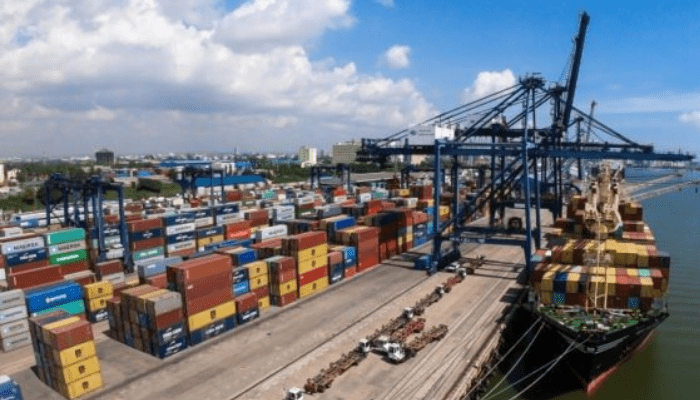
Nigeria’s planned rollout of the National Single Window (NSW) platform could reduce cargo clearance time from an average of three weeks to between 24 and 48 hours while attracting up to $3 billion in private logistics investment over the next five years, according to Dele Kelvin Oye, chairman of the Alliance for Economic Research and Ethics (AERE).
Oye projected a policy commentary ahead of the March 27 launch of the first phase of the digital trade platform, describing the initiative as a major opportunity to transform Nigeria’s import and export procedures.
According to him, the National Single Window is designed to transform Nigeria’s complex and often fragmented import and export procedures into a seamless, single-portal system where traders can submit documentation once, make payments electronically and track shipments in real time.
The platform will integrate key government agencies involved in cargo clearance, including the Nigeria Customs Service, National Agency for Food and Drug Administration and Control (NAFDAC), Standards Organisation of Nigeria (SON), Nigerian Ports Authority (NPA), and the Nigerian Maritime Administration and Safety Agency (NIMASA), as well as the Nigeria Revenue Service (NRS).
Oye said the system is expected to eliminate duplicate documentation processes that currently slow down trade at Nigeria’s ports while improving transparency and efficiency across the logistics chain.
“The stakes could not be higher. The NSW, spearheaded by Director Tola Fakolade at the National Single Window Secretariat, promises to slash cargo clearance times from 18-21 days to under 48 hours, eliminate duplicate documentation, and inject $2-3 billion dollars in private logistics investment over five years.
“Nigeria stands on the precipice of a trade revolution,” he said, noting that the country has attempted to implement a Single Window platform three times in the past without success.
He explained that previous attempts in 2009 and 2012 collapsed largely due to inter-agency rivalry, institutional resistance and lack of sustained political backing.
The renewed effort gained momentum in 2024 following backing from President Bola Ahmed Tinubu, with implementation now being coordinated by the National Single Window Secretariat led by Director Tola Fakolade.
Despite the renewed push, Oye noted that Nigeria’s decision to place the platform under a tax authority rather than a trade or investment agency raises questions about governance priorities.
“Nigeria has chosen to domicile this trade-facilitation tool under its tax authority rather than its trade promotion agency. This makes Nigeria an outlie,”
The system is currently domiciled under the Nigeria Revenue Service, which secured legislative backing through the Nigeria Tax Administration Act 2025.
Oye said this approach risks conflating trade facilitation with tax enforcement, a model that differs from global best practices.
He noted that global experience shows that effective Single Window systems significantly improve trade efficiency.
When Singapore pioneered the world’s first Single Window platform, TradeNet, in 1989, it was placed under the country’s trade development authorities rather than a tax agency. Similarly, Ghana’s GCNet operates as a public-private partnership with about 60 percent private sector ownership, while Rwanda integrates its Single Window system with both its revenue authority and investment promotion institutions.
Singapore’s TradeNet processes about 99 percent of permits within 10 minutes. Rwanda’s system has reduced import clearance time from 11 days to about 1.5 days while saving the country an estimated $18 million annually, and Ghana’s GCNet has reduced the number of clearance officers involved in cargo processing from 12 to three.
“These successful models show that trade facilitation works best when the private sector plays a central role in governance or implementation,” Oye said.
He added that when he served as National President of the Nigerian Association of Chambers of Commerce, Industry, Mines and Agriculture (NACCIMA), he had raised concerns about the structure of the initiative and called for stronger private sector involvement.
Oye said deeper participation from freight forwarders, exporters, port operators and financial institutions will be essential to the success of the initiative since they are the primary users of the system.
Oye said Nigeria must decide whether the National Single Window will serve primarily as a revenue collection tool or as a platform designed to unlock trade competitiveness.
“With the right governance structure and strong private sector participation, the National Single Window can become a catalyst for trade expansion and investment,” he said.

Join BusinessDay whatsapp Channel, to stay up to date
Open In Whatsapp


