Religious leaders and scholars recently raised concerns over the growing politicization of Christianity in Nigeria, warning that excessive partisanship risks eroding the church’s moral authority and prophetic responsibility.
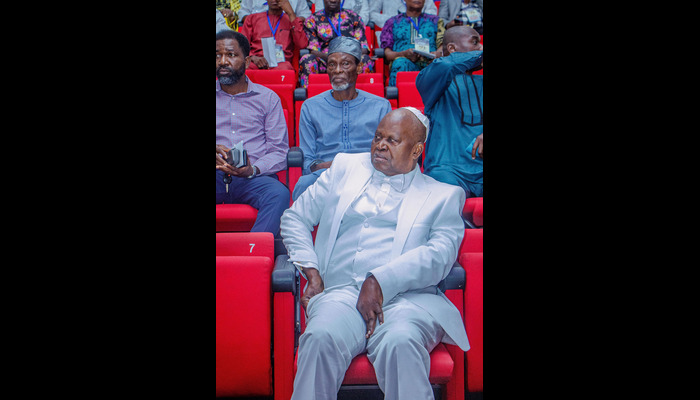
The concerns were expressed at a colloquium held in Lagos to mark the 80th birthday of Theophilus Oluwasanu Olabayo, Primate and founder of the Evangelical Church of Yahweh Worldwide (ECOY).
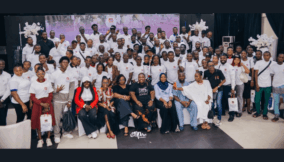
Themed “Shaping Prophetic and Spiritual Leadership for Global Impact,” the colloquium brought together theologians, clerics, academics, and church historians to reflect on the role of prophetic and spiritual leadership in Nigeria’s social and political development.
Dapo Folorunsho Asaju, Bishop Theologian of the Anglican Church of Nigeria and Bishop of the Diocese of Ilesa, in a keynote address described the prophetic office as a divine mandate rooted in scripture and central to national moral guidance.
He noted that prophets historically served as moral sentinels who warned rulers, confronted injustice, and guided societies toward righteousness.
“Prophets are raised for specific generations. Their role is to warn, to intercede, and to guide nations toward righteousness,” Asaju said.
He argued that Nigeria’s current socio-economic and political challenges reflect a failure of spiritual guidance, stating that the country should not be in its present condition if prophetic counsel had been heeded.
Asaju cautioned the church against becoming entangled in partisan politics, stressing that its influence must be exercised without compromising integrity or moral clarity.
According to him, prophets are not merely religious figures but agents of moral reformation who serve as intermediaries between God and society. He emphasized that their authority lies in truth-telling rather than political alignment.
Asaju also described Olabayo as a rare and uncompromising prophetic voice whose ministry has intersected with Nigeria’s political transitions, social crises, and economic challenges since he founded the Evangelical Church of Yahweh in 1973.
He said Olabayo’s forthright style of prophecy, often delivered without diplomacy and at personal risk, helped shape the rise of media-driven prophetic Christianity in Nigeria.
From an academic perspective, Rotimi Williams Omotoye, Rector, Crowther Graduate Theological Seminary and Professor of Church History, called for deeper scholarly engagement with indigenous prophetic movements.
He observed that Nigerian church historiography has tended to focus on major urban centers while overlooking influential movements that emerged in other regions.
Omotoye urged the Evangelical Church of Yahweh to strengthen its legacy through institution-building, particularly in education and healthcare, noting that churches with lasting impact are those that invest in structured social infrastructure. He added that it was not too late for the church to establish schools, medical facilities, or even a university.
Oluwayemisi Obashoro-John, assistant chaplain, Chapel of Christ Our Light and professor at the University of Lagos, examined the theological and sociological dimensions of the church’s role as a watchman in society.
She noted that the Nigerian church has historically extended its influence beyond worship into education, humanitarian service, reconciliation, and civic engagement.
She emphasized the need for stronger internal governance, ethical leadership, and institutional responsibility within Christian organizations, adding that the church must embrace ethics, public theology, and governance training to sustain its moral authority.
According to her, Christian leaders should also engage more deliberately with formal policy processes, not as political actors, but as principled voices shaping national conscience.
The colloquium concluded with a collective call for the Nigerian Church to reclaim its prophetic independence, moral courage, and integrity at a time of national uncertainty.

Join BusinessDay whatsapp Channel, to stay up to date
Open In Whatsapp