It was a unanimous decision of the Monetary Policy Committee (MPC) members for the Central Bank of Nigeria (CBN) to cut the benchmark interest rate after almost two quarters since the last cut and to the lowest monetary policy rate (MPR) in almost two years. The two cuts, in September 2025 and February 2026, are coming after a relentless and aggressive rate tightening for years.
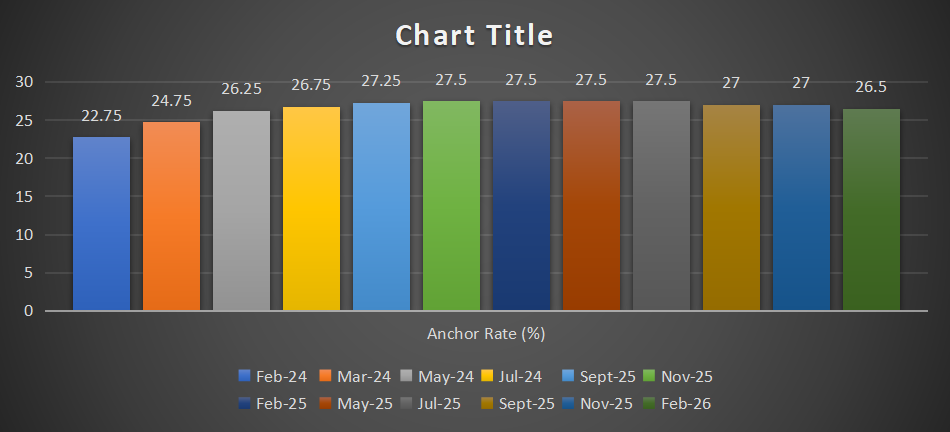
CHART: BUSINESSDAY
For the CBN to reduce rates, it shows that it considers inflation risk not to be a problem or at the very least, a dissipating one. This is so because CBN’s overarching mandate is price stability, meaning the deployment of all weapons in its arsenal to ensure inflation rate is low, stable and predictable. So, if it starts softening its stance, it would mean it does not consider it a threat again.
Why would the CBN cut anchor rate despite double-digit headline and core inflation rates?
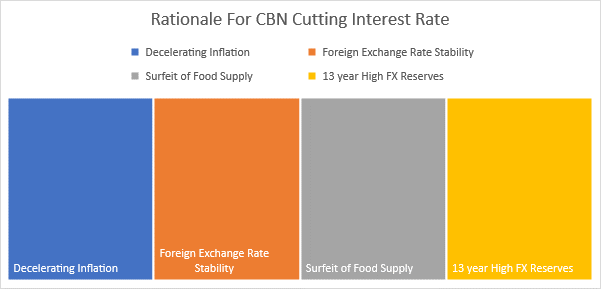
CHART: BUSINESSDAY
Back-to-back deceleration of inflation rate for 11 straight months, culminating in the January number of 15.1 %, the lowest in over five years. And the kicker is that the deceleration momentum is expected to continue.
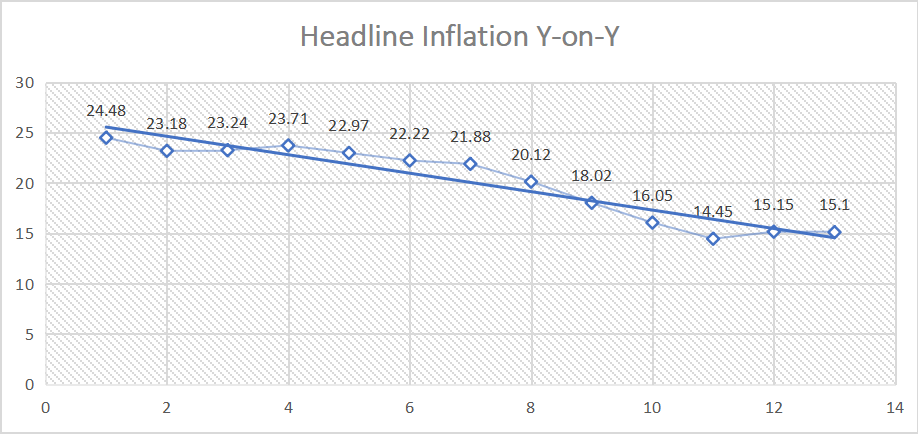
CHART: BUSINESSDAY
More rationale for easing includes foreign exchange stability and a surfeit of food supply making food inflation to be in single-digit territory for the first time in more than a decade at 8.89%.
Other reasons for soft-pedalling of monetary tightening are foreign exchange (FX) accretion reaching the highest in 13 years at the gross amount of $50.45 billion.
Implications of the cut in interest rates
Since baseline interest rate has come down, other lending rates would take a cue from that and should come down too. This would mean borrowings becoming more affordable hence boosting economic expansion.
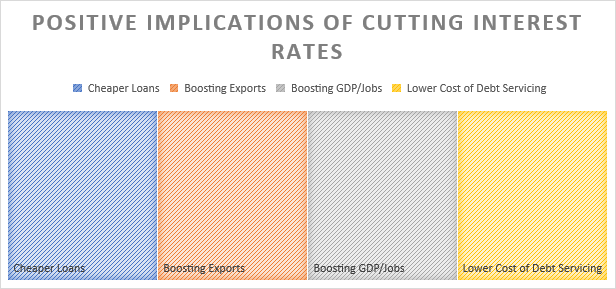
CHART: BUSINESSDAY
The CBN’s projection for economic growth is the most optimistic of the pack, and for that to come true, it has to play a big role. And part of that is making access to credit easy.
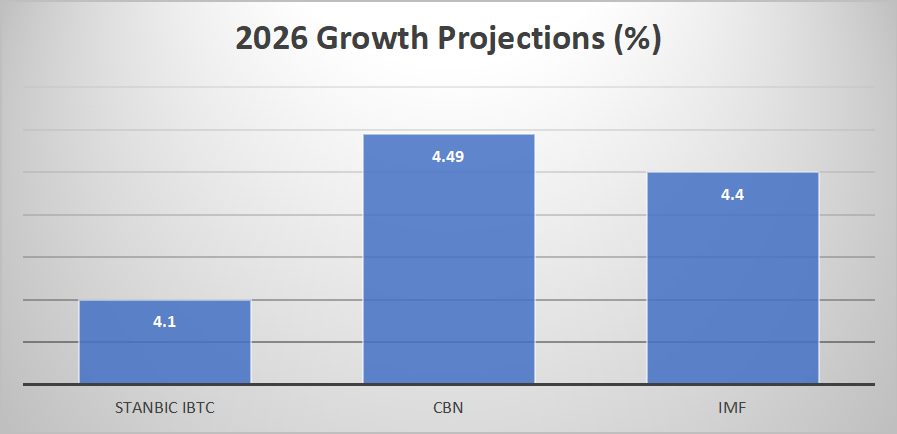
CHART: BUSINESSDAY
Unabated disinflation means things are looking up. And if the trajectory is maintained, inflation is on the way to being on target. However, inflation is still not yet within the band of 6-9% considered ideal by the macroeconomic authorities in Nigeria. Hence, it might be premature to start cutting rates as that risks inflationary pressure flaring up.
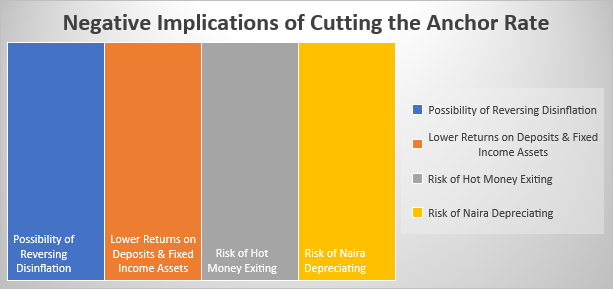
CHART: BUSINESSDAY
The consolation is that despite the cut, anchor rate still remains high. Furthermore, the effect of previous hikes might just be kicking in. So, it is not an easy balancing act.

Join BusinessDay whatsapp Channel, to stay up to date
Open In Whatsapp