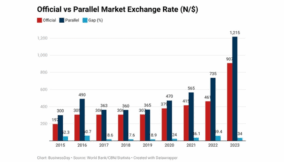
The economy of every country changes over time as a result of several factors which range from new policies to changes in financial systems. In 2014, it was announced that Nigeria had surpassed South Africa to become the biggest economy in Africa with a GDP of $594.257 billion. Recently, there have been increasing reports in the media about the rise and fall of the Naira against the Dollar as well as the different efforts made by the Central Bank of Nigeria (CBN) to stabilize the currency and stock market. The question is what does these events and reports mean to the ordinary man on the street? How do they affect his everyday life and is he able to understand and interpret all the financial jargon being reported? Also worth considering is whether companies are able to get relevant news, data and information like financial and stock market reports from the media to make important decisions.
The media is regarded as the watchdog of the society to report discrepancies and prevent abuse of power by the government, profit organizations and individuals. They have the power to set the agenda for topical issues and can influence the topics that would be regarded as important to attract the attention of the Government and relevant authorities that can trigger positive changes or vice versa for development. It is the duty and responsibility of financial journalists to inform and educate their audience about different events in the financial sector – banking, insurance, pension and stock market – in a timely and accurate manner, providing access to true and reliable data and information. This way, by reporting the right things accurately they have the power to influence policymakers to formulate decisions and polices that are not only relevant but effective.
As a result, there is a constant need to consistently invest in the development and training of journalists in order to improve reporting and research skills and enable them provide and interpret relevant information and data for different categories of readers as well as align with global journalism best practice. Accurate reporting and in-depth research of news can make it possible.
The Bloomberg Media Initiative Africa (BMIA) was launched in 2014 to deliver educational programs focused on business, economics, public policy and finance to enhance the skills and knowledge of journalists. It is funded by Bloomberg Philanthropies with additional support from the Ford Foundation in three African countries (Kenya, Nigeria and South Africa) and partnership with six business and journalism schools in Africa including the University of Lagos’s Department of Mass Communication and the Lagos Business School (LBS). Now in its second phase, it aims to convene pan-African forums to examine worldwide media best practices and support research to stimulate media innovations.
The media is so powerful that it can trigger substantial changes and influence the formulation of policies which contribute to the development of the economy in a sustainable way. Therefore, equipping journalists with the necessary tools and skills to meet the challenges of the changing media landscape will empower them to serve as catalysts in Nigeria by becoming educator of the public and trusted source of credible and reliable information and data.
Nnamdi Njemanze

Join BusinessDay whatsapp Channel, to stay up to date
Open In Whatsapp