In recent times, the transformation currently taking place in the education sector in Borno State is indeed unprecedented despite the mission of Boko Haram and its arch-rival to fight western education and innovation in more than 15 years of its campaign that almost brought the sector to a standstill at the formative stage of the crisis in the region.
Under the Governor Babagana Zulum, who is a professor himself, the sector is witnessing what could be described as a tsunami of transformation, driven by the current administration’s commitment and exceptional leadership to leave behind a society that not only values education but also has standard infrastructure in its educational sector.
“A child of a poor man we refuse to train/educate today will become a nightmare for the elite tomorrow,”- Kashim Shettima
Consequently, the governor has highlighted Borno’s significant investments in rebuilding educational infrastructure destroyed by insurgency, including the construction of over 120 new schools and the recruitment of thousands of teachers in the last six years.
These significant strides in improving the state’s education sector have been demonstrated by the Zulum administration, which has prioritised education, reducing the number of out-of-school children from two million to 700,000 over the past 6 years.
Read also: Zulum approves N12.9b to sponsor Borno indigenes to study aeronautics, others
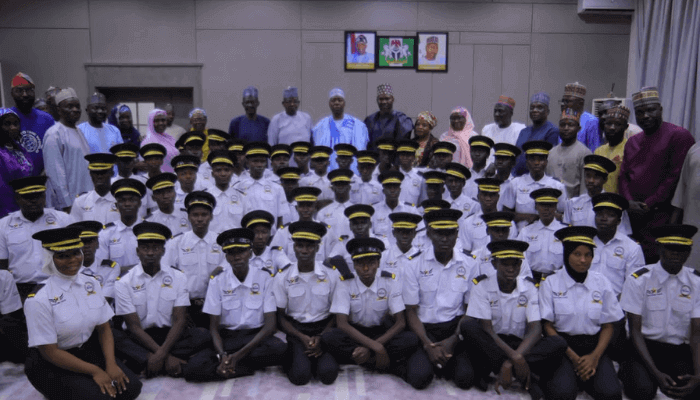
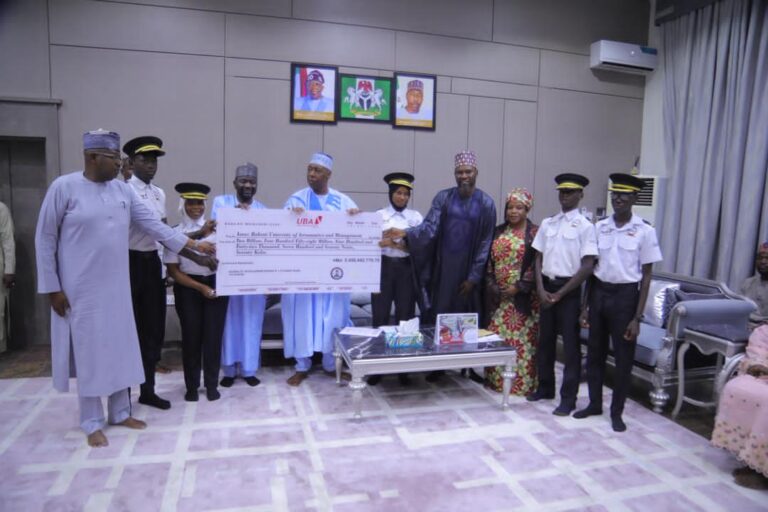
Borno sponsors indigenes to study aeronautics and Mechatronics. A few days ago, another bold step in the right direction was taken, as Zulum approved a N12.9 billion scholarship scheme to sponsor 54 indigenes of the state to study aeronautics and engineering, with various professional certifications, at the Isaac Balami University of Aeronautics and Management (IBUAM).
The training programme covers basic pilot training, with 10 beneficiaries specialising in Aerospace Engineering, 11 in Electrical and Electronic Engineering, 11 in Mechatronics Engineering, 12 in Software Engineering, and 10 in Systems Engineering.
This event points to a man who is building the state’s future, even as he is only a few months away from completing his eight years in office. He presented a cheque for N2.5 billion to the institution, covering the annual tuition and associated expenses, with the 5-year total package valued at N12.9 billion.
Addressing the beneficiaries, Zulum charged them to remain focused and dedicated to their studies. He emphasised that the selection process was deliberately designed to ensure equity across the state, with two students chosen from each of Borno’s 27 Local Government areas.
“What matters most is not just gaining admission, but how focused you will be in your studies. I advise you to remain dedicated and become good ambassadors of our state,” the governor stated.
In addition to funding their education, the governor announced an immediate financial support package of N500,000 per student to cover resumption logistics and other incidental expenses.
Responding, Isaac Balami, the founder of IBUAM, an indigene of Borno State, commended Governor Zulum for the initiative.
He assured the government that the students would receive world-class training, expressing confidence that they would be among those who would eventually build the first made-in-Nigeria aircraft.
Zulum meets 56 state-sponsored doctors, approves training fund, others
Similarly, he approved a special training fund for the 56 medical doctors currently undergoing residency training under the state’s sponsorship.
The governor granted approval during an interactive meeting with the resident doctors to assess the progress of their training and address any challenges, ensuring seamless progression in their assignments.
progress Beyond approving the training, the training committee also approvedediate implementation of promotional benefits for all resident doctors due for career progression.
He directed that the promotions be implemented with immediate effect and that all arrears be paid to the beneficiaries, dating back to the effective date of their promotions.
The governor also directed the Borno State Hospital Management Board to organise a similar interaction with other medical doctors in the state who are not undergoing residency training.
He reiterated that the welfare of all health workers in the state remained a top priority for his administration, stressing that a motivated workforce is essential for delivering quality healthcare services to the people of Borno.
“My administration is committed to creating an enabling environment for our health professionals. We understand that without their dedication, we cannot achieve the needed health coverage we desire for our citizens,” the governor stated.
Ambassadors and international partners hail Zulum’s investment in education
Recently, some foreign ambassadors and senior international partners commended the ulum administration’s investment in education and human capital development as critical to addressing the root causes of the state’s prolonged humanitarian crisis.
The delegation, comprising Ambassadors of India, Egypt, Indonesia, the Philippines, Turkey, Malaysia and Qatar, was accompanied by the United Nations Resident and Humanitarian Coordinator in Nigeria, Mr Mohamed Fall, and the Minister of Humanitarian Affairs and Poverty Alleviation, Mr Bernard Doro.
The high-level working visit to Maiduguri was convened to allow partners to undertake a ffirsthandassessment of the humanitarian situation in Borno State and to review ongoing recovery and development interventions.
During the visit, the delegation was taken on a tour of key legacy projects of the Zulum administration in education, health and human capital development by the Acting Governor, Umar Usman Kadafur.
Speaking to journalists after the tour, Fall commended the Borno State Government for what he described as transformative investments, particularly in education.
“But we want to show that beyond the headlines we always see around security challenges, there are things that are taking place which are transformative in Borno State,” he said.
He cited the state’s education programmes, including girl-child education initiatives, vocational training centres, and malnutrition treatment facilities, as evidence of a deliberate effort to change residents’ lived realities
“The education programme we have seen, the girl education programme, the vocational training, the malnutrition treatment centre – all of these show the effort that has been made to change the dynamic of what people are really going through,” Fall said.
He noted that Zulum’s strong focus on education reflected a clear understanding of the underlying drivers of conflict and instability.
“Given the importance of education and the investment he is making in the sector, it clearly shows the vision of the leadership of the state,” he said. “If you want to change the game, you have to touch the root causes of the crisis, and one of the root causes is good education for the children of the state.”
Also speaking, the Minister of Humanitarian Affairs and Poverty Alleviation, Bernard Doro, expressed satisfaction with the scale of development he observed, despite Borno’s decade-long experience with insurgency.
“I have to say that I am very happy with what I have seen,” Doro said. “The level of development is impressive, considering that this state has witnessed crises for over ten years.”
He praised Zulum’s leadership and commitment to helping people escape poverty through skills acquisition and education.
“When we went around, we saw vocational training centres, comprehensive schools and excellent facilities ready to train and graduate people out of poverty,” the minister said. “As Minister of Humanitarian Affairs and Poverty Alleviation, I am really pleased with what I have seen.”
The visit, officials said, is expected to strengthen international support for Borno State’s recovery, education and human capital development agenda.
6,226 teachers trained to boost their education sector
Last year, heexperience53.6 billion to train 6,226 teachers across the 27 local government areas of the state.According to him, the training would include 1,000 teachers identified to have ‘O’ level certificates, and those without certificates but who have the requisite experience.
Also, Zulum noted that the State Government experienced N53.6 billion in the education sector in 2025, stating this while declaring open the 28th Quarterly Meeting of the Universal Basic Education Commission (UBEC).
Read also: Zulum approves direct payment of LG allocations in Borno
He said the colleges would integrate traditional Islamic studies with literacy, numeracy, modern sciences, and vocational training.
According to him, the initiative aims to mainstream the non-formal education sector into the formal system, target Almajiri pupils, and provide a second chance for out-of-school children who have exceeded the official enrolment age.
The governor also directed the establishment of state libraries in Biu, southern Borno, and Monguno, in the northern part of the state, in addition to the upgraded Maiduguri library.
“Deliberately, I upgraded the Maiduguri library, intending to establishanother one in Biu and one in Monguno to promote reading culture, which is fast eroding.
“I want you to rejuvenate the reading culture by ensuring the library is effective. But most importantly, apart from the physical books, let’s put a mechanism for e-books in place.
He noted that the state government has built two additional colleges of nursing in Monguno and Gwoza to train more midwives and nurses, thereby enhancing the health sector.
Meanwhile, just two weeks ago, the final batch of 615 teachers enrolled in the two-year special NCE Teacher Training Programme successfully graduated, marking a significant advancement in the administration of the Borno State Governor, Professor Babagana Zulum’s education reforms.
The recent graduation ceremony at the College of Education in Waka-Biu is a major step in the government’s plan to phase out unqualified teachers.
The programme drew participants from all 27 Local Government Areas and focused on practicalclasses.room skills, pedagogy, literacy, and numeracy. Of 647 teachers who began the course, 615 completed the training.
In addition to the training program, Governor Babagana Zulum also prioritised teacher development and welfare, including the implementation of a ₦70,000 minimum wage for primary school teachers.

Join BusinessDay whatsapp Channel, to stay up to date
Open In Whatsapp