… Names CBN, NRS, joint supervisors, SEC retains oversight of security virtual assets
… New VARA framework to coordinate crypto oversight, boost consumer protection
President Bola Tinubu, has established the Virtual Asset Regulatory Council (VARC) and designated the Central Bank of Nigeria (CBN) and the Nigeria Revenue Service (NRS) as the country’s joint Virtual Asset Regulatory Authority (VARA), overseeing non-security virtual assets.
The move, BusinessDay gathered, is part of the administration’s decisive move to strengthen oversight of Nigeria’s fast-growing digital asset market.
The move is coming against the backdrop of Nigeria’s rapidly expanding virtual asset market.
Read also: PENGASSAN warns Tinubu’s order on NNPC revenues could lead to job losses
Presidency revealed that between “July 2024 and June 2025 alone, Nigerians conducted virtual asset transactions estimated at $92.1 billion in the formal market, excluding peer-to-peer and over-the-counter transactions”
It will be recalled that the President had established VARA through a Presidential Directive issued in August 2025, which also recognizes the Securities and Exchange Commission (SEC) as regulator of virtual assets that are classified as securities.
” The scale of activity underscores the urgency of creating robust safeguards to protect users, prevent financial crimes such as money laundering and terrorism financing, and formalise a sector that has operated largely in fragmented regulatory spaces”.
The new supervisory arrangement, unveiled as part of a broader policy framework, according to the Presidency, on Friday, is designed to reshape how Nigerians interact with cryptocurrencies, stablecoins, digital tokens and other virtual assets, while enhancing security, transparency and consumer protection in the sector.
BusinessDay gathered further that under the framework, contained in a White Paper issued in December 2025, VARA will not operate as a standalone regulator.
It will however, operate as a coordinating architecture to harmonises the mandates of all existing agencies already involved in aspects of virtual asset oversight.
At the heart of the new structure is the Virtual Asset Regulatory Council (VARC), which will serve as the strategic coordination body.
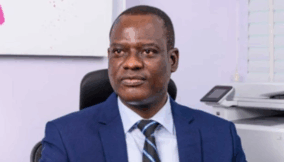
Governor of the Central Bank of Nigeria CBN nd the Executive Chairman of the Nigeria Revenue Service, will Co- Chair the body, alongside representation from other relevant regulatory and enforcement agencies.
A Presidency source said in Friday that the framework also establishes a Virtual Asset Regulatory Office (VARO) to handle operational coordination and supervision, particularly for non-security virtual assets.
In addition, agency-based Virtual Asset Regulatory Teams will function within stakeholder institutions, supervising virtual asset activities within their respective statutory mandates.
Read also: Flush with oil revenues, Tinubu faces fiscal discipline test
The source said the arrangement is deliberately structured to prevent duplication of roles and eliminate silo operations among agencies such as the CBN, NRS, SEC, and the Nigerian Financial Intelligence Unit (NFIU).
A key feature of the framework is a clear distinction between security and non-security virtual assets.
According to the source said ” VARA will focus exclusively on non-security virtual assets, including currency-pegged stablecoins, payment tokens, tokenised deposits and related services such as issuance, custody, payment processing, banking services and exchange operations.
“Virtual assets classified as securities will remain under the regulatory purview of the SEC, ensuring continuity in capital market oversight”
Officials familiar with the framework say this delineation is intended to provide regulatory clarity and reduce uncertainty for operators and investors.
Under the new regime, operators, whether local exchanges or offshore platforms serving
Nigerian users, will be required to register, meet baseline standards on client asset protection, Know-Your-Customer (KYC) compliance and cybersecurity, and adhere to ongoing reporting obligations.
In return, compliant firms will gain formal recognition, improved access to banking services and eligibility for regulated partnerships.
A Virtual Asset Sandbox will also allow firms to operate under supervised conditions while licensing rules are phased in.
Notably, the Federal Government has opted not to introduce immediate new legislation, instead, it is empowering existing regulators to act within their current statutory frameworks while the system evolves.
Policy documents indicate that the approach is influenced by international best practices, including the model adopted by the Dubai Virtual Assets Regulatory Authority, which was established in 2022 as an independent regulator for virtual assets in Dubai.
While Nigeria’s VARA differs in structure, functioning as a coordinated supervisory arrangement rather than a single new agency, officials say the framework is designed to be adaptive, innovation-friendly and globally aligned.
At launch, the new arrangement is being described by officials as Africa’s first operational coordinated regulatory framework dedicated to virtual assets.
Read also: FG to begin 2024, 2025 capital budget payments as lawmakers question revenue assumptions
President Tinubu’s administration sees the true test lying in implementation, for the framework to accelerate innovation and investor confidence or becomes an additional layer of bureaucracy in an already complex regulatory environment.
The administration also believes that the initiative forms part of a broader push to deepen Nigeria’s digital economy and advance its ambition of building a $1 trillion economy by 2030.
“With one of the largest crypto adoption rates in Africa, Nigeria’s bet on coordinated oversight may well determine whether virtual assets become a catalyst for growth, or a regulatory challenge in need of further reform”.

Join BusinessDay whatsapp Channel, to stay up to date
Open In Whatsapp