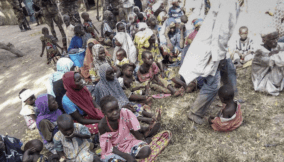
…Says ‘govt officials’ frustrating efforts to provide shelters to IDPs
When Alex Barbir first arrived in Yelwata, a troubled community in Benue State grappling with displacement and insecurity, he came with a simple goal to rebuild what had been destroyed.
Instead, the American missionary says he encountered what he describes as a system that thrives not on solving poverty, but on sustaining it.
Barbir, founder of the faith-based non-profit Building Zion and a former Liberty University athlete-turned-missionary, has stirred controversy following a viral video in which he alleged deep-rooted corruption in the management of funds meant for internally displaced persons (IDPs) in the area.
“When I arrived, I approached the Ministry of Humanitarian Affairs and the Benue State Emergency Management Agency with a proposal to rebuild the Yelwata market,” Barbir said. “They rejected it, then later presented a N300 million proposal for the same market. That market can be rebuilt for N50 to N60 million.”
His claim struck a nerve in a country where allegations of inflated contracts and mismanaged public funds frequently dominate public discourse.
A community scarred by insecurity
Yelwata, like many communities in Benue State, has been repeatedly hit by violent attacks linked to farmer-herder clashes and broader insecurity in Nigeria’s Middle Belt. Thousands have been displaced over the years, relying heavily on government assistance and humanitarian interventions for survival.
For Barbir, who says he has worked in conflict-affected zones before, the level of need was evident. But so too, he argues, was the disconnect between available resources and visible outcomes.
“With N1 billion, I can build thousands of homes,” he said, referring to a state government proposal to construct 66 houses for N1 billion on the outskirts of the community. “What I see here is not lack of resources but the diversion of funds. Poverty is being sustained, not solved.”
The figures he cited have fueled fresh debate about transparency and accountability in humanitarian spending, especially in regions burdened by displacement and insecurity.
An outsider’s perspective
Barbir’s comments have gained traction partly because they come from a foreigner. In Nigeria, criticism from international observers often carries symbolic weight, amplifying concerns that citizens have voiced for years.
His framing of poverty as a “sustained” condition rather than an inevitable one challenges a narrative that insecurity alone is responsible for the country’s humanitarian crises. Instead, he suggests that governance failures compound the violence, creating a cycle in which displacement generates funding, and funding, allegedly, creates opportunities for diversion.
For many Nigerians, this is not a new accusation. Civil society groups and anti-corruption advocates have long warned that emergency funds and reconstruction budgets are vulnerable to manipulation. However, such allegations rarely gain global attention unless echoed by international actors.
Corruption, insecurity and trust
Nigeria’s struggle with insecurity has deep economic and social costs. In states like Benue, repeated attacks have destroyed farms, markets and homes, pushing communities into dependency. When reconstruction efforts are delayed or appear inflated in cost, public trust erodes further.
Barbir’s remarks tap into a broader frustration that insecurity is not merely a security failure but also a governance challenge. When citizens perceive that funds allocated for rebuilding are mismanaged, the state’s legitimacy weakens.
Whether or not investigations validate Barbir’s specific claims, his comments have reignited a familiar national conversation. Is poverty in Nigeria primarily a resource problem, or a management problem?
For communities like Yelwata, the distinction is not academic. It determines whether displaced families return to stable homes or remain in camps; whether markets reopen to revive local economies or remain symbolic ruins.
As Nigeria continues to battle insecurity and humanitarian crises, the perspective of a foreign missionary has, at minimum, held up a mirror. It reflects both the depth of the country’s challenges and the intensity of global scrutiny.
“What I see here is not lack of resources but the diversion of funds,” Barbir said.
In a nation weary of corruption scandals and unfulfilled promises, that statement resonates far beyond Yelwata.

Join BusinessDay whatsapp Channel, to stay up to date
Open In Whatsapp