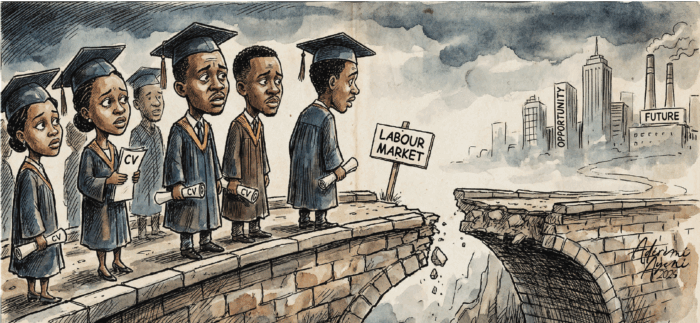
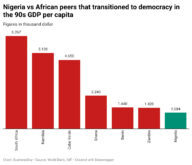
The dominant narrative on graduate unemployability in Nigeria places responsibility squarely on universities and their products. Graduates are routinely described as incompetent, poorly trained, and irrelevant to the labour market. While weaknesses in training may exist, this explanation is incomplete and analytically shallow. Graduate unemployment in Nigeria cannot be understood outside the context of the country’s political economy, industrial structure, governance systems, and labour-market dynamics. The problem is fundamentally structural,
The dominant narrative on graduate unemployability in Nigeria places responsibility squarely on universities and their products. Graduates are routinely described as incompetent, poorly trained, and irrelevant to the labour market. While weaknesses in training may exist, this explanation is incomplete and analytically shallow. Graduate unemployment in Nigeria cannot be understood outside the context of the country’s political economy, industrial structure, governance systems, and labour-market dynamics. The problem is fundamentally structural,